
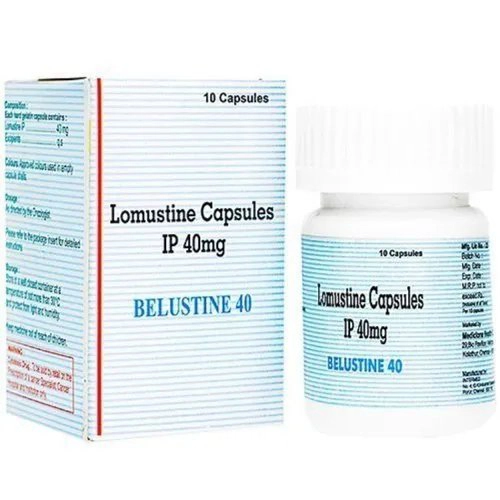
Belustine (Lomustine) – 40 Mg
Price range: $40.00 through $95.00
| Active Ingredient | Lomustine |
|---|---|
| Manufacturer | Medi Biotek (India) Pvt. Ltd. |
| Packaging | 10 capsules in Strip |
| Strength | 40mg |
| Delivery Time | 6 To 15 days |
| SKU: | Belustine (Lomustine) – 40mg |
Belustine (Lomustine) – 40 Mg: Uses, Dosage, Side Effects & Precautions
Belustine (Lomustine) – 40 Mg is an oral anticancer medicine containing lomustine, a chemotherapy drug belonging to the nitrosourea group. It is used under specialist medical supervision for certain cancers, particularly some brain tumors and Hodgkin lymphoma in specific treatment settings. Lomustine works by interfering with DNA and RNA processes inside cancer cells, which can prevent cancer cells from growing and multiplying.
Because lomustine can cause serious and delayed side effects, treatment requires careful planning, appropriate blood-count monitoring, and strict adherence to the prescribed schedule. Belustine (Lomustine) – 40 Mg should therefore only be taken when specifically prescribed by an oncologist or another qualified healthcare professional.
What Is Belustine (Lomustine) – 40 Mg?
Understanding Lomustine 40 Mg
Belustine (Lomustine) – 40 Mg contains 40 mg of lomustine in an oral capsule formulation. Lomustine is also known as CCNU and is classified as an alkylating-type chemotherapy medicine and nitrosourea. It is designed to interfere with important cellular processes that cancer cells need for survival and reproduction.
The 40 mg strength is one available capsule strength of lomustine. However, the presence of a 40 mg capsule does not mean that every patient should receive 40 mg as an individual dose. Cancer treatment doses are selected according to factors such as the cancer being treated, body size, previous treatment, blood counts, organ function, and the overall treatment plan.
Why Is It Used Under Specialist Supervision?
Belustine (Lomustine) – 40 Mg is a cytotoxic chemotherapy medicine. Its effects are not limited exclusively to cancer cells, meaning healthy rapidly dividing cells may also be affected. This can contribute to adverse effects such as reduced blood-cell production.
The FDA prescribing information carries a boxed warning concerning delayed bone-marrow suppression and the risk of overdose. Because toxicity can be delayed and cumulative, medical monitoring is an important part of treatment.
How Does Belustine (Lomustine) – 40 Mg Work?
Effect on Cancer Cells
Belustine (Lomustine) – 40 Mg works through lomustine, which can chemically modify DNA and interfere with DNA and RNA synthesis. These effects can damage cancer cells and reduce their ability to divide and continue growing.
Lomustine is also lipophilic and can cross the blood-brain barrier. This property is relevant to its use in certain brain tumors.
Why Its Effects Can Be Delayed
One important characteristic of lomustine is that its effect on bone marrow can occur after a delay rather than immediately after treatment. The FDA labeling describes myelosuppression as delayed, dose-related, and cumulative.
For this reason, patients should not assume that feeling well shortly after taking a dose means that blood-related complications cannot develop later.
What Are the Uses of Belustine (Lomustine) – 40 Mg?
Use in Certain Brain Tumors
Belustine (Lomustine) – 40 Mg may be included in treatment plans for certain brain tumors. NCI states that lomustine is approved for brain tumors in patients who have previously received surgery or radiation therapy.
The exact role of lomustine depends on the type and stage of the tumor, previous treatment, and the oncologist’s treatment strategy.
Use in Hodgkin Lymphoma
Lomustine is also approved for Hodgkin lymphoma that has worsened after other treatments, where it may be used as part of chemotherapy.
Not every patient with Hodgkin lymphoma is an appropriate candidate for lomustine. Treatment decisions depend on the individual’s medical history and previous therapies.
Use in Combination Chemotherapy
Lomustine may be used as part of combination chemotherapy. For example, NCI describes PCV as a combination containing procarbazine, lomustine, and vincristine that is used for certain brain tumors.
The choice between single-agent and combination treatment should be made by the oncology team.
Belustine (Lomustine) – 40 Mg Dosage
Why the Dose Must Be Individualized
The appropriate dose of Belustine (Lomustine) – 40 Mg varies between patients. Doctors may consider body surface area, previous chemotherapy, blood-cell counts, kidney and liver function, cancer type, and previous toxicity when determining treatment.
A 40 mg capsule may be combined with other capsule strengths when a prescribed total dose requires it. Patients should never calculate or change the total number of capsules themselves.
How Often Is Lomustine Taken?
Lomustine has an unusual dosing schedule compared with many daily oral medicines. FDA labeling warns that doses should not be administered more frequently than every six weeks and emphasizes the risk of severe toxicity from overdose.
Patients should follow the exact schedule provided by their oncology team. Taking an additional dose because a previous dose was missed, delayed, or misunderstood can be dangerous.
What If a Dose Is Missed?
If a scheduled dose is missed, the patient should contact the prescribing oncology team for instructions. The missed dose should not be replaced by taking extra capsules unless the treating healthcare professional specifically instructs the patient to do so.
How Should Belustine (Lomustine) – 40 Mg Be Taken?
Follow the Prescribed Instructions
Belustine (Lomustine) – 40 Mg should be taken exactly as directed by the treating physician. Because lomustine is a potent cytotoxic medicine, patients should not adjust the dose according to how they feel.
The prescribing information specifically emphasizes controlling the amount dispensed because accidental extra dosing can cause fatal toxicity.
Do Not Take Extra Capsules
Patients should never take additional Belustine (Lomustine) – 40 Mg capsules to compensate for a missed dose or to try to improve treatment results.
If there is uncertainty about the dose, capsule strength, or treatment date, contacting the oncology team or dispensing pharmacist is safer than making an independent decision.
What Are the Side Effects of Belustine (Lomustine) – 40 Mg?
Blood-Related Side Effects
One of the most important risks associated with Belustine (Lomustine) – 40 Mg is bone-marrow suppression. This can reduce the number of white blood cells and platelets and may increase the risk of infection or bleeding. The FDA identifies myelosuppression as the most common and severe toxic effect of lomustine.
Because the effect can be delayed, blood counts may need to be monitored for several weeks following treatment.
Digestive Side Effects
Lomustine may cause gastrointestinal effects such as nausea and vomiting. The oncology team may recommend supportive treatment to help control these symptoms.
Patients should tell their healthcare provider if vomiting prevents them from keeping medicines or fluids down.
Other Possible Reactions
Other adverse reactions can occur depending on the individual patient and treatment regimen. Fatigue, appetite changes, weakness, and other treatment-related effects may occur during chemotherapy.
The severity of side effects can vary considerably. Patients should report new, persistent, or worsening symptoms to their healthcare team.
What Are the Serious Warnings for Belustine (Lomustine) – 40 Mg?
Delayed Bone-Marrow Suppression
Delayed myelosuppression is a major safety concern with Belustine (Lomustine) – 40 Mg. The effect can lower blood-cell counts after treatment and may become more significant with repeated courses.
Low white-cell counts can increase infection risk, while low platelet counts can increase the risk of bruising or bleeding.
Risk of Overdose
Lomustine overdose can cause severe and potentially fatal toxicity. The FDA prescribing information specifically warns that only enough capsules for one dose should be prescribed, dispensed, and administered.
This makes careful handling of the medicine particularly important. Patients should keep the medication away from children and other people who have not been prescribed the treatment.
Cumulative Toxicity
The bone-marrow toxicity associated with lomustine can be cumulative. Previous blood-count results and treatment-related toxicity may therefore influence decisions about subsequent doses.
Who Should Use Caution With Belustine (Lomustine) – 40 Mg?
Patients With Low Blood Counts
Patients who already have reduced blood-cell counts may require particular caution. The oncology team may evaluate complete blood counts before deciding whether treatment can safely proceed.
Patients With Liver or Kidney Problems
People with liver or kidney impairment should tell their doctor before starting treatment. The medical team can determine whether additional monitoring or treatment adjustments are necessary.
Patients Receiving Other Cancer Treatments
Other chemotherapy medicines, radiation, or supportive medicines may affect blood counts or contribute to toxicity. The complete treatment plan should therefore be reviewed by the oncology team before Belustine (Lomustine) – 40 Mg is used.
What Precautions Are Important During Treatment?
Attend Scheduled Blood Tests
Blood tests are an essential part of safe lomustine therapy. FDA labeling recommends monitoring blood counts because bone-marrow suppression may be delayed.
Patients should attend all laboratory appointments even when they feel well.
Report Infection or Bleeding Symptoms
Fever, chills, unusual bruising, persistent bleeding, severe weakness, or other concerning symptoms should be reported promptly to the treating healthcare team.
A low white-blood-cell or platelet count may not always cause obvious symptoms at first, which is why laboratory monitoring remains important.
Avoid Self-Medication
Patients receiving Belustine (Lomustine) – 40 Mg should tell their doctor or pharmacist about prescription medicines, over-the-counter products, vitamins, and herbal supplements.
Some products may affect treatment safety or make certain adverse effects more difficult to manage.
Can Belustine (Lomustine) – 40 Mg Interact With Other Medicines?
Tell Your Doctor About All Medicines
Before starting Belustine (Lomustine) – 40 Mg, provide the healthcare team with a complete list of medicines and supplements being used.
This includes medicines prescribed by other doctors because cancer patients may receive several treatments from different healthcare professionals.
Avoid Unapproved Changes
Do not start, stop, or change another medicine without discussing it with the oncology team. The potential effects of other treatments should be assessed in the context of the complete chemotherapy regimen.
Belustine (Lomustine) – 40 Mg and Pregnancy
Pregnancy Considerations
Belustine (Lomustine) – 40 Mg is a cytotoxic anticancer medicine, so pregnancy planning requires discussion with the treating oncologist. Cancer treatment can have serious implications for an unborn baby.
Patients who are pregnant, planning pregnancy, or who could become pregnant should inform their healthcare provider before treatment.
Breastfeeding Considerations
Breastfeeding decisions during chemotherapy should be discussed with the treating physician. Patients should not assume that an oral chemotherapy medicine is compatible with breastfeeding simply because it is taken as a capsule.
How Should Belustine (Lomustine) – 40 Mg Be Stored?
Safe Storage
Keep Belustine (Lomustine) – 40 Mg in its original packaging and follow the storage instructions supplied with the product.
The medicine should be kept away from children and handled according to the instructions provided by the pharmacy or healthcare team.
Safe Handling
Lomustine is a cytotoxic medicine, so patients should follow the handling instructions provided by their healthcare professionals. Do not open, crush, chew, or otherwise alter a capsule unless a qualified healthcare professional specifically provides instructions to do so.
Frequently Asked Questions About Belustine (Lomustine) – 40 Mg
Is Belustine (Lomustine) – 40 Mg a chemotherapy medicine?
Yes. Belustine (Lomustine) – 40 Mg contains lomustine, an anticancer chemotherapy medicine classified as a nitrosourea. It is used for certain cancers under specialist supervision.
Is Belustine (Lomustine) – 40 Mg taken every day?
No. Lomustine is generally administered on an intermittent schedule rather than as a daily medicine. FDA labeling states that courses should not be given more frequently than every six weeks.
The exact schedule must come from the treating oncologist.
Can I change my Belustine (Lomustine) – 40 Mg dose?
No. The dose should not be changed without medical approval. Lomustine overdose can cause severe or fatal toxicity, making accurate dosing especially important.
Does Belustine (Lomustine) – 40 Mg cure cancer?
Whether lomustine can control a particular cancer depends on the cancer type, stage, previous treatments, and individual response. It should not be described as a universal cure.
Why are blood tests important with lomustine?
Blood tests help doctors monitor for delayed bone-marrow suppression. Lomustine can lower blood-cell counts after treatment, and the effect may be cumulative.
Final Thoughts on Belustine (Lomustine) – 40 Mg
Belustine (Lomustine) – 40 Mg is a specialized oral chemotherapy medicine used for selected cancer treatment situations. Its ability to interfere with cancer-cell DNA makes it an important option in certain oncology regimens, including selected brain tumors and Hodgkin lymphoma.
However, lomustine requires careful dosing because its effects on bone marrow can be delayed and cumulative. Patients should follow the prescribed treatment schedule, attend recommended blood tests, and promptly report concerning symptoms.
Belustine (Lomustine) – 40 Mg should only be used under the direction of a qualified oncology professional. Never change the dose, repeat a dose, or combine it with another treatment without medical guidance.
Medical Disclaimer:-
This content about Belustine (Lomustine) – 40 Mg is provided for general educational and informational purposes only and should not replace advice from a qualified doctor, oncologist, pharmacist, or other healthcare professional. Lomustine is a potent cytotoxic chemotherapy medicine that can cause serious and delayed adverse effects, including bone-marrow suppression and potentially life-threatening toxicity.
Do not start, stop, repeat, or change Belustine (Lomustine) – 40 Mg without specific medical instructions. The appropriate dose and treatment schedule vary according to the patient’s cancer, previous therapy, blood counts, organ function, and other clinical factors. If you experience severe symptoms or suspect an overdose, seek urgent medical attention.
Additional information
| unit | 10 Capsules, 20 Capsules, 30 Capsules |
|---|




Reviews
There are no reviews yet.