
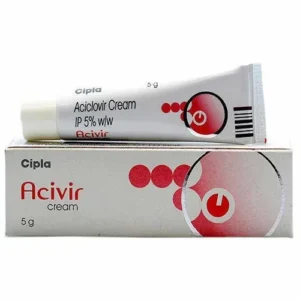
Acivir Eye Ointment (Acyclovir)

Price range: $3.00 through $15.00
| Active Ingredient | Acyclovir |
|---|---|
| Manufacturer | Cipla Limited |
| Packaging | 5gm in a Tube |
| Strength | 3% |
| Delivery Time | 6 To 15 days |
| SKU: | Acivir Eye Ointment (Acyclovir) |
Complete Guide to Acivir Eye Ointment (Acyclovir): Uses, How It Works, Application, and Safety
Eye infections caused by viruses can be deeply uncomfortable, causing redness, irritation, sensitivity to light, and watery discharge. Among viral eye conditions, Herpes Simplex Virus (HSV) keratitis is one of the most common and serious corneal infections. Left untreated or managed improperly, viral keratitis can cause corneal scarring and impaired vision.
When it comes to treating herpes simplex infections of the eye, Acivir Eye Ointment (Acyclovir) stands as a trusted, highly effective topical antiviral treatment. Formulated specifically for ophthalmic use, this ointment targets the virus directly at the site of infection, stopping its replication and helping your eye heal safely.
In this comprehensive, patient-focused guide, we will explore everything you need to know about Acivir Eye Ointment (Acyclovir). From its active mechanism and medical uses to step-by-step application instructions, safety guidelines, side effects, and essential precautions, this article gives you the clear, practical information you need for healthy eye recovery.
What is Acivir Eye Ointment (Acyclovir)?
Acivir Eye Ointment (Acyclovir) is an ophthalmic antiviral medication manufactured by Cipla Ltd. It contains Acyclovir (3% w/w) in a sterile, smooth, petroleum-based ointment vehicle designed specifically for application inside the lower eyelid.
Unlike antibiotic eye drops—which kill bacteria—or steroid drops—which reduce inflammation—Acyclovir is a specialized antiviral agent. It is formulated to combat viral pathogens, specifically Herpes Simplex Virus Type 1 (HSV-1) and Type 2 (HSV-2), which can infect the delicate clear front surface of the eye (the cornea).
Key Product Specifications
| Feature | Details |
| Active Ingredient | Acyclovir IP (3% w/w) |
| Formulation | Sterile Ophthalmic Ointment |
| Therapeutic Class | Antiviral (Ophthalmic) |
| Primary Indication | Herpes Simplex Keratitis (Corneal Viral Infection) |
| Manufacturer | Cipla Ltd. |
| Prescription Status | Prescription Only (Schedule H Drug) |
How Does Acivir Eye Ointment (Acyclovir) Work?
Understanding how Acivir Eye Ointment (Acyclovir) works helps explain why it is so targeted and effective against viral eye infections without harming healthy human cells.
The Mechanism of Action: Selective Antiviral Activity
Acyclovir is a synthetic purine nucleoside analogue. On its own, it is an inactive prodrug. Once applied inside the eye, it goes through a specialized multi-step activation process:
-
Selective Activation by the Virus: When Acyclovir enters a cell infected by the Herpes Simplex Virus, a viral enzyme called thymidine kinase converts Acyclovir into Acyclovir monophosphate. Healthy, uninfected cells lack high levels of this specific viral enzyme, meaning the drug is activated almost exclusively inside virus-infected cells.
-
Further Phosphorylation: Cellular enzymes in the host cell then convert Acyclovir monophosphate into its active form: Acyclovir triphosphate.
-
Inhibition of Viral DNA Polymerase: Acyclovir triphosphate competes with natural building blocks (deoxyguanosine triphosphate) for binding to viral DNA polymerase—the enzyme the virus relies on to copy its genetic material.
-
DNA Chain Termination: Once incorporated into the growing viral DNA strand, Acyclovir triphosphate permanently blocks further DNA chain elongation. Because it lacks a 3′-hydroxyl group, no additional nucleotides can attach.
By stopping viral DNA replication in its tracks, Acivir Eye Ointment (Acyclovir) halts the spread of the virus across the cornea, allowing your body’s immune system to clear the infection and heal the corneal tissue.
Primary Indications and Uses
Ophthalmologists and eye care specialists prescribe Acivir Eye Ointment (Acyclovir) for specific viral infections affecting the anterior segment of the eye.
1. Herpes Simplex Keratitis (Epithelial Keratitis)
Herpes Simplex Virus Type 1 (the same virus responsible for common lip cold sores) can reactivate and travel along nerve pathways to the eye. When it infects the superficial layer of the cornea (the epithelium), it causes characteristic branch-like lesions known as dendritic ulcers.
Acivir Eye Ointment (Acyclovir) is the gold-standard topical treatment for active dendritic corneal ulcers caused by HSV. It reduces viral load, speeds up ulcer healing, and relieves pain and light sensitivity.
2. Recurrent Ocular Herpes Outbreaks
Once a person contracts HSV, the virus remains dormant in nerve ganglia (specifically the trigeminal ganglion). During times of stress, illness, immune suppression, or intense UV exposure, the virus can reactivate and travel back to the cornea. Acivir Eye Ointment (Acyclovir) is used promptly during flare-ups to prevent deep corneal scarring.
3. Herpes Zoster Ophthalmicus (Off-Label Support)
While Shingles affecting the eye (Herpes Zoster) is primarily treated with oral antiviral tablets, topical Acivir Eye Ointment (Acyclovir) may sometimes be prescribed as an adjunct treatment if superficial corneal involvement is present, as directed by an eye specialist.
Key Benefits of Using Acivir Eye Ointment (Acyclovir)
-
Direct Localized Delivery: Placing the ointment directly into the conjunctival sac delivers high antiviral concentrations straight to the infected corneal cells while keeping absorption into the rest of the body extremely low.
-
High Target Specificity: Because activation relies on the viral enzyme thymidine kinase, healthy eye tissue remains largely unaffected.
-
Prevents Permanent Vision Damage: Rapid treatment of HSV keratitis prevents the virus from penetrating deeper into the corneal stroma, reducing the risk of permanent scarring, cloudiness, or vision loss.
-
Longer Retention Time: Unlike liquid eye drops that quickly wash away with tears, an ophthalmic ointment stays in contact with the eye surface longer, providing sustained antiviral action.
How to Apply Acivir Eye Ointment (Acyclovir): Step-by-Step Guide
Applying eye ointment correctly ensures the medication works effectively while preventing contamination of the tube or further irritation to your eye.
Step 1: Wash Your Hands
Thoroughly scrub your hands with soap and water for at least 20 seconds. Dry them completely with a clean, lint-free towel before touching your eye or medication.
Step 2: Prepare the Eye Area
If you have dried discharge or crusting around your eye, gently wipe it away using a sterile cotton pad moistened with clean, warm water or saline. Wipe from the inner corner outward.
Step 3: Position Yourself Comfortably
Sit in front of a mirror or tilt your head back slightly while looking up toward the ceiling.
Step 4: Form a Pocket in the Lower Eyelid
Gently pull down your lower eyelid with your clean index finger to create a small pocket (the lower conjunctival sac) between your eyelid and eyeball.
Step 5: Dispense the Ointment
Hold the tube between your thumb and forefinger, bringing the tip close to your eye without letting it touch your eyelid, eyeball, fingers, or any surface. Squeeze gently to place a 1 cm (about half an inch) ribbon of ointment inside the lower eyelid pocket.
Step 6: Close Your Eye Gently
Release your eyelid and close your eye gently for 1 to 2 minutes. Roll your eyeball around slowly with your eyelids closed to spread the ointment evenly across the surface of your eye. Do not blink vigorously or rub your eye.
Step 7: Clean the Tube Tip
Wipe the nozzle of the tube with a clean, dry tissue and replace the cap securely. Wash your hands again to remove any leftover medication.
Recommended Dosage and Treatment Schedule
-
Standard Adult & Pediatric Frequency: Apply a 1 cm ribbon of ointment into the affected lower conjunctival sac 5 times daily, spaced approximately 4 hours apart during waking hours (e.g., 7:00 AM, 11:00 AM, 3:00 PM, 7:00 PM, and 11:00 PM).
-
Treatment Duration: Continue applying the ointment 5 times daily until the corneal ulcer has completely healed. Crucial Rule: Once the eye appears healed, continue using the ointment for an additional 3 to 7 days as instructed by your doctor. Stopping treatment too early can cause the virus to reactivate.
-
Missed Dose: If you miss a dose, apply it as soon as you remember. However, if it is almost time for your next scheduled dose, skip the missed application and resume your normal routine. Never double up on ointment applications.
Important Precautions & Safety Warnings
To ensure safe treatment, keep these vital safety rules in mind while using Acivir Eye Ointment (Acyclovir):
1. Do Not Wear Contact Lenses
Do not wear contact lenses while treating an active eye infection or while using Acivir Eye Ointment (Acyclovir). Contact lenses can trap viral particles against the cornea, worsen irritation, delay healing, and harbor bacteria. Resume wearing contacts only after your eye doctor confirms the infection has fully cleared and treatment is complete.
2. Temporary Blurry Vision
Because of its rich, petrolatum base, applying eye ointment will cause temporary blurring of your vision for 10 to 20 minutes after application.
Safety Warning: Do not drive, operate machinery, or perform tasks requiring sharp vision immediately after applying Acivir Eye Ointment (Acyclovir). Wait until your vision becomes completely clear.
3. Prevent Contamination
The tip of the ointment tube must remain sterile. Never let the tip touch your eye, eyelashes, eyelids, skin, or fingers. Contaminating the tube tip can introduce secondary bacterial or fungal infections into your eye.
4. Do Not Use Steroids Without Medical Supervision
Never use corticosteroid eye drops alongside Acivir Eye Ointment (Acyclovir) unless specifically prescribed and monitored by an ophthalmologist. Corticosteroids can suppress local immune responses, allowing the Herpes Simplex Virus to spread deeper into the cornea and potentially cause permanent tissue damage.
5. Pregnancy and Breastfeeding
-
Pregnancy: Systemic absorption from topical eye ointment is negligible. However, Acivir Eye Ointment (Acyclovir) should be used during pregnancy only when clearly needed and prescribed by your physician.
-
Breastfeeding: Acyclovir passes into breast milk in tiny amounts following systemic administration, but levels after ophthalmic ointment use are minimal. Consult your doctor before use while nursing.
Potential Side Effects
Acivir Eye Ointment (Acyclovir) is generally well-tolerated by most patients. However, like any ophthalmic medication, mild side effects can occur.
Common and Mild Side Effects
-
Transient Stinging or Burning: A mild, brief stinging sensation immediately after placing the ointment in the eye. This usually settles within a minute.
-
Temporary Blurry Vision: Mild visual fogging caused by the ointment base, which clears as the gel melts and spreads.
-
Mild Conjunctival Irritation: Slight redness, watering, or a mild sensation of having something in your eye (foreign body sensation).
-
Superficial Punctate Keratopathy: Minor, temporary irritation of the outer corneal layer, which resolves after completing treatment.
Rare / Severe Reactions
Contact your ophthalmologist immediately if you experience any of the following uncommon symptoms:
-
Severe, worsening eye pain or intense swelling of the eyelids
-
Significant skin rash or itching around the eye
-
Sudden decrease or change in vision
-
Hypersensitivity reactions (swelling of lips, face, tongue, or difficulty breathing)
Drug Interactions with Acivir Eye Ointment
Because Acivir Eye Ointment (Acyclovir) acts topically with minimal systemic absorption, significant interactions with oral or injectable medications are rare. However, local ophthalmic interactions can occur:
| Combination Agent | Potential Interaction | Clinical Advice |
| Other Eye Drops / Ointments | Using multiple eye products simultaneously can wash out the active drug or prevent proper absorption. | Wait at least 10 to 15 minutes between applying different eye products. Always apply liquid eye drops first and ophthalmic ointments last. |
| Topical Ophthalmic Steroids | Steroids can mask symptoms and cause severe viral proliferation if used without adequate antiviral coverage. | Use topical steroids only under strict ophthalmologist supervision during viral keratitis. |
Complementary Eye Care & Lifestyle Tips During Treatment
In addition to using Acivir Eye Ointment (Acyclovir) as prescribed, these simple eye care habits will support a smooth recovery:
-
Rest Your Eyes: Avoid prolonged screen time, reading in dim light, or driving when your eyes feel fatigued or irritated.
-
Wear Sunglasses Outdoors: Viral keratitis often causes photophobia (extreme light sensitivity). Wearing UV-blocking sunglasses outdoors reduces discomfort and shields your eyes from wind and dust.
-
Practice Strict Hygiene: Use separate towels, pillowcases, and washcloths from the rest of your household to prevent spreading the Herpes Simplex Virus to others or your other eye. Wash your hands frequently.
-
Discard Eye Cosmetics: Throw away any eye makeup (mascara, eyeliner, eyeshadow) used just before or during the outbreak. Using old makeup after your infection clears can reintroduce the virus.
-
Avoid Eye Rubbing: Touching or rubbing your healing eye increases irritation and can spread viral particles to healthy tissues or cause physical injury to the healing corneal surface.
Frequently Asked Questions (FAQs) About Acivir Eye Ointment
1. How quickly does Acivir Eye Ointment (Acyclovir) begin to work?
Acivir Eye Ointment (Acyclovir) begins inhibiting viral replication shortly after application. Most patients notice an improvement in eye pain, redness, and light sensitivity within 2 to 3 days of starting regular treatment. However, it is essential to complete the full recommended course even if your symptoms improve quickly.
2. Why do I need to keep using the ointment after my eye feels better?
Even after symptoms disappear and the corneal ulcer heals, small amounts of the virus may remain active in corneal cells. Continuing the ointment for 3 to 7 days after complete healing ensures that any lingering viral particles are eliminated, drastically reducing the risk of an immediate flare-up.
3. Can I use Acivir Eye Ointment for bacterial pink eye (conjunctivitis)?
No. Acivir Eye Ointment (Acyclovir) is an antiviral medication specifically designed to treat Herpes Simplex Virus infections. It is completely ineffective against bacterial, allergic, or fungal eye infections. Using it for bacterial conjunctivitis will not cure the infection and delays proper antibiotic treatment.
4. What should I do if I accidentally apply too much ointment?
Placing a slightly larger ribbon of ointment in your lower eyelid is not harmful, though it will cause more noticeable temporary vision blurring. Simply close your eye gently, wipe away any excess ointment from your cheek or eyelids with a clean tissue, and wait for your vision to clear.
5. Can I use Acivir Eye Ointment while wearing contact lenses?
No. You must avoid wearing contact lenses throughout the duration of your treatment. Contact lenses worsen corneal irritation, trap viral particles, and increase the risk of secondary bacterial corneal ulcers. Wait until your eye doctor confirms the infection has fully resolved before wearing contacts again.
6. How should Acivir Eye Ointment be stored?
Store Acivir Eye Ointment (Acyclovir) at room temperature, ideally below $25^\circ\text{C}$ ($77^\circ\text{F}$). Protect it from heat, direct light, and freezing. Keep the tube tightly capped when not in use, and discard the tube 1 month after opening, even if medication remains inside, to prevent contamination.
Disclaimer:-
This information about Acivir Eye Ointment (Acyclovir) is provided for educational purposes only and is not a substitute for professional medical advice, diagnosis, or treatment. Use this medicine only as directed by a qualified healthcare professional. Always read the product information and consult your doctor or pharmacist if you have questions about its use, side effects, or suitability.
Additional information
| unit | 1 Cream, 3 Cream, 6 Cream |
|---|




Reviews
There are no reviews yet.