
Atarax Anti-Itch Lotion
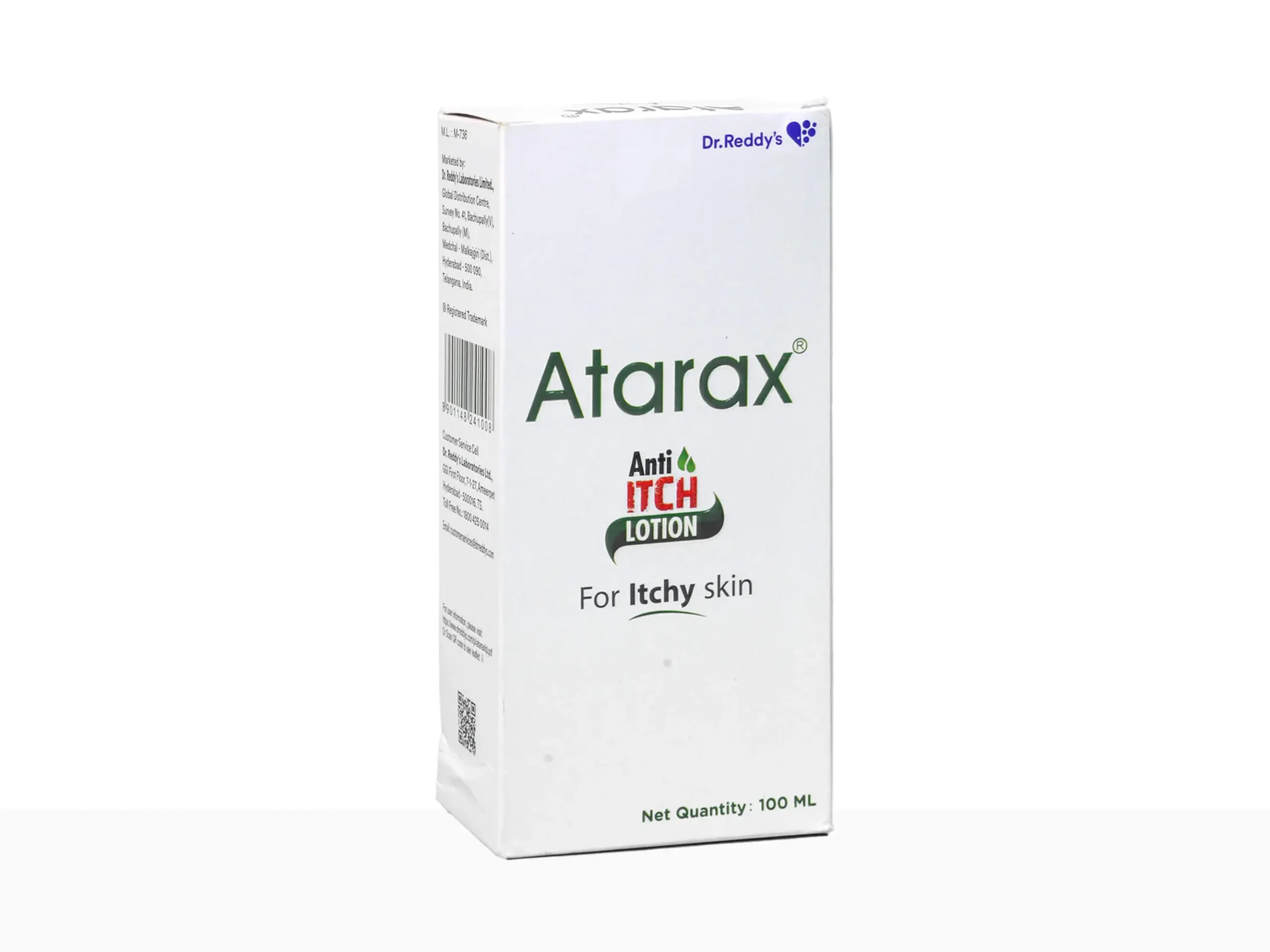
Price range: $32.00 through $95.00
| Active Ingredient | Pramoxine Hydrochloride And Aloe Vera |
|---|---|
| Manufacturer | Dr. Reddy’s Laboratories, India |
| Packaging | 100 ml in 1 bottle |
| Strength | 100 ml |
| Delivery Time | 6 To 15 days |
| SKU: | Atarax Anti-Itch Lotion |
Atarax Anti-Itch Lotion: Uses, Benefits, Ingredients, How to Use & Precautions
Introduction
Itchy skin can be uncomfortable and distracting, especially when dryness, insect bites, minor irritation, allergic reactions, or other skin concerns trigger repeated scratching. An appropriate topical product may help soothe the affected area while supporting skin moisture.
Atarax Anti-Itch Lotion is a topical skin-care formulation marketed to provide relief from itching and dryness. The listed formulation contains pramoxine hydrochloride along with aloe vera, glycerine, calamine, light liquid paraffin, and silicone-based moisturizing ingredients.
Pramoxine hydrochloride is included for its local anti-itch action, while moisturizing ingredients can help reduce dryness that may contribute to skin discomfort. Aloe vera and calamine are also included in the formulation for their soothing properties.
This guide explains Atarax Anti-Itch Lotion uses, potential benefits, ingredients, application instructions, precautions, and situations where professional medical advice may be appropriate.
What Is Atarax Anti-Itch Lotion?
Atarax Anti-Itch Lotion is a topical lotion designed to help relieve itching and dry, irritated skin. It is intended for external application rather than oral use.
The formulation listed by pharmacies includes pramoxine hydrochloride, aloe vera gel, glycerine, calamine, light liquid paraffin, dimethicone, propylene glycol, and other formulation ingredients.
Atarax Anti-Itch Lotion is different from Atarax tablets containing hydroxyzine. Despite the similar brand name, the lotion is a topical formulation and should not be confused with oral hydroxyzine medication.
Atarax Anti-Itch Lotion Ingredients
Pramoxine Hydrochloride
Pramoxine hydrochloride is a topical local anesthetic commonly used in anti-itch preparations. It works locally on the skin to reduce the sensation of itching, which can help make irritated skin feel more comfortable.
The presence of pramoxine makes Atarax Anti-Itch Lotion particularly relevant when temporary relief from itching is needed.
Aloe Vera
Aloe vera is included as a soothing botanical ingredient. It may provide a cooling and comforting sensation on dry or irritated skin.
Aloe vera also contributes to the overall skin-conditioning properties of the lotion.
Glycerine
Glycerine is a humectant that helps attract and retain water in the outer layers of the skin. Maintaining adequate moisture can be useful because excessive dryness may make itching more noticeable.
Calamine
Calamine is traditionally used in topical preparations intended to soothe minor skin irritation and itching. It can provide a calming effect when applied appropriately to the skin.
Moisturizing Ingredients
The formulation also contains ingredients such as light liquid paraffin and dimethicone. These ingredients can help condition the skin and reduce moisture loss.
The complete ingredient list may include additional stabilizers, emulsifiers, preservatives, and other formulation components. Always check the product label for the most current ingredient information.
What Are the Uses of Atarax Anti-Itch Lotion?
Atarax Anti-Itch Lotion is marketed for temporary relief of itching and dry skin associated with several common skin complaints. Product information lists conditions such as eczema, sunburn, allergic rashes, insect bites, scabies, and tinea-related itching among its uses.
Relief From Itchy Skin
One of the primary purposes of Atarax Anti-Itch Lotion is to reduce the uncomfortable sensation of itching.
Pramoxine hydrochloride provides local anti-itch action, while the moisturizing components can help address dryness that may accompany irritation.
Relief From Dry Skin
Dryness can weaken the skin barrier and contribute to tightness, roughness, and itching. Glycerine, aloe vera, paraffin, and dimethicone help provide moisturizing and conditioning support.
Insect Bite-Related Itching
Insect bites can cause localized redness and itching. A topical anti-itch lotion may help reduce the uncomfortable sensation associated with minor bites.
However, severe swelling, breathing difficulty, widespread hives, or other signs of a serious allergic reaction require urgent medical attention rather than self-treatment.
Minor Irritation
Some forms of mild skin irritation may respond to soothing and moisturizing topical care. The underlying cause should still be considered if irritation continues or repeatedly returns.
How Does Atarax Anti-Itch Lotion Work?
Atarax Anti-Itch Lotion combines an anti-itch ingredient with moisturizing and soothing components.
Action of Pramoxine
Pramoxine hydrochloride acts locally on the skin and helps reduce the sensation of itching. By decreasing the uncomfortable itch signal, it may help reduce the urge to scratch.
Moisturizing Action
Glycerine and other emollient ingredients help support skin hydration. Better moisturization can be particularly useful when dryness is contributing to discomfort.
Soothing Skin Support
Aloe vera and calamine contribute to the soothing characteristics of the formulation. Together with moisturizing ingredients, they can help make dry or irritated skin feel more comfortable.
Benefits of Atarax Anti-Itch Lotion
Helps Reduce Itching
The pramoxine-containing formulation is designed to provide local relief from itching. This may be useful for temporary discomfort caused by minor skin irritation and other common triggers.
Helps Soothe Dry Skin
The moisturizing components can help improve the feel of dry skin while reducing roughness and tightness associated with inadequate moisture.
Supports Skin Moisture
Glycerine and emollient ingredients help maintain hydration and may support the skin barrier when used as directed.
Convenient Topical Application
A lotion can be applied directly to the affected skin, allowing the product to act locally without requiring oral administration.
Soothing Formulation
The combination of aloe vera, calamine, pramoxine, and moisturizing ingredients provides a multi-purpose approach to managing temporary skin discomfort.
How to Use Atarax Anti-Itch Lotion
Step 1: Clean the Affected Area
Gently clean the area and allow it to dry before application. Avoid aggressive rubbing because friction can further irritate sensitive skin.
Step 2: Apply a Thin Layer
Apply a thin layer of Atarax Anti-Itch Lotion over the affected area.
Step 3: Massage Gently
Gently massage the lotion until it is absorbed. Avoid vigorous rubbing, particularly if the skin is already irritated.
Step 4: Follow the Recommended Frequency
Current product information recommends application two to three times daily. However, always follow the product label or advice provided by your healthcare professional.
Precautions When Using Atarax Anti-Itch Lotion
For External Use Only
Atarax Anti-Itch Lotion should be used on the skin as directed. Do not swallow the product or intentionally apply it inside the body.
Avoid the Eyes
Avoid contact with the eyes. If the product accidentally enters the eyes, rinse thoroughly with clean water.
Do Not Apply to Open Wounds
The product should not be applied over open cuts, wounds, or significantly damaged skin unless a healthcare professional specifically recommends it.
Stop If Significant Irritation Develops
Although topical products are generally tolerated by many people, individual sensitivity can occur. Stop using the lotion and seek medical advice if significant redness, swelling, worsening rash, or an allergic reaction develops.
Atarax Anti-Itch Lotion Side Effects
Most people may tolerate topical anti-itch preparations when they are used appropriately, but skin reactions can occur.
Possible Local Reactions
Some individuals may experience redness, irritation, burning, stinging, or a new rash after applying a topical product.
Allergic Reaction
A person who develops significant swelling, widespread hives, facial swelling, difficulty breathing, or other symptoms suggesting a severe allergic reaction should seek urgent medical care.
Do not continue using a product that clearly worsens your skin symptoms.
Who Should Be Careful With Atarax Anti-Itch Lotion?
People With Sensitive Skin
People with particularly sensitive skin should monitor the treated area after the first applications. A healthcare professional can advise whether the formulation is appropriate for persistent or recurring symptoms.
Children
Use in children should follow the product label and, where appropriate, medical advice. Children may scratch irritated areas more frequently, potentially causing skin damage.
Pregnant or Breastfeeding Women
If you are pregnant or breastfeeding, consult a healthcare professional before using a medicated topical product, particularly when applying it repeatedly or over large areas.
People With Persistent Skin Problems
Persistent itching can sometimes indicate eczema, fungal infection, scabies, allergy, medication reactions, or another underlying condition. Treating the itch alone may not address the cause.
When Should You See a Doctor?
Persistent Itching
If itching does not improve or continues to return, professional evaluation can help identify the underlying cause.
Widespread Rash
A rash covering large areas of the body, especially when accompanied by fever or significant discomfort, should be evaluated by a healthcare professional.
Signs of Infection
Increasing warmth, swelling, pain, pus, crusting, or rapidly worsening redness may indicate infection and requires medical assessment.
Severe Allergic Symptoms
Breathing difficulty, swelling of the lips or tongue, dizziness, or widespread hives can indicate a serious allergic reaction and require urgent medical attention.
Can Atarax Anti-Itch Lotion Treat Every Cause of Itching?
No topical anti-itch lotion should be assumed to cure every cause of itching.
Itching may result from dry skin, allergies, insect bites, eczema, fungal infections, scabies, medication reactions, or systemic conditions. A product that provides temporary symptomatic relief may not eliminate the underlying cause.
For example, fungal infections generally require appropriate antifungal treatment, while scabies requires specific treatment aimed at eliminating the mite infestation. Therefore, persistent or unexplained itching should be assessed by a healthcare professional.
Tips for Managing Itchy and Dry Skin
Keep Skin Moisturized
Regular use of a suitable moisturizer can help reduce dryness and support the skin barrier.
Avoid Very Hot Water
Hot showers can worsen skin dryness for some people. Lukewarm water is generally gentler on dry or sensitive skin.
Choose Mild Cleansers
Fragrance-heavy or harsh cleansing products may aggravate sensitive skin. A mild cleanser can be preferable when dryness is a concern.
Avoid Excessive Scratching
Repeated scratching can damage the skin and increase the risk of irritation and infection. Keeping fingernails short may help reduce accidental skin damage.
Identify Possible Triggers
Pay attention to new soaps, detergents, cosmetics, fabrics, foods, medications, or environmental exposures that appear to coincide with itching.
Frequently Asked Questions About Atarax Anti-Itch Lotion
What is Atarax Anti-Itch Lotion used for?
Atarax Anti-Itch Lotion is designed to provide topical relief from itching and dry skin. Its listed formulation includes pramoxine hydrochloride along with aloe vera, glycerine, calamine, and moisturizing ingredients.
How often can Atarax Anti-Itch Lotion be applied?
Current product information recommends applying a thin layer two to three times daily. Follow the product packaging or your healthcare professional’s instructions for your particular situation.
Can Atarax Anti-Itch Lotion be used on open wounds?
It should not be applied over open cuts, wounds, or damaged skin unless a healthcare professional specifically advises its use there.
Can Atarax Anti-Itch Lotion be used for insect bites?
The product is marketed for relief of itching associated with insect bites. However, significant swelling, breathing problems, or widespread allergic symptoms require immediate medical evaluation rather than relying on a topical lotion.
Does Atarax Anti-Itch Lotion moisturize the skin?
Yes. Its listed formulation contains glycerine, aloe vera, light liquid paraffin, and dimethicone, which contribute moisturizing and skin-conditioning properties.
Is Atarax Anti-Itch Lotion the same as Atarax tablets?
No. Atarax Anti-Itch Lotion is a topical formulation containing pramoxine hydrochloride and other skin-care ingredients. It should not be confused with oral hydroxyzine products that may also use the Atarax brand name.
Can I use Atarax Anti-Itch Lotion every day?
Use it according to the product directions. If itching requires continued treatment, keeps returning, or does not improve, consult a healthcare professional rather than repeatedly treating the symptom without identifying its cause.
What should I do if my skin becomes more irritated?
Stop using the product if significant irritation develops and seek medical advice, especially if the reaction is severe, spreading, or accompanied by swelling or other allergy symptoms.
Final Takeaway
Atarax Anti-Itch Lotion is a topical formulation intended to help relieve itching and dry, uncomfortable skin. Its formulation includes pramoxine hydrochloride for local anti-itch action, along with aloe vera, glycerine, calamine, paraffin, dimethicone, and other ingredients that provide soothing and moisturizing support.
Atarax Anti-Itch Lotion may be useful for temporary relief from itching associated with several minor skin complaints, but the correct treatment depends on the underlying cause. Persistent, severe, spreading, infected, or unexplained itching should be evaluated by a qualified healthcare professional.
Always read the product label before use and follow the recommended application instructions.
Medical Disclaimer:-
This content is provided for general educational and informational purposes only. It is not intended to replace professional medical advice, diagnosis, or treatment. Product formulations, labeling, indications, and usage instructions may change, so readers should check the current product packaging and consult a qualified healthcare professional when necessary. Do not use a topical product on severe, infected, broken, or unexplained skin conditions without appropriate medical guidance. Seek urgent medical attention for severe allergic symptoms, breathing difficulty, facial or throat swelling, or rapidly worsening symptoms.
Additional information
| unit | 2 Bottle, 6 Bottle, 4 Bottle |
|---|




Reviews
There are no reviews yet.