
- “Budecort Respules 0.5 Mg” already exists in your wishlist
Bambudil (Bambuterol)
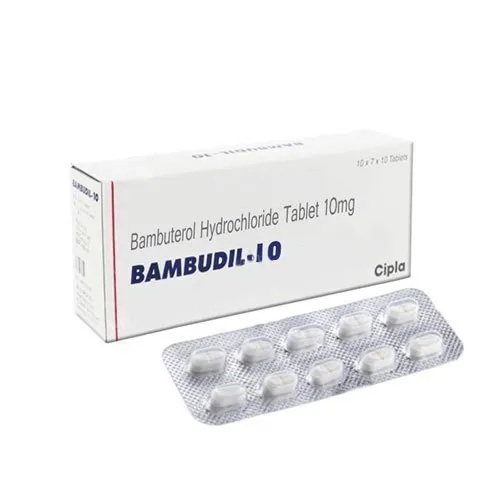
Price range: $28.80 through $66.00
| Active Ingredient | Bambuterol |
|---|---|
| Manufacturer | Cipla Limited |
| Packaging | 10 tablets in 1 strip |
| Strength | 10 Mg |
| Delivery Time | 6 To 15 days |
| SKU: | Bambudil (Bambuterol) |
Ultimate Guide to Bambudil (Bambuterol): Uses, Mechanism, Benefits, Dosage, and Safety
Breathing is something most people take for granted—until it becomes a struggle. For millions of individuals living with chronic respiratory conditions like asthma and chronic obstructive pulmonary disease (COPD), sudden chest tightness, persistent wheezing, and shortness of breath can turn simple daily routines into overwhelming challenges. When airways constrict and become inflamed, getting enough oxygen into the lungs requires immediate, long-lasting therapeutic support.
This is where Bambudil (Bambuterol) plays a critical role in modern respiratory medicine. As an advanced, long-acting oral bronchodilator, this medication is specifically engineered to keep airways open, relaxed, and clear over extended periods.
In this comprehensive guide, we will cover everything you need to know about Bambudil (Bambuterol). From its active pharmacological mechanism and clinical indications to step-by-step administration rules, potential side effects, drug interactions, and lifestyle practices for optimal lung health, this article provides clear, reliable information to help you manage your respiratory well-being.
What is Bambudil (Bambuterol)?
Bambudil (Bambuterol) is a prescription oral bronchodilator belonging to the class of selective beta-2 ($\beta_2$) adrenergic receptor agonists. It is formulated to relieve and prevent bronchospasm—the sudden constriction of the muscle walls surrounding the bronchial tubes in the lungs.
What makes Bambudil (Bambuterol) stand out among bronchodilators is its design as a prodrug of terbutaline. A prodrug is an inactive compound that, once ingested, undergoes enzymatic conversion inside the human body to release its active therapeutic form. In the case of Bambudil (Bambuterol), the drug slowly converts into terbutaline, providing a smooth, sustained release of active medication over a 24-hour period.
Key Product Specifications
| Attribute | Details |
| Active Compound | Bambuterol Hydrochloride |
| Active Metabolite | Terbutaline |
| Therapeutic Class | Selective Beta-2 Adrenergic Agonist / Prodrug |
| Primary Route | Oral (Tablets / Solution) |
| Primary Indications | Bronchial Asthma, Chronic Obstructive Pulmonary Disease (COPD) |
| Onset of Action | Gradual (Reaches peak therapeutic levels over several hours) |
| Duration of Action | Up to 24 Hours (Once-Daily Dosing) |
| Habit-Forming | No |
Unlike short-acting rescue inhalers designed to stop sudden asthma attacks, Bambudil (Bambuterol) is a maintenance medication. It provides continuous, round-the-clock protection against airway constriction, making it particularly effective at preventing overnight breathing difficulties.
How Does Bambudil (Bambuterol) Work?
To understand how Bambudil (Bambuterol) eases breathing, it helps to look at the underlying physiology of bronchial smooth muscles and how the drug metabolizes inside the body.
The Mechanism of Action
-
Slow Enzymatic Hydrolysis: After ingestion, Bambudil (Bambuterol) is absorbed through the gastrointestinal tract into the bloodstream. It undergoes slow, controlled metabolic hydrolysis driven primarily by the enzyme plasma cholinesterase (butyrylcholinesterase) as well as specific tissue esterases.
-
Sustained Release of Terbutaline: This gradual metabolic conversion slowly converts Bambuterol into its active form, terbutaline. Because this process happens over many hours, it maintains stable levels of terbutaline in the blood without causing sharp spikes.
-
Beta-2 Receptor Stimulation: The generated terbutaline selectively binds to beta-2 ($\beta_2$) adrenergic receptors located on the smooth muscle cells lining the bronchial airways.
-
Activation of Adenylyl Cyclase: Binding to these receptors stimulates an intracellular enzyme called adenylyl cyclase, which converts adenosine triphosphate (ATP) into cyclic adenosine monophosphate ($cAMP$).
-
Bronchial Smooth Muscle Relaxation: Elevated levels of $cAMP$ lower intracellular calcium ion concentrations. This causes the tight, constricted smooth muscles around the airways to relax and dilate, widening the bronchial passages.
-
Inhibition of Mediator Release: In addition to relaxing airway muscles, stimulating beta-2 receptors helps inhibit the release of inflammatory mediators (such as histamine and leukotrienes) from pulmonary mast cells, reducing localized swelling and mucus hypersecretion.
+-----------------------------------------------------------------------+
|                 BAMBUDIL (BAMBUTEROL) METABOLIC PATHWAY               |
+-----------------------------------------------------------------------+
|                                                                       |
|   Bambudil (Bambuterol) [Inactive Prodrug]                            |
|       │                                                               |
|       ▼ (Slow enzymatic breakdown via Plasma Cholinesterase)           |
|                                                                       |
|   Terbutaline [Active Form]                                           |
|       │                                                               |
|       ▼ (Selectively binds to Beta-2 Receptors in the Lungs)          |
|                                                                       |
|   Elevated Intracellular cAMP                                         |
|       │                                                               |
|       ▼ (Relaxes Smooth Muscle & Decreases Calcium Ions)              |
|                                                                       |
|   Bronchodilation (Widened Airways & Improved Airflow)                |
|                                                                       |
+-----------------------------------------------------------------------+
Primary Uses and Clinical Indications
Physicians prescribe Bambudil (Bambuterol) to manage several chronic obstructive airway disorders where long-term bronchodilation is needed.
1. Bronchial Asthma Maintenance
Asthma is a chronic inflammatory disorder characterized by hyperreactive airways that spasm, swell, and fill with mucus in response to triggers like cold air, dust, pollen, or stress. Bambudil (Bambuterol) is prescribed as a long-term controller medication to keep airways open, reduce asthma flare-ups, and improve overall daily lung capacity.
2. Chronic Obstructive Pulmonary Disease (COPD)
COPD is a progressive lung condition—encompassing chronic bronchitis and emphysema—that obstructs airflow and makes breathing increasingly difficult. Bambudil (Bambuterol) helps manage persistent breathlessness in COPD patients by relaxing tight bronchial muscles and reducing airflow resistance throughout the day.
3. Prevention of Nocturnal Asthma (Nighttime Breathing Spasms)
Many asthma patients experience a dip in lung function late at night or early in the morning, leading to waking up coughing, wheezing, or gasping for air. Because Bambudil (Bambuterol) provides 24-hour therapeutic coverage, taking a single dose at bedtime offers continuous protection throughout the night, ensuring uninterrupted rest.
4. Chronic Bronchitis with Bronchospasm
In chronic bronchitis, long-term inflammation of the bronchial tubes leads to excessive mucus production and persistent coughing. When accompanied by bronchospasms, Bambudil (Bambuterol) eases muscle tightness, helping clear secretions and making breathing more comfortable.
Distinct Advantages of Bambudil (Bambuterol)
Compared to other oral bronchodilators and short-acting inhalers, Bambudil (Bambuterol) offers several notable clinical benefits:
-
Convenient Once-Daily Dosing: Thanks to its prodrug design, a single daily dose delivers steady 24-hour symptom control, improving treatment adherence compared to medications that require multiple daily doses.
-
Targeted Tissue Affinity: The prodrug formulation exhibits a natural affinity for lung tissue, helping concentrate the active form (terbutaline) where it is needed most while minimizing systemic peaks.
-
Stable Blood Concentration: Slow metabolic conversion prevents rapid spikes in plasma drug levels, reducing cardiovascular side effects like severe tremors and heart palpitations often seen with rapid-acting oral beta-agonists.
-
Excellent Nocturnal Protection: Taking the dose at bedtime prevents early morning asthma dips, ensuring consistent coverage when rescue inhalers are out of reach during sleep.
-
Inhaler-Free Administration: For elderly patients, young children, or individuals with severe arthritis who struggle with inhaler coordination, an oral tablet or liquid offers an accessible alternative for long-term maintenance.
Step-by-Step Guide: How to Take Bambudil (Bambuterol)
To ensure maximum safety and therapeutic benefit, Bambudil (Bambuterol) must be taken exactly as prescribed by a qualified healthcare professional.
Recommended Dosing Guidelines
-
Adults and Adolescents (12 Years and Older): The standard starting dose is 10 mg once daily, taken orally at bedtime. Depending on clinical response and individual tolerance, your doctor may increase the dose to 20 mg once daily after 1 to 2 weeks.
-
Elderly Patients: A starting dose of 10 mg once daily is generally recommended, as age-related changes in organ function can alter drug metabolism.
-
Patients with Renal Impairment: Because active terbutaline is excreted through the kidneys, patients with reduced kidney function (glomerular filtration rate under 50 mL/min) typically begin with a lower dose of 5 mg once daily.
Best Practices for Administration
-
Take at Bedtime: Unless specifically instructed otherwise by your doctor, take your dose in the evening before bed to cover nighttime breathing risks.
-
Swallow Whole: Swallow the tablet whole with a full glass of water. Do not crush, chew, or break the tablet unless advised by your doctor.
-
Food Interactions: You can take Bambudil (Bambuterol) with or without food. Taking it with a light meal or snack can help prevent minor stomach upset.
-
Maintain Consistency: Take your dose at the same time every night to maintain consistent blood levels.
-
Do Not Stop Abruptly: Continue taking your medication even if you feel completely fine. Bambudil (Bambuterol) works as a preventive controller; stopping suddenly can trigger rebound bronchospasms.
Important Safety Precautions & Warnings
While Bambudil (Bambuterol) is safe and effective when used as directed, several important medical precautions must be observed.
1. Not a Rescue Medication for Acute Attacks
Bambudil (Bambuterol) has a gradual onset of action and is designed exclusively for long-term maintenance. It will not relieve sudden, acute asthma attacks or severe bronchospasms. Always keep a short-acting rescue inhaler (such as albuterol/salbutamol) accessible for immediate emergency relief.
2. Cardiovascular Monitoring
Beta-2 adrenergic agonists can stimulate the cardiovascular system. Use Bambudil (Bambuterol) with caution if you have a history of:
-
Ischemic heart disease or prior myocardial infarction
-
Cardiac arrhythmias (irregular heartbeats or tachycardia)
-
Severe hypertension (high blood pressure)
-
Hypertrophic obstructive cardiomyopathy
3. Diabetes Mellitus and Blood Glucose
Beta-2 agonists can stimulate glycogenolysis in the liver, leading to elevated blood glucose levels. Patients with diabetes should monitor their blood sugar levels more closely when starting or adjusting their dose of Bambudil (Bambuterol).
4. Hypokalemia (Low Potassium Levels)
Potentially severe hypokalemia can result from beta-2 agonist therapy, as the medication encourages extracellular potassium to shift into intracellular space. This risk is amplified in severe asthma or when combined with xanthines (like theophylline), corticosteroids, or diuretics. Periodic monitoring of serum potassium levels may be required.
5. Pregnancy and Breastfeeding
-
Pregnancy: Bambudil (Bambuterol) should only be used during pregnancy if the potential benefit outweighs potential risks to the fetus. Beta-2 agonists can also relax uterine smooth muscle, which may interfere with labor contractions late in pregnancy.
-
Breastfeeding: Active terbutaline passes into human breast milk in small amounts. Consult your physician before taking this medication while nursing.
Potential Side Effects of Bambudil (Bambuterol)
Most patients tolerate Bambudil (Bambuterol) well, especially because its slow metabolic conversion avoids sharp drug spikes in the bloodstream. However, side effects can occur in sensitive individuals or at higher doses.
Common and Mild Side Effects
-
Fine Muscle Tremors: Slight trembling or shaking, most noticeable in the hands and fingers.
-
Tachycardia & Palpitations: A feeling of a racing, fluttering, or pounding heart rate.
-
Headaches: Mild to moderate headaches as the vascular system adjusts to beta-agonist activity.
-
Restlessness & Anxiety: Mild central nervous system stimulation, occasionally causing sleep disturbances if taken too close to bedtime without proper adaptation.
-
Gastrointestinal Upset: Nausea, mild stomach discomfort, or loose stools.
Rare and Serious Side Effects
-
Severe Hypokalemia: Marked drop in blood potassium, causing muscle weakness, cramps, or irregular heart rhythms.
-
Paradoxical Bronchospasm: In rare instances, a patient may experience a sudden increase in wheezing or difficulty breathing immediately after taking the medication. If this occurs, stop taking the drug immediately and seek emergency medical care.
-
Allergic Reactions: Skin rash, urticaria (hives), angioedema (swelling of the face, lips, tongue, or throat), and difficulty swallowing.
+-----------------------------------------------------------------------+
|                    BAMBUDIL SIDE EFFECT PROFILE                       |
+------------------------------------+----------------------------------+
|      COMMON / MILD EFFECTS         |     RARE / SERIOUS EFFECTS       |
+------------------------------------+----------------------------------+
| • Fine hand tremors                | • Paradoxical bronchospasm       |
| • Mild heart palpitations          | • Severe hypokalemia             |
| • Mild headache                    | • Cardiac arrhythmias            |
| • Transient restlessness           | • Allergic hypersensitivity      |
| • Minor stomach upset              | • Markedly elevated blood sugar  |
+------------------------------------+----------------------------------+
Drug Interactions to Keep in Mind
To prevent unwanted side effects or reduced drug performance, always inform your doctor about all prescription drugs, over-the-counter medications, vitamins, and herbal supplements you are taking.
| Drug Category | Interacting Agents | Nature of Interaction & Clinical Advice |
| Non-Selective Beta-Blockers | Propranolol, Atenolol, Timolol | Beta-blockers directly block beta-2 receptors, neutralizing the bronchodilating effect of Bambuterol and potentially triggering severe bronchospasms. Avoid simultaneous use. |
| Cholinesterase Inhibitors | Neostigmine, Pyridostigmine, Donepezil | Since Bambuterol is metabolized by plasma cholinesterase, cholinesterase inhibitors delay its breakdown, leading to prolonged or excessive drug levels. |
| Diuretics (Water Pills) | Furosemide, Hydrochlorothiazide | Combining non-potassium-sparing diuretics with beta-2 agonists increases the risk of severe hypokalemia (low potassium). |
| Xanthines & Corticosteroids | Theophylline, Prednisolone, Budesonide | Concurrent use enhances bronchodilation but can worsen hypokalemia. Serum potassium levels should be monitored closely. |
| Halogenated Anesthetics | Halothane, Isoflurane | Increases the risk of cardiac arrhythmias during surgical procedures requiring general anesthesia. |
Complementary Lifestyle Practices for Better Lung Health
While Bambudil (Bambuterol) provides effective pharmaceutical control over bronchial constriction, incorporating healthy lifestyle habits strengthens your respiratory system and reduces exposure to triggers.
1. Identify and Eliminate Environmental Triggers
-
Avoid Tobacco Smoke: Completely avoid smoking and secondhand tobacco smoke, which inflames airway linings and impairs natural lung cilia.
-
Control Indoor Allergens: Use HEPA air purifiers, wash bedding frequently in hot water to eliminate dust mites, and keep indoor humidity levels between 30% and 50% to prevent mold growth.
-
Monitor Air Quality: Check daily pollen and pollution forecasts. Limit outdoor physical exertion on high-smog or high-pollen days.
2. Practice Deep Breathing Exercises
Engage in daily breathing techniques like pursed-lip breathing or diaphragmatic (belly) breathing. These exercises help strengthen the diaphragm, improve oxygen-carbon dioxide exchange, and keep lungs expanded.
3. Maintain Optimal Hydration
Drink plenty of water throughout the day. Staying well-hydrated thins bronchial mucus secretions, making them far easier to clear from your airways through normal coughing.
4. Adopt an Anti-Inflammatory Diet
Eat a balanced diet rich in antioxidant-dense foods—such as fresh berries, leafy greens, nuts, seeds, and fatty fish high in omega-3 fatty acids. Antioxidants help protect lung tissue from oxidative stress and chronic inflammation.
Frequently Asked Questions (FAQs)
1. How fast does Bambudil (Bambuterol) work after taking it?
Bambudil (Bambuterol) is a slow-release prodrug designed for long-term maintenance, not immediate relief. It takes several hours to reach therapeutic levels in the bloodstream. For sudden, acute asthma attacks, always use your fast-acting rescue inhaler.
2. Why is Bambudil (Bambuterol) typically taken at night?
It is usually taken at bedtime because its prodrug breakdown delivers steady therapeutic coverage over 24 hours, specifically protecting against the dip in lung function that many asthma and COPD patients experience during the early morning hours.
3. Can I take Bambudil (Bambuterol) if I have high blood pressure?
If you have high blood pressure (hypertension) or heart disease, discuss it with your physician first. While Bambudil (Bambuterol) is generally better tolerated by the heart than rapid-acting oral bronchodilators, beta-agonists can occasionally increase heart rate and blood pressure, requiring careful monitoring.
4. What should I do if I miss a dose?
If you forget to take your dose, take it as soon as you remember—unless it is almost time for your next scheduled dose. In that case, skip the missed dose and resume your regular schedule. Never take a double dose to compensate for a missed application.
5. Is Bambudil (Bambuterol) safe for long-term use?
Yes, Bambudil (Bambuterol) is formulated for long-term daily management of chronic respiratory conditions under medical supervision. Regular follow-ups with your doctor ensure the medication remains effective and appropriate for your lung health needs.
Disclaimer:-
This content is provided for informational and educational purposes only and should not be considered medical advice, diagnosis, or treatment. Bambudil (Bambuterol) should be used only under the guidance of a qualified healthcare professional. Do not start, stop, or change the dose of any medication without consulting your doctor. Seek medical attention if you experience serious or unusual side effects.
Additional information
| unit | 300 Tablet, 90 Tablet, 120 Tablet, 150 Tablet |
|---|






Reviews
There are no reviews yet.