
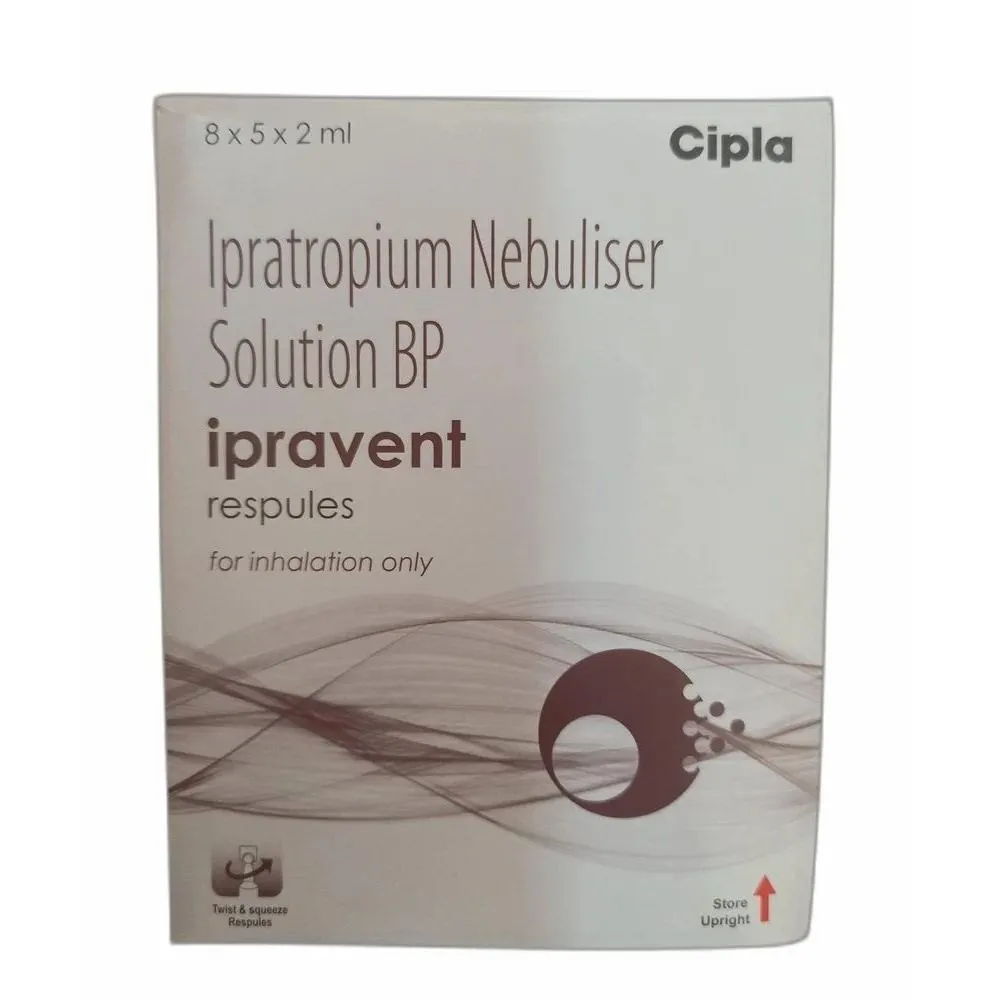
Ipravent Respules (Ipratropium Bromide)
Price range: $12.00 through $30.00
| Active Ingredient | Ipratropium Bromide |
|---|---|
| Manufacturer | Cipla Limited |
| Packaging | 5 Respules in 1 strip |
| Strength | 500 Mcg |
| Delivery Time | 6 To 15 days |
| SKU: | Ipravent Respules (Ipratropium Bromide) |
Ultimate Guide to Ipravent Respules (Ipratropium Bromide): Uses, Dosage, Mechanism, and Safety
Living with a chronic respiratory condition makes every breath a conscious effort. Whether you are managing Chronic Obstructive Pulmonary Disease (COPD), chronic bronchitis, emphysema, or persistent asthma flare-ups, sudden airway constriction can leave you feeling exhausted and anxious. When smooth muscles surrounding your bronchial tubes contract and excessive mucus accumulates, airflow becomes severely restricted, resulting in wheezing, chest tightness, coughing, and shortness of breath.
Fast, reliable, and targeted bronchodilator therapy is essential to open constricted airways and restore smooth breathing. Among the most widely prescribed inhalation treatments is Ipravent Respules (Ipratropium Bromide). Delivered via a nebulizer directly into the lungs, this anticholinergic medication relaxes bronchial smooth muscles rapidly, helping individuals breathe easier during acute respiratory distress and as part of daily maintenance therapy.
In this comprehensive, expert-reviewed guide, we will break down everything you need to know about Ipravent Respules (Ipratropium Bromide). We will explore its active chemical compound, detailed mechanism of action, therapeutic indications, step-by-step nebulization instructions, safety precautions, potential side effects, and practical tips for managing your respiratory health effectively.
What is Ipravent Respules (Ipratropium Bromide)?
Ipravent Respules (Ipratropium Bromide) is a specialized, sterile inhalation solution designed for administration using a jet or ultrasonic nebulizer. Formulated as a single-dose, plastic ampoule (respule), it contains Ipratropium Bromide, a potent anticholinergic (antimuscarinic) bronchodilator.
Unlike oral bronchodilators or systemic steroids that pass through the digestive tract and bloodstream before reaching the lungs, Ipravent Respules (Ipratropium Bromide) converts the liquid solution into a fine aerosol mist. When inhaled, the microscopic droplets travel straight into the tracheobronchial tree, delivering maximum therapeutic concentration directly to constricted airways while minimizing systemic absorption across the rest of the body.
Product Composition and Key Specifications
| Attribute | Specification Details |
| Active Ingredient | Ipratropium Bromide Monohydrate (typically 500 mcg in 2 mL) |
| Therapeutic Class | Anticholinergic / Antimuscarinic Bronchodilator |
| Administration Route | Inhalation via Nebulizer (Do NOT ingest or inject) |
| Primary Indications | COPD, Chronic Bronchitis, Emphysema, Acute Asthma exacerbations |
| Onset of Action | Within 15 to 30 minutes |
| Peak Effect | 1 to 2 hours |
| Duration of Action | 4 to 6 hours |
| Habit-Forming | No |
How Does Ipravent Respules (Ipratropium Bromide) Work?
Understanding how Ipravent Respules (Ipratropium Bromide) functions in the lungs clarifies why it is such a cornerstone treatment for obstructive airway disorders.
The Mechanism of Action: Anticholinergic Blockade
Human bronchial smooth muscle tone and mucus secretion are regulated heavily by the parasympathetic nervous system via the vagus nerve. The parasympathetic system releases a neurotransmitter called acetylcholine.
-
Acetylcholine Binding: During airway irritation, inflammation, or reflex bronchospasm, acetylcholine binds to muscarinic receptors (specifically $M_1$, $M_2$, and $M_3$ receptor subtypes) located on bronchial smooth muscle cells and submucosal glands.
-
Bronchoconstriction Signal: Activation of the $M_3$ receptors triggers intracellular calcium release, causing smooth muscle fibers around the airways to contract tightly (bronchospasm) and stimulating hypersecretion of thick mucus.
-
Competitive Antagonism by Ipratropium: Ipratropium Bromide is a quaternary ammonium derivative structurally similar to atropine. When inhaled, it acts as a competitive antagonist at muscarinic acetylcholine receptors.
-
Airway Relaxation: By blocking acetylcholine from binding to $M_3$ receptors, Ipravent Respules (Ipratropium Bromide) inhibits parasympathetic nerve impulses. This leads to relaxation of the bronchial smooth muscles, dilation of the airways (bronchodilations), and a reduction in watery glandular secretions.
Because Ipratropium is a quaternary amine, it carries a permanent positive charge, making it poorly soluble in lipids. As a result, very little of the inhaled drug crosses mucosal membranes into the bloodstream. This localized action produces powerful bronchodilation in the lungs with minimal anticholinergic side effects in the rest of the body.
Primary Uses and Clinical Indications
Physicians and pulmonologists prescribe Ipravent Respules (Ipratropium Bromide) for several acute and chronic respiratory conditions where airway narrowing impairs ventilation.
1. Chronic Obstructive Pulmonary Disease (COPD)
COPD is a progressive lung condition characterized by restricted airflow and long-term breathing difficulty. Ipravent Respules (Ipratropium Bromide) serves as a primary maintenance treatment for COPD, helping keep airways open continuously, reducing daily breathlessness, and improving exercise tolerance.
2. Chronic Bronchitis
Chronic bronchitis involves long-term inflammation of the bronchial tubes, accompanied by persistent coughing and excessive mucus production. By blocking vagal tone, Ipravent Respules (Ipratropium Bromide) relaxes constricted airways and helps control excessive mucosal secretions, easing the work of breathing.
3. Pulmonary Emphysema
In emphysema, damage to the air sacs (alveoli) leads to hyperinflation and loss of elastic recoil in the lungs, causing small airways to collapse during exhalation. Ipravent Respules (Ipratropium Bromide) helps maintain airway patency, preventing premature airway closure during exhalation and reducing air trapping.
4. Acute Asthma Exacerbations
During acute, severe asthma attacks, beta-agonist inhalers (like salbutamol) may not provide complete relief on their own. Ipravent Respules (Ipratropium Bromide) is frequently co-administered or combined with beta-2 agonists in emergency care settings. This dual mechanism produces additive bronchodilation, opening airways faster and reducing hospitalization rates.
5. Bronchospasm Associated with Respiratory Infections
Viral or bacterial lower respiratory tract infections can trigger severe bronchospasm in susceptible individuals. Ipravent Respules (Ipratropium Bromide) provides temporary symptomatic relief, allowing patients to breathe comfortably while fighting off the underlying infection.
Key Benefits of Ipravent Respules (Ipratropium Bromide)
Inhalation therapy using Ipravent Respules (Ipratropium Bromide) offers distinct clinical advantages for patients with compromised lung function:
-
Direct Pulmonary Delivery: Delivers high medication concentration directly to lung tissue, bypassing gastrointestinal degradation and hepatic first-pass metabolism.
-
Low Systemic Side Effects: Due to poor systemic absorption, it does not cause the widespread systemic anticholinergic side effects often seen with oral antimuscarinic drugs.
-
Synergistic Action: Combines exceptionally well with short-acting and long-acting beta-agonists (SABAs/LABAs) and inhaled corticosteroids for enhanced bronchodilation.
-
Easy Inhalation for Vulnerable Patients: Nebulized respules require no co-ordinated hand-breath timing, making them ideal for elderly patients, children, or individuals in acute respiratory distress who struggle with metered-dose inhalers (MDIs).
-
Mucus Regulation: Helps inhibit excess submucosal gland secretion without drying out the airways to the point of mucus plugging.
Step-by-Step Nebulization Guide: How to Use Ipravent Respules
To ensure you receive the full therapeutic dose of Ipravent Respules (Ipratropium Bromide) safely, proper preparation and nebulizer technique are critical. Follow this step-by-step procedure:
Step 1: Wash Your Hands
Thoroughly clean your hands with soap and warm water before handling the respule or nebulizer equipment to prevent introducing pathogens into your lungs.
Step 2: Inspect the Respule
Take one single-dose plastic respule from its foil pouch. Inspect the liquid to ensure it is clear, colorless, and free of floating particles or discoloration. Do not use the respule if the fluid looks cloudy or damaged.
Step 3: Open the Respule
Hold the respule upright and twist off the top tab smoothly.
Step 4: Fill the Nebulizer Cup
Squeeze the entire contents of the Ipravent Respules (Ipratropium Bromide) into the medication chamber (nebulizer cup). If your physician has prescribed a combined nebulization solution (such as mixing with Salbutamol), add the second medication as directed. Otherwise, do not dilute unless instructed by a healthcare provider.
Step 5: Connect Equipment
Attach the top of the nebulizer cup securely to the mouthpiece or face mask, and connect the air tubing from the cup to your compressor nebulizer machine.
Step 6: Begin Treatment
Turn on the air compressor. You should see a fine, steady mist rising from the mouthpiece or mask. Sit in an upright, comfortable position to allow maximum lung expansion.
Step 7: Inhale the Aerosol Mist
Place the mouthpiece firmly between your teeth and seal your lips around it (or fit the face mask snuggly over your nose and mouth). Breathe deeply, slowly, and evenly through your mouth. Hold your breath for 2 to 3 seconds at the end of each deep breath to allow microscopic droplets to settle deep into peripheral airways.
Step 8: Complete the Session
Continue inhaling until the nebulizer cup begins sputtering and no more mist is produced (typically takes 5 to 15 minutes). Turn off the machine.
Step 9: Clean the Equipment
Disconnect the nebulizer cup, rinse it thoroughly with warm distilled water, and let it air-dry completely on a clean towel. Proper cleaning prevents bacterial contamination.
Crucial Eye Safety Warning: Avoid letting nebulized mist escape into your eyes. Ipratropium Bromide can cause acute pupillary dilation, increased intraocular pressure, blurred vision, and trigger acute narrow-angle glaucoma if sprayed directly into the eyes. Always ensure your face mask fits tightly or use a mouthpiece.
Recommended Dosage and Frequency
Dosage must always be individualized based on severity of disease and clinical response under medical supervision.
| Patient Category | Typical Standard Dosage | Maximum Daily Limit |
| Adults & Elderly (COPD Maintenance) | 250 mcg to 500 mcg (1 respule) 3 to 4 times daily | Up to 2000 mcg (4 respules per day) |
| Adults (Acute Bronchospasm / Asthma) | 500 mcg via nebulizer every 4 to 6 hours as needed | As directed under emergency care |
| Children (Aged 3 to 12 Years) | 250 mcg 3 to 4 times daily | Under strict pediatric supervision |
Note: Always adhere strictly to your doctor’s specific prescription. Never double doses or alter frequencies independently.
Important Safety Precautions & Warnings
While Ipravent Respules (Ipratropium Bromide) is safe and well-tolerated by most patients, important precautions must be followed to avoid complications.
1. Angle-Closure Glaucoma Risk
Anticholinergic agents can cause pupillary dilation (mydriasis). In patients with narrow anterior chamber angles, this can block aqueous humor drainage, leading to a rapid rise in intraocular pressure (acute angle-closure glaucoma). Inform your doctor immediately if you experience eye pain, visual halos, or eye redness during treatment.
2. Prostatic Hyperplasia and Urinary Retention
Systemic anticholinergic activity can relax the bladder detrusor muscle and tighten the urinary sphincter. Use Ipravent Respules (Ipratropium Bromide) with caution if you have benign prostatic hyperplasia (BPH), bladder neck obstruction, or difficulty urinating.
3. Paradoxical Bronchospasm
As with all inhaled medications, Ipravent Respules (Ipratropium Bromide) can occasionally produce sudden, paradoxical bronchospasm immediately after inhalation, causing sudden breathlessness and wheezing. If this occurs, stop using the respule immediately, use a fast-acting rescue inhaler, and seek medical attention.
4. Hypersensitivity Reactions
Immediate allergic reactions can occur, presenting as skin rash, hives (urticaria), angioedema (swelling of tongue, lips, or throat), or anaphylaxis. Discontinue use if allergic signs appear.
5. Pregnancy and Breastfeeding
-
Pregnancy: Categorized as a safe treatment option when clearly needed, but should be used under obstetric guidance.
-
Breastfeeding: It is unknown whether Ipratropium Bromide passes into human breast milk in significant quantities. Because systemic absorption is low, risk to a nursing infant is minimal, but caution is advised.
Potential Side Effects of Ipravent Respules (Ipratropium Bromide)
Most side effects associated with Ipravent Respules (Ipratropium Bromide) are mild, localized, and related to its localized anticholinergic action.
Common Side Effects
-
Dry Mouth and Throat: Reduced salivation is the most frequent complaint. Sipping water or chewing sugar-free gum helps alleviate dryness.
-
Mild Cough and Throat Irritation: The physical mist can occasionally trigger brief coughing fits or scratchiness in the throat.
-
Headache: Temporary, mild headaches can occur shortly after treatment.
-
Dizziness: Rare, transient lightheadedness as airways dilate and oxygen exchange improves.
-
Gastrointestinal Discomfort: Nausea, mild constipation, or indigestion due to localized smoothing of gastrointestinal motility.
Less Common / Serious Side Effects
Seek prompt medical care if you observe:
-
Fast or pounding heart rate (tachycardia) or heart palpitations
-
Difficulty or pain when urinating (urinary retention)
-
Severe eye pain, blurred vision, or seeing colored halos around lights
-
Severe swelling of the face, lips, or tongue
Drug Interactions to Keep in Mind
Co-administering Ipravent Respules (Ipratropium Bromide) with certain medications can alter efficacy or increase side effect risks.
| Drug Class | Examples | Interaction Impact | Clinical Guidance |
| Other Anticholinergics | Tiotropium, Aclidinium, Umeclidinium, Oxybutynin | Additive anticholinergic effects, increasing risks of dry mouth, urinary retention, and constipation. | Avoid combining multiple short-acting anticholinergics simultaneously. |
| Beta-2 Agonists | Salbutamol, Levalbutamol, Formoterol | Synergistic bronchodilation (Beneficial interaction). | Frequently co-prescribed to maximize airway opening in severe COPD/asthma. |
| Xanthines | Theophylline, Aminophylline | Enhanced bronchodilatory response. | Monitor for potential additive cardiac stimulation or tremors. |
Essential Lifestyle Guidelines for Managing COPD and Asthma
While Ipravent Respules (Ipratropium Bromide) provides vital pharmaceutical relief, combining medical treatment with healthy lifestyle habits yields the best long-term respiratory outcomes:
1. Quit Smoking Completely
Cigarette smoke is the primary cause of COPD and a major asthma trigger. Smoking destroys lung cilia, increases inflammation, and accelerates lung function decline. Quitting smoking is the single most effective step you can take to preserve your remaining lung tissue.
2. Avoid Airborne Irritants
Minimize exposure to secondhand smoke, wood smoke, chemical fumes, strong perfumes, aerosol sprays, dust, and high outdoor air pollution. Stay indoors on days with poor air quality index (AQI) levels.
3. Practice Pulmonary Rehabilitation & Deep Breathing
Engage in structured pulmonary rehabilitation programs. Exercises like pursed-lip breathing and diaphragmatic breathing help keep airways open longer during exhalation, reducing air trapping and improving oxygen intake.
4. Stay Hydrated and Eat Well
Drink plenty of fluids throughout the day to keep mucosal secretions thin and easier to clear from your chest. Consume a nutrient-dense diet rich in antioxidants, lean proteins, and healthy fats to support respiratory muscle strength.
5. Get Vaccinated
Respiratory infections like influenza and pneumococcal pneumonia can trigger severe COPD exacerbations. Keep your annual flu shot and pneumococcal vaccines up to date as recommended by your physician.
Frequently Asked Questions (FAQs)
1. Is Ipravent Respules (Ipratropium Bromide) a rescue inhaler?
Ipravent Respules (Ipratropium Bromide) starts working within 15 to 30 minutes, which is slightly slower than short-acting beta-agonists like Salbutamol (which work in 3 to 5 minutes). While it is used in emergency rooms for acute exacerbations, a fast-acting beta-agonist is typically preferred as the primary immediate rescue inhaler for sudden severe bronchospasm.
2. Can I mix Ipravent Respules with Salbutamol in the same nebulizer?
Yes, physicians frequently prescribe Ipravent Respules (Ipratropium Bromide) to be mixed directly with Salbutamol (a beta-2 agonist) in the nebulizer cup for acute flare-ups. Combining these two distinct mechanisms produces greater, longer-lasting bronchodilation than using either drug alone. However, only combine medications if explicitly instructed by your physician.
3. How often can I use Ipravent Respules in a day?
The standard maintenance schedule is 3 to 4 times daily, spaced evenly 6 to 8 hours apart. Do not exceed the maximum daily limit prescribed by your doctor.
4. What should I do if I accidentally get the mist in my eyes?
Immediately flush your eyes with clean, cool water for several minutes. If you experience eye pain, persistent blurred vision, red eyes, or see halos around lights, contact an eye specialist or seek emergency medical care promptly to rule out elevated intraocular pressure.
5. Can I drink water immediately after using Ipravent Respules?
Yes. In fact, rinsing your mouth and drinking a glass of water after your nebulization session helps relieve dry mouth and removes any lingering medication taste from your oral cavity.
6. How should I store Ipravent Respules?
Store Ipravent Respules (Ipratropium Bromide) at room temperature, ideally below 25°C (77°F). Keep the respules in their original foil pouch to protect them from direct light and heat. Do not freeze them, and keep them safely out of reach of children. Once a respule is opened, use it immediately and discard any unused solution.
Disclaimer:-
This information is provided for educational purposes only and should not replace professional medical advice. Ipravent Respules (Ipratropium Bromide) should be used only under the guidance of a qualified healthcare professional. Always follow the prescribed dosage and instructions. Do not self-medicate, and consult your doctor or pharmacist regarding possible side effects, precautions, drug interactions, or whether this medicine is suitable for your condition.
Additional information
| unit | 20 Respules, 40 Respules, 60 Respules |
|---|


Reviews
There are no reviews yet.