
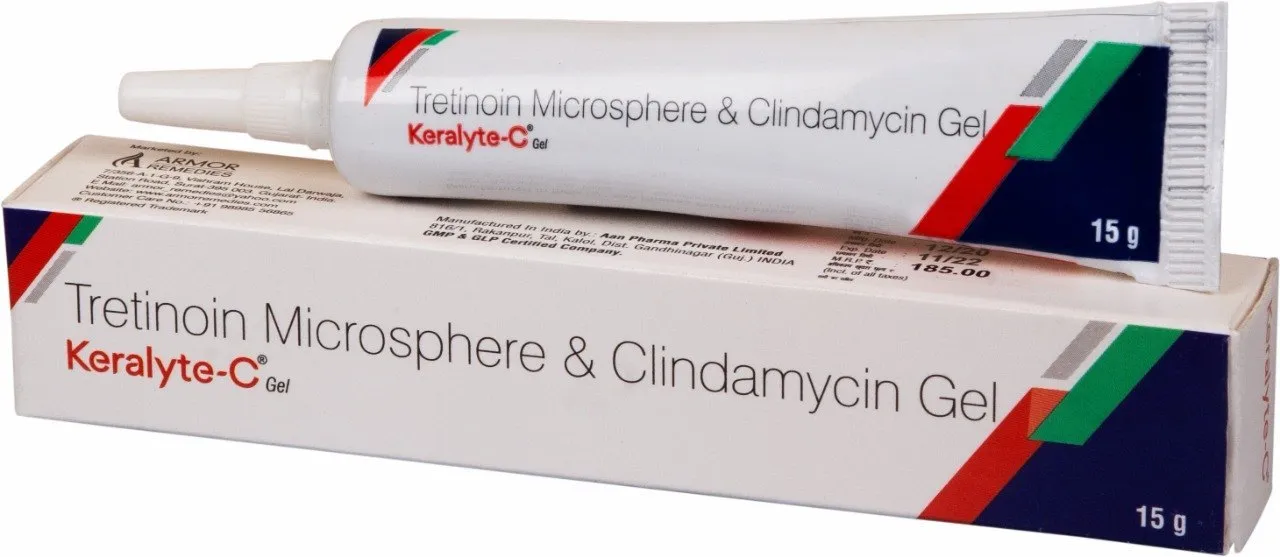
Keralyte C Gel
Price range: $12.00 through $55.00
| Active Ingredient | Clindamycin/Tretinoin |
|---|---|
| Manufacturer | Armour Remedies |
| Packaging | 15 gm in 1 tube |
| Strength | 15 gm |
| Delivery Time | 6 to 15 days |
| SKU: | Keralyte C Gel |
Keralyte C Gel: The Comprehensive Dermatological Guide to Clear, Acne-Free Skin
Struggling with persistent acne, stubborn blackheads, and inflamed breakouts can feel like an uphill battle. When standard over-the-counter cleansers and spot treatments fall short, turning to a targeted dermatological solution becomes essential. Keralyte C Gel is a powerful combination topical treatment prescribed by dermatologists to treat mild-to-severe acne vulgaris, clear clogged pores, and accelerate skin healing.
Whether you are dealing with painful cystic pimples, post-acne texture, or persistent whiteheads, understanding how Keralyte C Gel works on a cellular level can help you achieve maximum results while protecting your skin barrier. In this comprehensive guide, we examine the composition, mechanism of action, proper application techniques, potential side effects, and essential precautions associated with using Keralyte C Gel.
What is Keralyte C Gel?
Keralyte C Gel is a prescription-strength, dual-action topical gel formulated to combat active acne lesions and prevent future breakouts simultaneously. Unlike single-ingredient spot treatments, this gel targets acne through two distinct therapeutic pathways: eliminating acne-causing bacteria and unclogging hair follicles.
The formulation blends a topical lincosamide antibiotic with a potent Vitamin A derivative (retinoid) to clear active lesions while refining overall skin texture.
Active Ingredient Profile
| Active Ingredient | Concentration | Pharmacological Class | Primary Target Function |
| Clindamycin Phosphate | 1.0% w/w | Topical Lincosamide Antibiotic | Kills Cutibacterium acnes bacteria and reduces severe skin inflammation. |
| Tretinoin | 0.025% w/w | First-Generation Topical Retinoid | Normalizes skin cell turnover, unplugs pores, and prevents microcomedones. |
How Keralyte C Gel Works: The Synergy of Dual-Action Therapy
Acne vulgaris develops when four major biological factors converge: excess sebum (oil) production, abnormal follicular keratinization (dead cell buildup), bacterial colonization, and local skin inflammation. Keralyte C Gel directly addresses every step in this chain.
[Dead Skin & Sebum Buildup] + [C. acnes Bacteria]
                       │
                       ▼
            [Blocked Pores & Inflammation]
                       │
          ┌────────────┴────────────┐
          ▼                         ▼
   Tretinoin (0.025%)     Clindamycin (1.0%)
   Increases turnover      Kills acne bacteria
   Unclogs pores           Reduces redness & swelling
          │                         │
          └────────────┬────────────┘
                       ▼
        [Clear, Smoother, Restored Skin]
1. The Role of Clindamycin (1.0%)
Clindamycin works by binding to the 50S ribosomal subunit of susceptible bacteria, inhibiting bacterial protein synthesis. In the skin, it selectively targets Cutibacterium acnes (formerly known as Propionibacterium acnes), the primary organism responsible for turning clogged pores into red, swollen, pus-filled lesions. By suppressing bacterial growth, Clindamycin rapidly diminishes swelling, redness, and localized skin pain.
2. The Role of Tretinoin (0.025%)
Tretinoin is one of the most thoroughly researched ingredients in clinical dermatology. It works by binding to retinoic acid receptors (RARs) inside skin cells, signaling them to shed more rapidly and evenly. This accelerated turnover process prevents dead skin cells from clumping together with sebum inside pores. Additionally, Tretinoin helps loosen existing blackheads and whiteheads (comedolysis) and boosts collagen synthesis to smooth out uneven skin texture left behind by past breakouts.
3. Why the Combination Beats Monotherapy
Using Clindamycin or Tretinoin alone can produce results, but combining them inside Keralyte C Gel creates a powerful synergistic effect:
-
Enhanced Penetration: Tretinoin thins the outermost layer of dead skin (stratum corneum), allowing Clindamycin to penetrate deeper into infected pores.
-
Reduced Antibiotic Resistance: Using topical antibiotics alone over extended periods can lead to bacterial resistance. Tretinoin alters the follicular microenvironment, keeping pores clear and minimizing the risk of bacterial adaptation.
Key Clinical Benefits of Keralyte C Gel
Incorporating Keralyte C Gel into a structured dermatological routine delivers several clear, measurable skin benefits:
-
Clears Active Inflammatory Breakouts: Swiftly flattens painful papules, pustules, and deep-seated acne bumps on the face, chest, and back.
-
Prevents New Microcomedones: Keeps hair follicles clear of dead skin and sebum, effectively stopping blackheads and whiteheads before they form.
-
Smoothes Uneven Skin Texture: Tretinoin’s exfoliation mechanism encourages healthy cellular renewal, softening rough patches and improving overall skin clarity.
-
Fades Post-Acne Hyperpigmentation: By accelerating skin cell shedding, the gel aids in fading dark spots and post-inflammatory marks left behind after acne heals.
-
Lightweight, Fast-Absorbing Gel Formula: The gel vehicle is specifically formulated for oily and acne-prone skin, absorbing rapidly without leaving a greasy residue or clogging pores.
Skin Conditions Treated by Keralyte C Gel
Dermatologists prescribe Keralyte C Gel for a broad range of acne-related concerns:
-
Acne Vulgaris (Moderate to Severe): Effective for managing widespread facial pimples and inflammatory papules.
-
Comedonal Acne: Helps dissolve stubborn whiteheads (closed comedones) and blackheads (open comedones).
-
Truncal Acne: Suitable for treating breakouts on the back, shoulders, and chest (“backne”).
-
Post-Inflammatory Erythema and Pigmentation: Accelerates skin turnover to help fade lingering red or dark post-acne spots.
Step-by-Step Guide: How to Apply Keralyte C Gel Correctly
Because Keralyte C Gel contains potent active ingredients, correct application is critical to maximizing efficacy while preventing irritation, peeling, and redness.
Step 1: Cleanse Gently
Wash your face using a mild, non-comedogenic, sulfate-free cleanser and lukewarm water. Avoid harsh physical scrubs, abrasive pads, or exfoliating acids (like Salicylic or Glycolic acid) right before applying the gel.
Step 2: Dry Thoroughly (The 15-Minute Rule)
Pat your skin completely dry with a soft, clean towel. Wait 10 to 15 minutes before application. Applying Tretinoin to damp skin speeds up its absorption rate dramatically, which can cause intense stinging, redness, and irritation.
Step 3: Apply a Pea-Sized Amount
Dispense a small, pea-sized amount of Keralyte C Gel onto your fingertip. Dab this small quantity onto your forehead, chin, nose, and cheeks. Gently smooth a paper-thin layer over the entire affected area.
Important: Do not treat Keralyte C Gel as a simple spot treatment. Applying it across the entire affected area allows it to clear current breakouts while actively preventing new pores from clogging in surrounding skin.
Step 4: Avoid Sensitive Areas
Keep the gel away from sensitive mucous membranes, including:
-
The delicate skin around your eyes and eyelids.
-
The corners of your nose (nasolabial folds).
-
Directly on the lips or open wounds.
Step 5: Follow with a Barrier-Repairing Moisturizer
Allow the gel to absorb into your skin for 5 to 10 minutes. Follow up with a simple, fragrance-free, ceramide-rich moisturizer to support your moisture barrier and lock in hydration.
Sample Application Schedules: Morning vs. Night
Because Tretinoin breaks down in direct sunlight and causes photosensitivity, Keralyte C Gel should ideally be applied as part of your nighttime skincare routine.
Recommended Nighttime Routine (PM)
-
Cleanse: Gentle Hydrating Cleanser
-
Dry: Wait 10–15 minutes until skin is bone-dry
-
Treat: Apply a thin, pea-sized layer of Keralyte C Gel
-
Hydrate: Apply a non-comedogenic barrier moisturizer
Recommended Daytime Routine (AM)
-
Cleanse: Gentle Cleanser or plain water rinse
-
Hydrate: Lightweight Hydrating Serum or Gel Moisturizer
-
Protect: Apply a Broad-Spectrum Sunscreen (SPF 30 or higher) generously
Combining Keralyte C Gel with Other Skincare Actives
To protect your skin barrier, avoid mixing aggressive active ingredients simultaneously. Here is a guide on how Keralyte C Gel interacts with common skincare components:
                  ┌──────────────────────────────────────────────┐
                  │          KERALYTE C GEL COMPATIBILITY         │
                  └──────────────────────┬───────────────────────┘
                                         │
          ┌──────────────────────────────┼──────────────────────────────┐
          ▼                              ▼                              ▼
  [SAFE TO PAIR]                 [USE WITH CAUTION]                 [AVOID MIXING]
  • Niacinamide                  • Alpha Hydroxy Acids (AHA)       • Benzoyl Peroxide
  • Hyaluronic Acid              • Salicylic Acid (BHA)            • High-Dose Vitamin C
  • Ceramides & Glycerin         • Azelaic Acid                    • Physical Scrubs
Safe Ingredients to Pair
-
Niacinamide (Vitamin B3): Calms inflammation, strengthens the lipid barrier, and minimizes irritation caused by retinoids.
-
Hyaluronic Acid & Glycerin: Draws moisture into the skin, combating the drying effects of Tretinoin.
-
Ceramides: Rebuilds damaged intercellular lipids, ensuring the skin barrier remains healthy during treatment.
Ingredients to Avoid or Separate
-
Benzoyl Peroxide: Applying Benzoyl Peroxide at the same time as Keralyte C Gel can oxidize and degrade Tretinoin, reducing its effectiveness. It can also cause severe dryness and peeling.
-
Alpha & Beta Hydroxy Acids (AHAs/BHAs): Glycolic, Lactic, and Salicylic acids perform deep chemical exfoliation. Combining them with Tretinoin in the same session can easily over-exfoliate your skin.
-
L-Ascorbic Acid (Vitamin C): High concentrations of pure Vitamin C can cause irritation when layered with retinoids. Use Vitamin C in the morning and Keralyte C Gel at night.
Realistic Timeline: What to Expect During Treatment
Achieving clear skin with prescription retinoids requires patience and consistency. Results build gradually over several weeks.
Weeks 1 to 2: The Retinization & Adjustment Phase
During the first fortnight, your skin undergoes “retinization” as it adapts to Tretinoin. You may experience mild redness, tightness, light flaking around the mouth and nose, and a mild tingling sensation upon application.
Weeks 3 to 4: The Retinoid Purging Phase
As skin cell turnover speeds up, microcomedones trapped deep beneath the skin are pushed to the surface faster. You may notice temporary flare-ups or small pimples emerging. This is a normal process known as “purging.” Do not stop treatment during this phase unless you experience severe allergic reactions or unbearable irritation.
Weeks 6 to 8: Visible Clearance
Active inflammatory breakouts begin to decrease noticeably in both frequency and severity. Pimple redness flattens faster, and skin texture starts feeling noticeably smoother.
Weeks 12 and Beyond: Long-Term Transformation
Maximum clinical therapeutic results are typically seen around week 12. Active acne is significantly controlled, post-acne dark marks fade, and overall skin texture appears refined, clear, and radiant.
Potential Side Effects and How to Manage Them
While Keralyte C Gel is well-tolerated by most skin types when used correctly, side effects can occur—especially during the first few weeks of treatment.
| Side Effect | Frequency | Common Symptoms | Management Strategy |
| Dryness & Flaking | Very Common | Light skin peeling, tightness, scaling. | Apply moisturizer before and after gel (the “Sandwich Technique”). |
| Erythema (Redness) | Common | Mild facial flushing or localized redness. | Reduce application frequency to every 2–3 nights until skin adapts. |
| Burning / Stinging | Common | Temporary smarting sensation after application. | Ensure skin is 100% dry before applying gel. Do not apply to damp skin. |
| Photosensitivity | Common | Sunburn-like reaction under mild sun exposure. | Apply broad-spectrum sunscreen (SPF 30+) daily and avoid direct sun. |
| Gastrointestinal Effects | Very Rare | Watery or bloody diarrhea due to systemic absorption of Clindamycin. | Discontinue product immediately and contact a healthcare professional. |
Safety Precautions and Warnings
Because Keralyte C Gel contains active medical-grade ingredients, strict adherence to safety guidelines is required:
1. Pregnancy and Breastfeeding (Absolute Contraindication)
Keralyte C Gel is strictly contraindicated during pregnancy or if you are actively planning to become pregnant. Tretinoin is a Vitamin A derivative linked to potential fetal harm and congenital birth defects. Nursing mothers should also avoid this gel or consult their doctor, as Clindamycin can pass into breast milk.
2. Sun Protection is Mandatory
Tretinoin thins the outer stratum corneum, making your skin significantly more susceptible to UV rays, sunburns, and photosensitivity. Daily application of broad-spectrum SPF 30+ sunscreen is essential throughout your treatment. Avoid tanning beds, sunlamps, and direct sunlight whenever possible.
3. Gastrointestinal & Colitis Warnings
Although Keralyte C Gel is applied topically, small amounts of Clindamycin can be absorbed systemically through the skin. Patients with a history of regional enteritis, ulcerative colitis, or antibiotic-associated colitis should exercise extreme caution or avoid topical lincosamides, as they can trigger severe intestinal inflammation or pseudomembranous colitis.
4. Age Restrictions
Keralyte C Gel is generally not recommended for pediatric patients under 12 years of age, as safety and efficacy profiles have not been established for this age group.
Keralyte C Gel vs. Alternative Topical Acne Treatments
To understand why your dermatologist prescribed Keralyte C Gel, it helps to see how it compares to other common prescription treatments:
| Criteria | Keralyte C Gel | Plain Tretinoin (0.025%) | Benzoyl Peroxide + Clindamycin |
| Active Ingredients | Clindamycin (1%) + Tretinoin (0.025%) | Tretinoin (0.025%) | Benzoyl Peroxide (5%) + Clindamycin (1%) |
| Primary Target | Inflammatory & Comedonal Acne | Blackheads, Texture & Fine Lines | Inflammatory & Bacterial Acne |
| Bacterial Control | High (Targeted Antibiotic) | None | High (Non-antibiotic antibacterial) |
| Cellular Turnover Rate | High (Rapid skin shedding) | High | Low to Moderate |
| Irritation Risk | Moderate (Adjustment period) | Moderate to High | Moderate (Can bleach fabrics) |
Frequently Asked Questions (FAQs)
1. Can I purchase Keralyte C Gel over the counter?
No. Keralyte C Gel contains prescription-strength Tretinoin and Clindamycin. It must be prescribed by a licensed physician or dermatologist after evaluating your skin condition.
2. What should I do if my skin starts peeling heavily?
Peeling is a common response to Tretinoin during the first few weeks. To manage flaking, reduce application to once every two or three nights, adopt the “Sandwich Technique” (applying moisturizer before and after the gel), and ensure you are using a rich, ceramide-based moisturizer.
3. How long should I continue using Keralyte C Gel?
Use the gel for the full length of time prescribed by your dermatologist. Because it contains a topical antibiotic (Clindamycin), long-term continuous use beyond the recommended timeframe should be monitored by your physician to prevent bacterial resistance.
4. Can I use makeup while treating my skin with Keralyte C Gel?
Yes. You can apply makeup during the daytime. Ensure all cosmetics, primers, and foundations are labeled non-comedogenic (won’t clog pores). Always remove makeup thoroughly at night with a gentle cleanser before applying the gel.
5. Will Keralyte C Gel bleach my clothing or pillowcases?
No. Unlike Benzoyl Peroxide products, Keralyte C Gel does not contain bleaching agents and will not discolor fabrics, towels, or bed linens.
6. What should I do if I miss an application?
If you forget to apply your gel at night, skip the missed dose and resume your regular application schedule the following evening. Do not double apply or use extra gel to make up for missed doses.
Final Takeaway: Path to Clearer Skin
Keralyte C Gel is a highly effective, dermatologist-backed topical treatment for clearing inflammatory acne, refining rough skin texture, and preventing future breakouts. Combining Clindamycin and Tretinoin allows it to address the core biological causes of acne simultaneously.
While the initial adjustment period requires patience—along with careful sun protection, proper moisturizing, and consistent nightly application—sticking to your routine can help you achieve a smooth, healthy, and confident complexion.
Additional information
| unit | 1 Gel, 3 Gel, 6 Gel |
|---|


Reviews
There are no reviews yet.