
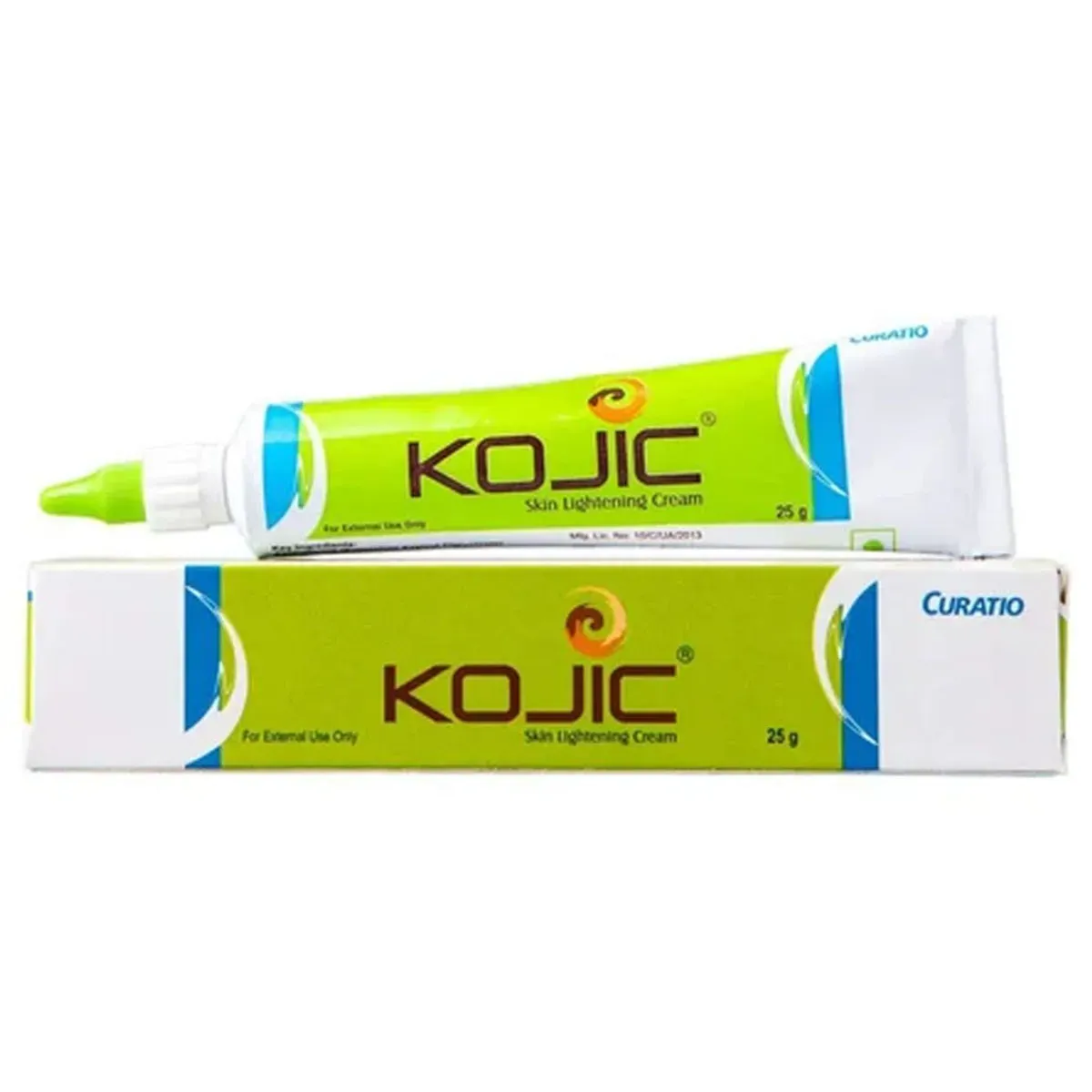
Kojic Cream (Kojic & Ascorbic Acid)
Price range: $9.00 through $50.00
| Active Ingredient | Kojic/Ascorbic Acid |
|---|---|
| Manufacturer | Curatio Healthcare India Pvt Ltd |
| Packaging | 25g in Tube |
| Strength | 25gm |
| Delivery Time | 6 To 15 days |
| SKU: | Kojic Cream (Kojic/Ascorbic Acid) |
Kojic Cream (Kojic & Ascorbic Acid): The Complete Guide to Radiant, Even-Toned Skin
Hyperpigmentation, stubborn sun spots, melasma, and post-acne dark marks can make achieving a clear, even complexion feel like an ongoing struggle. While hundreds of brightening serums and creams promise fast results, very few formulations combine clinically proven active ingredients that work in harmony to address discoloration at its root cause. That is precisely why Kojic Cream (Kojic & Ascorbic Acid) has earned its reputation as a gold-standard topical solution in modern dermatological skincare.
By pairing two of the most potent skin-brightening agents available—Kojic Acid and Ascorbic Acid (pure Vitamin C)—this dual-action cream targets dark spots through multiple biological pathways. It doesn’t merely cover up discoloration; it actively works to inhibit pigment production, defend against environmental damage, and restore a luminous, smooth skin texture.
In this comprehensive guide, we will explore everything you need to know about Kojic Cream (Kojic & Ascorbic Acid)—including its science-backed formulation, biological mechanism of action, key clinical benefits, step-by-step application guidelines, ingredient pairings, expected timelines, and practical tips for managing sensitive skin.
What is Kojic Cream (Kojic & Ascorbic Acid)?
Kojic Cream (Kojic & Ascorbic Acid) is a specialized dermatological formulation engineered to diminish hyperpigmentation and enhance skin radiance. It combines two powerhouses of modern skin science into a single, cohesive emollient base.
-
Kojic Acid: A naturally derived chelation agent produced by several species of fungi (principally Aspergillus oryzae) during the fermentation of rice used in making sake. It is world-renowned for its ability to penetrate skin layers and suppress the enzymatic activity that leads to dark spot formation.
-
Ascorbic Acid (Vitamin C): The most biologically active and thoroughly researched form of Vitamin C. It is a powerful antioxidant that neutralizes free radicals, brightens dull skin tone, stimulates collagen synthesis, and suppresses excess melanin production.
When these two ingredients are formulated together in Kojic Cream (Kojic & Ascorbic Acid), they provide a synergistic effect. Kojic Acid blocks pigment synthesis at the enzymatic level, while Ascorbic Acid neutralizes oxidative stress and fades existing discoloration.
Comprehensive Product Overview
| Feature | Detailed Description |
| Primary Active Ingredients | Kojic Acid & Ascorbic Acid (Vitamin C) |
| Pharmacological Category | Topical Pigment Corrector & Antioxidant |
| Primary Indications | Melasma, Post-Inflammatory Hyperpigmentation (PIH), Sun Spots, Age Spots |
| Texture & Vehicle | Lightweight, fast-absorbing emollient cream |
| Key Biological Mechanisms | Tyrosinase Inhibition, Antioxidant Protection, Collagen Support |
| Recommended Frequency | Once to twice daily (depending on skin tolerance) |
The Science: How Kojic Cream (Kojic & Ascorbic Acid) Works
Melanin is the natural pigment responsible for skin color. It is produced by specialized cells called melanocytes located in the basal layer of the epidermis. When your skin is exposed to ultraviolet (UV) radiation, hormonal shifts, or physical inflammation (such as an acne breakout), an enzyme called tyrosinase is activated. Tyrosinase converts the amino acid tyrosine into melanin, resulting in dark patches or localized spots.
Kojic Cream (Kojic & Ascorbic Acid) interrupts this process at multiple critical stages:
[UV Light / Hormones / Inflammation]
                  │
                  ▼
       [Tyrosinase Activation]
                  │
     ┌────────────┴────────────┐
     ▼                         ▼
Kojic Acid              Ascorbic Acid
Chelates copper ions    Reduces dopaquinone
Blocks enzyme action    Neutralizes free radicals
     │                         │
     └────────────┬────────────┘
                  ▼
    [Suppression of Melanin Synthesis]
                  │
                  ▼
     [Clear, Luminous, Even Skin]
1. Direct Tyrosinase Inhibition via Copper Chelation
Tyrosinase requires copper ions to function. Kojic Acid acts as a powerful chelating agent—it physically binds to the copper ions present inside the tyrosinase enzyme. Without available copper, tyrosinase cannot become active, effectively turning off the “switch” for excess melanin production before it even starts.
2. Reduction of Dopaquinone & Free Radical Scavenging
Ascorbic Acid works alongside Kojic Acid by acting as a strong reducing agent. It interacts with dopaquinone (an intermediate compound in melanin formation) to prevent it from converting into dark pigment. Furthermore, as an antioxidant, Ascorbic Acid quenches reactive oxygen species (ROS) triggered by UV rays and pollution. By eliminating free radicals, it removes the primary environmental trigger that signals melanocytes to overproduce pigment.
3. Exfoliation and Cellular Renewal
In addition to stopping new pigment formation, the combination of Kojic Acid and Ascorbic Acid mildy accelerates natural epidermal turnover. This allows hyperpigmented dead skin cells on the surface to shed more efficiently, revealing fresher, lighter skin cells underneath.
Key Clinical Benefits of Kojic Cream (Kojic & Ascorbic Acid)
Incorporating Kojic Cream (Kojic & Ascorbic Acid) into a structured skincare routine offers wide-ranging, visible benefits for your skin’s health and appearance:
-
Fades Persistent Hyperpigmentation: Effectively lightens dark spots, age spots, freckles, and stubborn dark patches caused by sun damage.
-
Manages Hormonal Melasma: Helps control and reduce the blotchy, symmetrical facial discoloration associated with pregnancy, birth control, or hormonal fluctuations.
-
Erases Post-Acne Dark Marks (PIH): Accelerates the disappearance of brown or dark spots left behind after acne pimples heal.
-
Restores Overall Radiance: Transforms dull, tired, and sallow skin into a brighter, more vibrant complexion.
-
Provides Advanced Environmental Defense: The potent antioxidant activity of Ascorbic Acid shields skin cells from oxidative stress and premature aging caused by environmental toxins.
-
Improves Skin Texture & Smoothness: Mildly exfoliates surface buildup, smoothing out rough patches and refining overall surface clarity.
-
Hydroquinone-Free Safety: Offers a powerful brightening alternative for individuals who cannot tolerate hydroquinone or prefer to avoid long-term steroid-based fading creams.
Skin Concerns Addressed by Kojic Cream (Kojic & Ascorbic Acid)
Kojic Cream (Kojic & Ascorbic Acid) is versatile enough to target a broad spectrum of pigmentary disorders across various skin types:
1. Melasma
Melasma is a deep-seated hyperpigmentation condition that appears as brown or gray-brown patches, most commonly on the forehead, cheeks, nose, and upper lip. Because it is triggered by hormonal changes and heat, melasma is notoriously difficult to treat. Kojic Cream (Kojic & Ascorbic Acid) targets the hyperactive melanocytes responsible for these patches without bleaching the surrounding healthy skin.
2. Post-Inflammatory Hyperpigmentation (PIH)
Whenever the skin experiences inflammation—due to acne, eczema, insect bites, or cosmetic procedures—it often responds by overproducing melanin. This results in flat dark marks where the injury occurred. Using Kojic Cream (Kojic & Ascorbic Acid) speeds up the clearance of these marks significantly faster than leaving them to fade on their own.
3. Solar Lentigines (Sun Spots & Age Spots)
Years of cumulative exposure to UV rays cause melanocytes to become permanently hyperactive in localized areas, leading to sun spots or “liver spots.” The direct tyrosinase-inhibiting action of this cream helps fade these spots and restores uniform color.
4. Uneven Skin Tone and Dullness
Even if you do not have distinct dark spots, factors like pollution, stress, and aging can cause your skin to lose its natural luster. Kojic Cream (Kojic & Ascorbic Acid) revitalizes the skin matrix, leaving it visibly brighter, more even, and youthful.
Step-by-Step Guide: How to Apply Kojic Cream (Kojic & Ascorbic Acid)
To achieve optimal results from Kojic Cream (Kojic & Ascorbic Acid) while keeping your skin barrier strong and healthy, follow this dermatologist-aligned daily application protocol:
Step 1: Perform a Patch Test (Day 1)
Before applying the cream to your face, test a tiny amount on your inner arm or behind your ear. Wait 24 hours to ensure you do not experience severe redness, burning, or allergic reactions.
Step 2: Cleanse Thoroughly
Wash your face with a mild, gentle, non-stripping cleanser and lukewarm water. Avoid using harsh mechanical scrubs or cleansing brushes immediately before applying active brightening creams.
Step 3: Dry Skin Completely
Gently pat your face dry with a clean towel. Ensure your skin is completely dry before applying Kojic Cream (Kojic & Ascorbic Acid). Applying active formulas to damp skin can increase absorption speed too quickly, leading to mild stinging or irritation.
Step 4: Apply a Thin Layer
Dispense a pea-sized amount of Kojic Cream (Kojic & Ascorbic Acid) onto your fingertips. Dab the cream onto hyperpigmented areas or smooth a thin layer across your entire face, avoiding the immediate eye area, nostrils, and lips.
Pro Tip: Applying the cream across your whole face ensures an even overall brightening effect while actively preventing new dark spots from emerging in adjacent areas.
Step 5: Seal with Moisturizer
Wait 3 to 5 minutes for the cream to absorb completely. Follow up with a hydrating, fragrance-free moisturizer containing ceramides, hyaluronic acid, or fatty acids to nourish the skin barrier.
Step 6: Apply Broad-Spectrum Sunscreen (Daytime Mandatory)
In the morning, always finish your routine with a broad-spectrum SPF 30+ sunscreen. Sunscreen is completely non-negotiable when treating hyperpigmentation. UV exposure can reactivate tyrosinase within minutes, reversing weeks of progress made by Kojic Cream (Kojic & Ascorbic Acid).
Application Routines: Morning vs. Evening
Depending on your skin’s sensitivity level, you can incorporate Kojic Cream (Kojic & Ascorbic Acid) into your daily routine once or twice a day:
Recommended Morning Routine (AM)
-
Cleanse: Gentle Hydrating Cleanser
-
Brighten: Thin layer of Kojic Cream (Kojic & Ascorbic Acid)
-
Moisturize: Lightweight Hydrating Lotion
-
Protect: Broad-Spectrum Sunscreen (SPF 30 or higher)
Recommended Evening Routine (PM)
-
Cleanse: Gentle Cleanser (or double cleanse if wearing makeup)
-
Treat: Thin layer of Kojic Cream (Kojic & Ascorbic Acid)
-
Nourish: Rich Barrier Repair Cream
If you have sensitive or easily reactive skin, begin by applying the cream every second or third evening. Once your skin adjusts over 2 to 3 weeks, slowly increase frequency to daily nighttime use, and eventually to twice-daily application if recommended.
Combining Kojic Cream (Kojic & Ascorbic Acid) with Other Actives
Strategic ingredient pairing can amplify your results, while incorrect combinations can lead to barrier damage and rebound hyperpigmentation. Here is how Kojic Cream (Kojic & Ascorbic Acid) interacts with other popular ingredients:
Excellent Compatibility
-
Niacinamide (Vitamin B3): Niacinamide prevents the transfer of melanin from melanocytes into surrounding skin cells. When combined with Kojic Cream (Kojic & Ascorbic Acid), you target dark spots from two completely different angles—inhibiting pigment production AND blocking pigment transfer.
-
Hyaluronic Acid: Provides immediate surface and deep-layer hydration, offsetting any potential tightness or mild dryness caused by active brightening ingredients.
-
Ceramides & Centella Asiatica: Helps reinforce the intercellular lipid matrix and calm irritation, keeping skin comfortable during active treatment.
Use with Caution or Alternate
-
Retinoids (Retinol, Tretinoin, Adapalene): Both retinoids and Kojic Cream (Kojic & Ascorbic Acid) encourage cellular turnover. Using them at the exact same moment can cause redness and peeling. To avoid irritation, use Kojic Cream (Kojic & Ascorbic Acid) in the morning and your retinoid at night.
-
Alpha Hydroxy Acids (AHAs) & Beta Hydroxy Acids (BHAs): Chemical exfoliants like Glycolic Acid, Lactic Acid, or Salicylic Acid lower skin pH and exfoliate dead cells. Layering them directly under or over Kojic Acid can irritate the skin. Alternate usage on separate days or times.
Avoid Simultaneous Layering
-
Benzoyl Peroxide: Benzoyl Peroxide is a strong oxidizing agent. Applying it at the same time as Ascorbic Acid will oxidize the Vitamin C, rendering it ineffective and potentially irritating to the skin.
Realistic Timeline: What to Expect During Treatment
Fading hyperpigmentation requires patience. Melanin deposits sit at varying depths within the skin layers, meaning visible clearance happens progressively over time.
Weeks 1 to 2: The Adaptation Phase
Your skin begins building tolerance to the active ingredients. You may notice an immediate improvement in skin hydration and a subtle increase in overall skin softness. A mild, temporary tingling sensation upon application is completely normal during this phase.
Weeks 3 to 4: Initial Brightening
The overall skin tone starts to look more refreshed and less dull. Minor surface post-acne marks begin to lighten around the edges. Skin texture feels smoother.
Weeks 6 to 8: Visible Pigment Reduction
Noticeable lightening of darker spots, sun spots, and melasma patches becomes visible. Discoloration looks less concentrated, and the skin tone takes on a far more uniform appearance.
Weeks 12 and Beyond: Optimal Clearance & Maintenance
Maximum brightening results are generally achieved around 12 weeks of continuous, consistent use. Deep pigment deposits are significantly faded. Continuing with a maintenance routine and strict daily sun protection keeps new discoloration from forming.
Potential Side Effects & Barrier Care Management
Kojic Cream (Kojic & Ascorbic Acid) is well-tolerated by most skin types, but mild side effects can occur—particularly during the initial weeks of introduction.
| Potential Side Effect | Primary Cause | Recommended Management Strategy |
| Mild Tingling or Prickling | Low pH of Ascorbic Acid | Normal response; usually resolves within 5 to 10 minutes after application. |
| Surface Dryness or Flaking | Accelerated cell turnover | Apply a rich ceramide moisturizer over the cream (or use the sandwich technique). |
| Mild Redness or Flushing | Transient vascular response | Reduce application frequency to 2-3 times per week until tolerance develops. |
| Contact Dermatitis | Sensitivity to active concentrations | Discontinue use, apply a plain soothing balm, and consult a dermatologist. |
How to Practice the “Sandwich Technique” for Sensitive Skin
If you experience flaking or sensitivity when starting Kojic Cream (Kojic & Ascorbic Acid), try buffering the product:
-
Apply a thin layer of hydrating moisturizer to clean skin.
-
Wait 5 minutes for it to sink in.
-
Apply a pea-sized amount of Kojic Cream (Kojic & Ascorbic Acid).
-
Follow with another light layer of moisturizer on top.
This slows down the rate of active ingredient absorption without sacrificing long-term brightening efficacy.
Kojic Cream (Kojic & Ascorbic Acid) vs. Other Brightening Ingredients
To understand why Kojic Cream (Kojic & Ascorbic Acid) is such a versatile option, compare it to alternative dark-spot treatments on the market:
| Feature / Criteria | Kojic Cream (Kojic & Ascorbic Acid) | Hydroquinone (2% – 4%) | Alpha Arbutin | Glycolic Acid |
| Primary Mechanism | Tyrosinase inhibition + Antioxidant protection | Cytotoxic to melanocytes / Tyrosinase blocker | Slow-release hydroquinone derivative | Exfoliates dead surface skin cells |
| Long-Term Safety | Excellent; safe for ongoing maintenance | Requires breaks (risk of ochronosis) | Good for continuous use | Good, but can increase sun sensitivity |
| Target Concerns | Melasma, PIH, Sun Spots, Dullness | Severe Melasma & Deep Pigment | Mild to Moderate Pigmentation | Texture & Surface Discoloration |
| Antioxidant Action | Very High (due to Ascorbic Acid) | Low | Low | Low |
| Irritation Risk | Low to Moderate | Moderate to High | Very Low | Moderate |
Frequently Asked Questions (FAQs)
1. Can I use Kojic Cream (Kojic & Ascorbic Acid) every day?
Yes. Once your skin has adapted to the active ingredients (usually within 1 to 2 weeks), Kojic Cream (Kojic & Ascorbic Acid) can be used safely every day. Many individuals use it once daily at night or twice daily alongside sun protection.
2. Is Kojic Cream (Kojic & Ascorbic Acid) safe for dark skin tones?
Absoluely. In fact, Kojic Cream (Kojic & Ascorbic Acid) is an ideal choice for deeper skin tones (Fitzpatrick skin types IV–VI) because it selectively targets hyperactive melanocytes without bleaching normal surrounding skin, lowering the risk of rebound hyperpigmentation.
3. How long does it take for Kojic Cream (Kojic & Ascorbic Acid) to show results?
Initial improvements in skin radiance and texture typically appear within 2 to 4 weeks. Significant fading of dark spots, sun damage, and melasma patches usually requires 6 to 12 weeks of consistent daily application.
4. Can Kojic Cream (Kojic & Ascorbic Acid) be used during pregnancy?
While topical Vitamin C is widely considered safe during pregnancy, Kojic Acid should be discussed with your obstetrician or dermatologist before use. Always consult your healthcare provider before introducing new active skincare products during pregnancy or nursing.
5. Will stopping the cream cause my dark spots to return?
If the underlying cause of your hyperpigmentation (such as unprotected sun exposure or hormonal shifts) is still present, dark spots can eventually return. To maintain your results, continue using broad-spectrum sunscreen daily and keep Kojic Cream (Kojic & Ascorbic Acid) in your maintenance routine.
6. Can I apply makeup over Kojic Cream (Kojic & Ascorbic Acid)?
Yes. The cream absorbs cleanly into the skin. Simply allow Kojic Cream (Kojic & Ascorbic Acid) and your daily moisturizer to set for 3 to 5 minutes before applying primer, concealer, or foundation.
7. Does Kojic Cream (Kojic & Ascorbic Acid) help with active acne?
While its primary purpose is fading dark spots and boosting radiance, Ascorbic Acid and Kojic Acid both possess mild antibacterial and anti-inflammatory properties that help calm minor breakouts and prevent post-acne marks from developing.
8. What should I do if the cream turns slightly yellow over time?
Ascorbic Acid (Vitamin C) is a sensitive ingredient that naturally oxidizes when exposed to air, light, and heat, which can cause the cream to take on a light golden or yellowish tint. Keep the cap tightly sealed and store your tube in a cool, dark place away from direct sunlight to preserve potency.
Final Takeaway: Achieving Luminous, Balanced Skin
Fading uneven pigmentation and restoring vibrant skin radiance does not require harsh chemical bleaches or aggressive routines that compromise your skin barrier. Kojic Cream (Kojic & Ascorbic Acid) delivers a clinically sound, dual-action formula that targets dark spots directly at the source while defending your skin against future damage.
By pairing direct tyrosinase inhibition with potent antioxidant protection, Kojic Cream (Kojic & Ascorbic Acid) offers a reliable, long-term pathway to clearer, brighter, and more even-toned skin. Maintain a consistent routine, pair your treatment with a nourishing moisturizer, and never skip daily broad-spectrum sunscreen to enjoy lasting skin clarity and radiance.
Disclaimer:-
This information about Kojic Cream (Kojic & Ascorbic Acid) is provided for educational purposes only and should not be considered medical advice. Skincare products may affect people differently. Follow the product label or advice from a qualified healthcare professional, especially if you have sensitive skin, existing skin conditions, or are using other topical treatments. Stop use if significant irritation occurs and seek professional advice when needed.
Additional information
| unit | 1 Cream, 3 Cream, 6 Cream |
|---|



Reviews
There are no reviews yet.