
- “Asthalin Inhaler (Salbutamol)” already exists in your wishlist
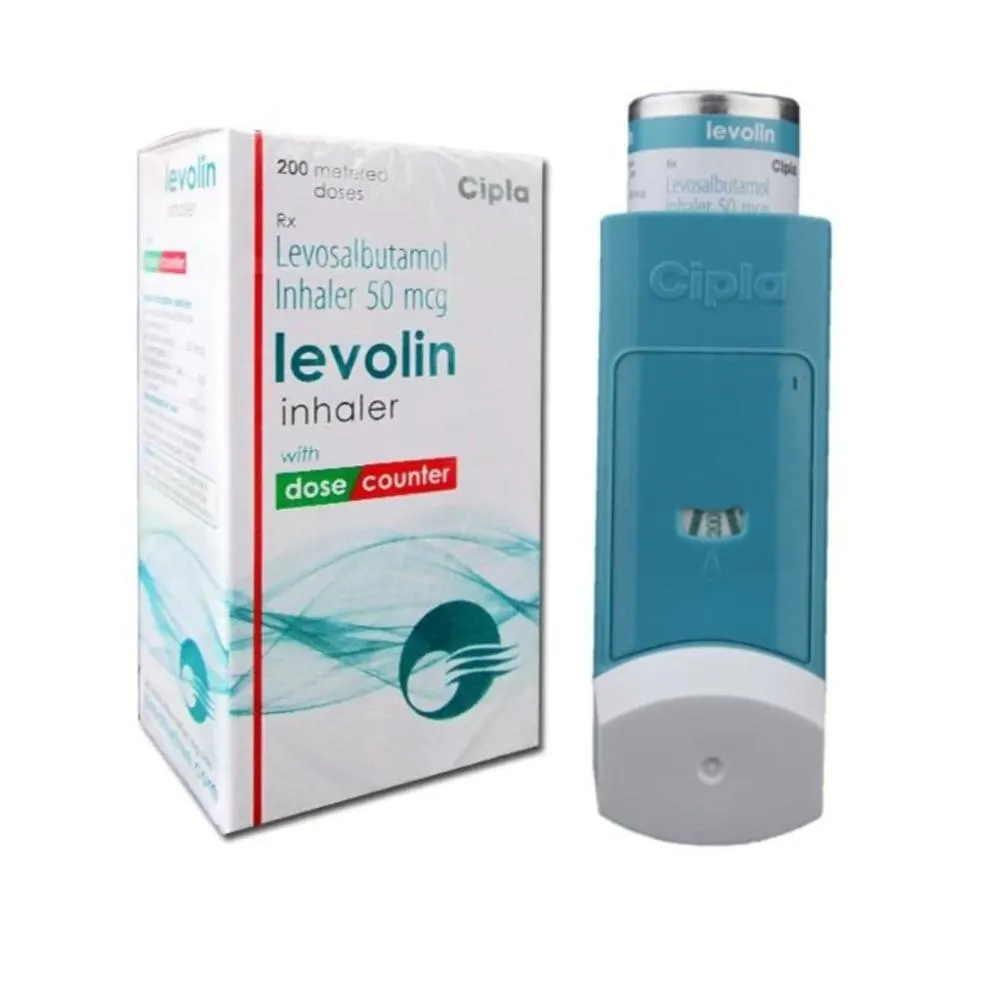
Levolin Inhaler (Levosalbutamol)
Price range: $7.00 through $35.00
| Active Ingredient | Levosalbutamol |
|---|---|
| Manufacturer | Cipla Limited |
| Packaging | 200 MDI in 1 Inhaler |
| Strength | 50 Mcg |
| Delivery Time | 6 To 15 days |
| SKU: | Levolin Inhaler (Levosalbutamol) |
Ultimate Guide to Levolin Inhaler (Levosalbutamol): Uses, Benefits, Dosage, and Safety
Breathing is something most people take for granted—until it becomes a struggle. If you or a loved one lives with respiratory conditions like asthma or Chronic Obstructive Pulmonary Disease (COPD), you know how fast a sudden onset of wheezing, chest tightness, or shortness of breath can turn a normal day into a distressing situation. When smooth airway muscles constrict and inflammation narrows the breathing passages, quick and efficient relief becomes an absolute necessity.
This is where Levolin Inhaler (Levosalbutamol) plays a critical role in modern respiratory care. Designed as a fast-acting bronchodilator, this inhaled therapy delivers targeted medicine straight into the lungs to relax constricted airway muscles and reopen air passages within minutes.
In this comprehensive, human-centered guide, we will break down everything you need to know about Levolin Inhaler (Levosalbutamol). From its active active pharmaceutical compound and mechanism of action to step-by-step inhalation techniques, dosage guidelines, potential side effects, and daily management strategies, this article serves as your complete reference for breathing easier with confidence.
What is Levolin Inhaler (Levosalbutamol)?
Levolin Inhaler (Levosalbutamol) is a widely prescribed short-acting beta-2 agonist (SABA) designed for the prevention and quick-relief treatment of bronchospasm. Manufactured by Cipla Ltd., a global leader in respiratory care, Levolin Inhaler contains Levosalbutamol (also known as levalbuterol in certain regions) as its single active ingredient.
Unlike systemic medications taken orally in tablet form, an inhaled treatment like Levolin Inhaler (Levosalbutamol) delivers micro-particles of medicine directly to the bronchial tubes. This targeted delivery allows the drug to work almost instantaneously while keeping systemic exposure—and corresponding body-wide side effects—to a minimum.
Product Specifications Overview
| Attribute | Specification Details |
| Active Ingredient | Levosalbutamol Tartrate (typically 50 mcg per actuation) |
| Drug Class | Selective Short-Acting Beta-2 Adrenergic Receptor Agonist (SABA) |
| Primary Indications | Asthma, Chronic Obstructive Pulmonary Disease (COPD), Bronchospasm |
| Onset of Action | 5 to 10 minutes |
| Duration of Relief | Approximately 4 to 6 hours |
| Device Type | Metered Dose Inhaler (MDI) / Pressurized Inhaler |
| Therapeutic Role | Rescue / Quick-Relief Bronchodilator |
The Science Behind Levolin Inhaler (Levosalbutamol)
To appreciate why Levolin Inhaler (Levosalbutamol) is considered an advanced option in respiratory medicine, it helps to understand the chemistry of bronchodilators.
For decades, Racemic Salbutamol (commonly known as Albuterol) was the primary rescue medication for airway constriction. Racemic Salbutamol is a 50:50 mixture of two chemical mirror-images (enantiomers): the (R)-enantiomer and the (S)-enantiomer.
-
The (R)-Enantiomer (Levosalbutamol): This is the single biologically active component responsible for relaxing bronchial smooth muscle and dilating the airways.
-
The (S)-Enantiomer: This component provides virtually no bronchodilation and may contribute to unwanted side effects such as rapid heart rate (tachycardia), muscle tremors, and airway hyper-responsiveness.
Levolin Inhaler (Levosalbutamol) contains only the single, pure (R)-enantiomer (Levosalbutamol). By isolating the active molecule and removing the inert (S)-enantiomer, Levolin provides powerful bronchodilation at roughly half the required dose of racemic salbutamol, often resulting in fewer side effects like jitteriness and palpitations.
Mechanism of Action: How It Opens the Airways
When you inhale a dose of Levolin Inhaler (Levosalbutamol), the medication travels down the trachea into the smaller bronchial branches:
-
Receptor Binding: Levosalbutamol selectively binds to beta-2 adrenergic receptors located on the smooth muscle cells lining the bronchial airways.
-
Enzyme Activation: This binding triggers an enzyme called adenylyl cyclase, which boosts the intracellular production of cyclic adenosine monophosphate (cyclic AMP or cAMP).
-
Smooth Muscle Relaxation: Increased cAMP activates protein kinase A, which lowers intracellular calcium levels within muscle cells.
-
Airway Opening: Lower calcium causes the constricted bronchial muscles to relax rapidly. Airways widen, airflow increases, and symptoms like wheezing, chest tightness, and dyspnea diminish quickly.
Primary Medical Uses & Clinical Indications
Healthcare professionals prescribe Levolin Inhaler (Levosalbutamol) for several obstructive airway conditions where rapid muscle relaxation is required.
1. Acute Asthma Symptoms and Flare-Ups
Asthma is a chronic inflammatory disorder characterized by hyper-reactive airways. When triggered by allergens, cold air, exercise, or viral infections, the muscles surrounding the airways contract sharply (bronchospasm). Levolin Inhaler (Levosalbutamol) acts as a “rescue inhaler,” rapidly opening narrowed air passages during acute asthma attacks to restore normal breathing.
2. Chronic Obstructive Pulmonary Disease (COPD)
COPD—which includes chronic bronchitis and emphysema—causes long-term airflow limitation and persistent shortness of breath. Patients with COPD frequently experience sudden spikes in airway constriction. Using Levolin Inhaler (Levosalbutamol) relieves symptom surges and improves daily physical capacity.
3. Exercise-Induced Bronchospasm (EIB)
Physical exertion, especially in cold or dry air, can trigger sudden airway narrowing in susceptible individuals. Inhaling Levolin Inhaler (Levosalbutamol) 15 to 30 minutes before exercise acts as a preventative measure, keeping airways open during sports, workouts, or strenuous physical labor.
4. Acute Bronchitis and Respiratory Infections
Viral or bacterial infections can cause temporary bronchial inflammation and hyper-reactivity accompanied by wheezing. Doctors may prescribe Levolin Inhaler (Levosalbutamol) on a short-term basis to keep airways open while the infection resolves.
Key Benefits of Levolin Inhaler (Levosalbutamol)
Choosing Levolin Inhaler (Levosalbutamol) offers several distinct advantages for patients requiring fast-acting respiratory support:
-
Fast-Acting Relief: Begins relaxing airway muscles within 5 to 10 minutes, providing quick reassurance during sudden breathing difficulties.
-
Refined Active Formulation: Containing purely the active (R)-enantiomer, it offers therapeutic benefits at lower effective doses compared to traditional racemic albuterol.
-
Fewer Cardiovascular Side Effects: Many patients report fewer episodes of racing heartbeat (palpitations) or severe fine hand tremors compared to older bronchodilators.
-
Targeted Delivery: Inhaled delivery places medicine directly into lung tissue, reducing systemic absorption throughout the rest of the body.
-
Compact & Portable: The standard metered-dose inhaler easily fits into a pocket, purse, or backpack, ensuring quick access during emergencies.
Step-by-Step Guide: How to Use Levolin Inhaler Correctly
Proper inhalation technique is critical when using a metered-dose inhaler (MDI). Up to 70% of inhaler users make mistakes that reduce the amount of medicine reaching their lungs. Follow this step-by-step guide to get the full therapeutic benefit from Levolin Inhaler (Levosalbutamol):
Step 1: Preparation and Inspection
-
Remove the protective cap from the mouthpiece of the inhaler.
-
Inspect the mouthpiece inside and out to ensure there is no dust, lint, or foreign particles.
-
Shake the inhaler thoroughly for 5 seconds to ensure the propellant and medication are evenly mixed.
Step 2: Priming (If Needed)
-
If your Levolin Inhaler (Levosalbutamol) is brand new, or if you have not used it for 7 days or more, prime it by spraying 2 to 4 test puffs into the air, away from your face.
Step 3: Posture and Exhalation
-
Sit upright or stand up straight to allow your lungs to expand fully.
-
Breathe out fully and gently away from the inhaler to empty your lungs as much as comfortable.
Step 4: Placement and Inhalation
-
Hold the inhaler upright with your thumb on the base (below the mouthpiece) and your index finger on top of the canister.
-
Place the mouthpiece in your mouth between your teeth, forming a tight seal with your lips around it. Do not bite the mouthpiece or block the opening with your tongue.
-
Start breathing in slowly and deeply through your mouth. Immediately press down firmly on the top of the canister to release one puff of medicine while continuing to inhale steadily.
Step 5: Breath-Hold
-
Remove the inhaler from your mouth and hold your breath for 10 seconds, or for as long as comfortable. This permits the aerosolized droplets to settle deep into the smaller lower airways.
-
Breathe out gently through your mouth or nose.
Step 6: Second Puff (If Prescribed)
-
If your physician prescribed two puffs, wait approximately 1 minute, shake the inhaler again, and repeat steps 3 through 5.
-
Replace the protective cap over the mouthpiece immediately after use to keep it clean.
Pro Tip: Using a Spacer Device: If you find it difficult to coordinate pressing the canister while breathing in at the same time, ask your doctor about using a spacer device (holding chamber). A spacer holds the mist inside a chamber, allowing you to breathe the medicine in slowly and easily over 2 to 3 breaths. Spacers also reduce medication settling in the back of the throat.
Recommended Dosage and Usage Guidelines
Always use Levolin Inhaler (Levosalbutamol) exactly as prescribed by your treating physician. Standard general dosage guidelines include:
Standard Adult & Adolescent Dosage (12 Years and Older)
-
Acute Bronchospasm Relief: 1 to 2 puffs inhaled every 4 to 6 hours as needed.
-
Exercise-Induced Bronchospasm Prevention: 2 puffs inhaled 15 to 30 minutes prior to physical activity.
Pediatric Dosage (Children Aged 6 to 11 Years)
-
Acute Relief: Usually 1 puff (or as directed by a pediatrician) every 4 to 6 hours. Pediatric use should always be supervised by an adult, preferably using a spacer device with a face mask if required.
Important Dosage Rule: The “Rule of Two”
Levolin Inhaler (Levosalbutamol) is a rescue medication meant for acute symptom relief, not daily maintenance control. If you find yourself needing your Levolin Inhaler (Levosalbutamol) more than 2 days a week (excluding pre-exercise use), or using up more than 2 canisters a year, it indicates that your underlying asthma or airway disease is unmanaged. Contact your physician promptly—you may require a daily anti-inflammatory maintenance medication (such as an inhaled corticosteroid).
Potential Side Effects of Levolin Inhaler (Levosalbutamol)
While Levolin Inhaler (Levosalbutamol) is generally well tolerated, side effects can occur, particularly if high doses are taken. Most side effects are temporary and mild as your body adjusts to the medication.
Common, Mild Side Effects
-
Fine Tremors: A subtle trembling sensation, most noticeable in the hands or fingers.
-
Slight Restlessness or Nervousness: Feeling slightly anxious or jittery shortly after inhalation.
-
Transient Headache: Mild headaches resulting from slight blood vessel dilation.
-
Dizziness or Lightheadedness: Brief feelings of unsteady balance.
-
Mild Throat Irritation or Dry Mouth: Temporary dryness in the back of the mouth or pharynx.
Less Common / Moderate Side Effects
-
Palpitations or Rapid Heartbeat (Tachycardia): Feeling a noticeably pounding or fast heartbeat.
-
Muscle Cramps: Occasional muscle tightness or leg cramps due to temporary shifts in potassium levels.
Rare but Serious Side Effects (Requires Immediate Medical Care)
-
Paradoxical Bronchospasm: In rare instances, an inhaled medication can cause a sudden, unexpected tightening of the airways immediately after inhalation. If your breathing worsens right after using the inhaler, stop using it immediately and seek emergency medical assistance.
-
Hypokalemia (Low Blood Potassium): High or frequent doses can drive potassium from the blood into cells, leading to muscle weakness or cardiac rhythm disturbances.
-
Allergic Reactions: Symptoms such as skin rash, hives, swelling of the face, lips, tongue, or severe difficulty swallowing.
Drug Interactions & Precautionary Warnings
Before using Levolin Inhaler (Levosalbutamol), inform your doctor about your complete medical history and any other medications you are currently taking.
Important Medical Precautions
-
Cardiovascular Conditions: Use with caution if you have a history of high blood pressure (hypertension), coronary artery disease, heart rhythm disorders (arrhythmias), or a recent heart attack. Beta-2 agonists can stimulate the heart.
-
Hyperthyroidism: Patients with an overactive thyroid gland are more sensitive to beta-adrenergic stimulation and may experience heightened side effects.
-
Diabetes Mellitus: Beta-2 agonists can temporarily increase blood glucose levels. Diabetics should monitor blood sugar levels more closely when starting or increasing therapy.
-
Seizure Disorders: Caution is advised in individuals with a history of epilepsy or underlying convulsive disorders.
Key Drug Interactions
| Medication Category | Interaction Risk | Clinical Advice |
| Beta-Blockers (e.g., Propranolol, Atenolol) | Non-selective beta-blockers block beta-2 receptors, neutralizing the bronchodilating effect of Levosalbutamol and potentially triggering severe asthma attacks. | Avoid non-selective beta-blockers unless explicitly directed by a cardiologist. |
| Diuretics (Loop/Thiazide, e.g., Furosemide) | Combining non-potassium-sparing diuretics with high doses of Levosalbutamol can increase the risk of hypokalemia (low potassium). | Monitor blood potassium levels during co-administration. |
| Monoamine Oxidase Inhibitors (MAOIs) & Tricyclic Antidepressants (TCAs) | Can intensify the cardiovascular effects of Levosalbutamol on heart rate and blood pressure. | Exercise extreme caution if taken within 2 weeks of these psychiatric medications. |
| Other Sympathomimetic Bronchodilators | Taking additional short-acting stimulants concurrently can lead to excessive cardiovascular stimulation. | Do not combine multiple short-acting rescue inhalers without medical supervision. |
Special Populations: Pregnancy, Breastfeeding & Pediatrics
-
Pregnancy: Levolin Inhaler (Levosalbutamol) should be used during pregnancy only if the potential benefit justifies the potential risk to the fetus. Uncontrolled asthma poses a far greater oxygen deprivation risk to the baby than appropriate inhaler use. Consult your obstetrician.
-
Breastfeeding: It is not definitively known whether Levosalbutamol passes into breast milk in significant quantities. Exercise caution and discuss benefits versus risks with your pediatrician.
-
Pediatric Use: Safe and effective in children aged 6 years and older when used under adult supervision and according to pediatric dosage instructions.
Practical Storage, Maintenance & Cleaning Care
To ensure your Levolin Inhaler (Levosalbutamol) works dependably when you need it most, follow these practical maintenance habits:
Cleaning Your Inhaler (Once a Week)
-
Pull the metal canister out of the plastic actuator casing and remove the mouthpiece cover.
-
Rinse the plastic casing and mouthpiece thoroughly under warm running tap water for 30 to 40 seconds. Never submerge or wash the metal canister in water.
-
Shake off excess water and allow the plastic casing to air-dry completely overnight on a clean paper towel.
-
Once completely dry, insert the metal canister back into the casing and replace the mouthpiece cap.
Proper Storage Conditions
-
Store at room temperature away from direct heat, high humidity, and direct sunlight.
-
Do not puncture, burn, or incinerate the metal canister, even when empty, as it remains pressurized.
-
Keep out of reach of children and pets.
Frequently Asked Questions (FAQs) About Levolin Inhaler
1. How fast does Levolin Inhaler (Levosalbutamol) start working?
Levolin Inhaler (Levosalbutamol) starts working within 5 to 10 minutes of inhalation, with peak bronchodilating effects occurring around 30 to 60 minutes after use.
2. Is Levolin Inhaler the same as Asthalin or Ventolin?
Not entirely. Asthalin and Ventolin contain Racemic Salbutamol (Albuterol), which is a mix of both (R) and (S) enantiomers. Levolin Inhaler contains pure Levosalbutamol (only the active R-enantiomer). While both types open airways, Levolin often achieves equal bronchodilation at lower doses with potentially fewer cardiovascular side effects.
3. Can I use Levolin Inhaler every day?
Levolin Inhaler (Levosalbutamol) is designed as a “rescue” inhaler for quick relief of acute symptoms, not as a daily preventative medicine. If you need it daily, consult your doctor to adjust your long-term maintenance treatment plan.
4. What should I do if my symptoms do not improve after using the inhaler?
If your shortness of breath, wheezing, or chest tightness fails to improve within 10 to 15 minutes of taking your prescribed puffs, or if symptoms return quickly, seek emergency medical care immediately. This can be a sign of a severe asthma exacerbation.
5. Can I use Levolin Inhaler with a spacer?
Yes. Using a spacer device with Levolin Inhaler (Levosalbutamol) is highly recommended, especially for children, elderly individuals, or anyone who finds it difficult to synchronize pressing the inhaler while breathing in deeply.
6. Will Levolin Inhaler cause my heart to race?
Because Levosalbutamol is a selective beta-2 agonist, it has a lower tendency to cause heart racing compared to older bronchodilators. However, a temporary mild increase in heart rate can still occur, especially at higher doses.
7. What happens if I accidentally take too many puffs?
Taking too much can cause significant side effects like severe hand tremors, rapid heart rate, nervousness, chest pain, or dizziness. If an accidental overdose occurs, stay calm and contact a doctor or local poison control center right away.
Medical Disclaimer:-
This content is provided for general informational and educational purposes only and should not be considered medical advice, diagnosis, or treatment. Levolin Inhaler (Levosalbutamol) should be used only under the guidance of a qualified healthcare professional. Always follow your prescribed dosage and instructions, and consult your doctor or pharmacist regarding possible side effects, precautions, interactions, or concerns about your treatment. Do not start, stop, or change any medication without professional medical advice.
Additional information
| unit | 1 Inhaler, 3 Inhaler, 6 Inhaler |
|---|




Reviews
There are no reviews yet.