
Opexa Gel (Ascorbyl Tetraisopalmitate & Dimethicone)
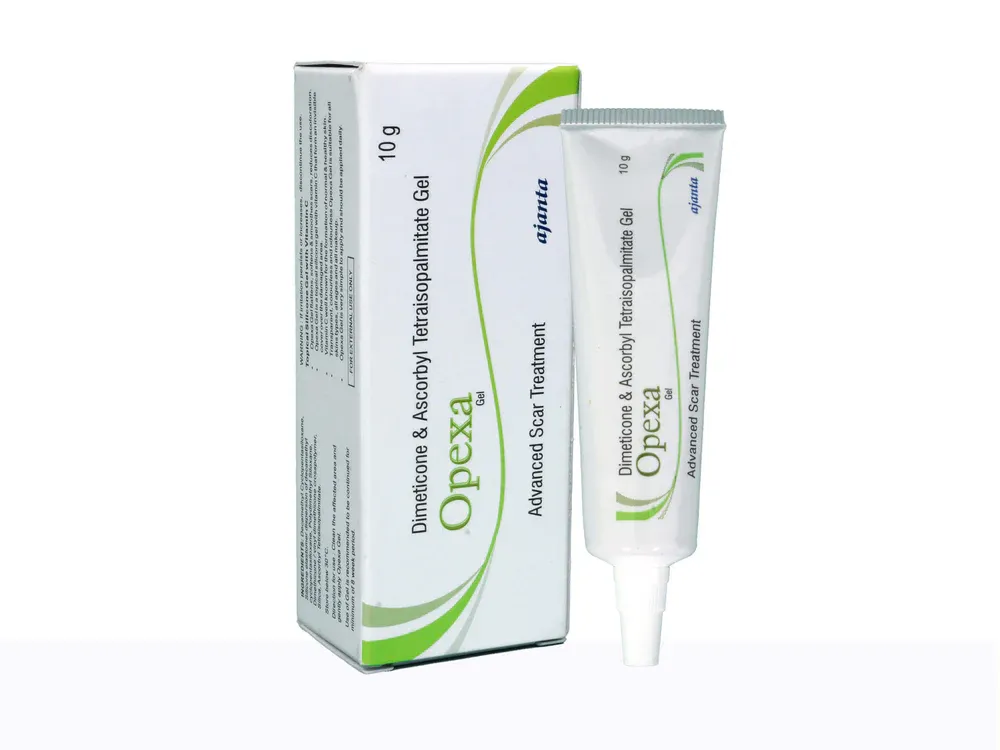
| Active Ingredient | Ascorbyl Tetraisopalmitate/Dimethicone |
|---|---|
| Manufacturer | Ajanta Pharma Ltd |
| Packaging | 10gm in 1 tube |
| Strength | 10gm |
| Delivery Time | 6 To 15 days |
| SKU: | Opexa Gel (Ascorbyl Tetraisopalmitate/Dimethicone) |
The Complete Guide to Opexa Gel (Ascorbyl Tetraisopalmitate & Dimethicone): Uses, Benefits, Science, and How to Fade Scars Effectively
Scars are more than just cosmetic marks on the skin; they are a physical reminder of past trauma, whether from a surgical procedure, an unexpected injury, a severe burn, or persistent acne. While wound healing is a natural bodily process, the resulting scar tissue can often feel raised, rough, itchy, discolored, and visually distracting. For many people, visible scars can affect self-esteem and confidence.
Fortunately, modern dermatological science has transformed scar therapy. You no longer have to simply accept permanent, dark, or raised scars. Advanced topical treatments can significantly modify how scar tissue matures, helping it blend smoothly with the surrounding healthy skin.
Among the most effective dermatological solutions recommended by plastic surgeons and dermatologists is Opexa Gel (Ascorbyl Tetraisopalmitate & Dimethicone). This advanced scar management gel pairs medical-grade silicone with an ultra-stable, lipid-soluble derivative of Vitamin C.
In this detailed, expert guide, we will explore everything you need to know about Opexa Gel (Ascorbyl Tetraisopalmitate & Dimethicone). We will cover how its active ingredients work at the cellular level, the specific types of scars it treats, step-by-step application instructions, safety profiles, and essential lifestyle tips for achieving smooth, clear, and rejuvenated skin.
Understanding Scars: Why Do They Form and How Do They Mature?
To appreciate how Opexa Gel (Ascorbyl Tetraisopalmitate & Dimethicone) works, it is essential to understand what happens beneath the surface when your skin heals.
The skin consists of three primary layers: the epidermis (outer protective layer), the dermis (middle structural layer containing collagen fibers and blood vessels), and the subcutaneous tissue (fat and connective tissue). When an injury, incision, or deep acne lesion penetrates into the dermis, the body initiates a complex four-stage wound healing cascade:
-
Hemostasis: Blood clotting occurs immediately to seal the wound and prevent blood loss.
-
Inflammation: White blood cells flood the area to clear away debris, bacteria, and damaged cells. This phase causes localized swelling, redness, and heat.
-
Proliferation: The body rebuilds missing tissue by producing new blood vessels and synthesizing collagen—a structural protein that provides strength to the skin.
-
Remodeling (Maturation): Over several months to years, the newly deposited collagen is reorganized and refined.
Where Wound Healing Goes Wrong
During the remodeling phase, the balance between collagen production and collagen breakdown determines the final appearance of your scar.
If the wound loses excessive moisture, the body misinterprets this dehydration as a signal of incomplete barrier function. In response, special cells called fibroblasts overreact and produce excessive, disorganized collagen fibers. This leads to raised, thick, and stiff scars known as hypertrophic scars or keloids.
Simultaneously, persistent inflammation stimulates melanocytes (the skin’s pigment-producing cells) to overproduce melanin, resulting in dark red, purple, or brown marks known as post-inflammatory hyperpigmentation (PIH).
This is precisely where Opexa Gel (Ascorbyl Tetraisopalmitate & Dimethicone) intervenes. By providing deep hydration, barrier restoration, and pigment regulation, it guides the remodeling process toward a flatter, softer, and more natural finish.
Deconstructing the Active Formulation: Science Behind Opexa Gel
The clinical efficacy of Opexa Gel (Ascorbyl Tetraisopalmitate & Dimethicone) relies on its dual-action ingredient matrix. Unlike simple cosmetic creams that remain on the surface, this formulation combines medical-grade silicone technology with specialized antioxidant biochemistry.
| Active Component | Biological Role & Action | Key Outcome on Scar Tissue |
| Dimethicone | Forms a micro-thin, semi-occlusive protective film that retains moisture without suffocating the skin. | Reduces Transepidermal Water Loss (TEWL), signals fibroblasts to stop overproducing collagen, flattens raised tissue, and eases itching. |
| Ascorbyl Tetraisopalmitate | Highly stable, oil-soluble Vitamin C ester that penetrates deep through the skin’s lipid layer. | Inhibits tyrosinase enzyme to fade dark marks and PIH, stimulates healthy collagen structure, and neutralizes damaging free radicals. |
1. Dimethicone (and Silicone Elastomers)
Dimethicone belongs to a group of organosilicon compounds widely celebrated as the gold standard in non-invasive scar therapy. When applied topically, Dimethicone and its accompanying silicone polymers spread evenly to form a clear, flexible, and micro-thin protective film over the skin.
-
Occlusion Without Suffocation: Silicone creates a semi-occlusive layer. It allows oxygen to pass through while trapping water molecules inside the stratum corneum (the outermost skin layer).
-
Reduction of Transepidermal Water Loss (TEWL): By preventing moisture from evaporating, Dimethicone maintains optimal skin hydration levels.
-
Regulation of Fibroblast Activity: Adequate hydration sends a signal down into the dermis telling fibroblasts that the skin barrier is intact. This stops the overproduction of dense, disorganized collagen, allowing raised scars to soften, flatten, and smooth out over time.
-
Symptom Relief: Dry, maturing scar tissue often feels tight, itchy, and uncomfortable. The emollient properties of Dimethicone soothe nerve endings, reducing itching and physical discomfort.
2. Ascorbyl Tetraisopalmitate (Lipid-Soluble Vitamin C)
While standard Vitamin C (L-ascorbic acid) is a popular antioxidant, it has major limitations in skincare: it is highly unstable, oxidizes quickly when exposed to air or light, and has trouble penetrating the skin’s natural oil barrier because it is water-soluble.
Ascorbyl Tetraisopalmitate is an advanced, oil-soluble (tetra-esterified) derivative of Vitamin C designed to overcome these challenges:
-
Superior Dermal Absorption: Because skin cell membranes are made of lipids (fats), the lipid-soluble structure of Ascorbyl Tetraisopalmitate allows it to pass through the outer barrier far more efficiently than standard Vitamin C.
-
Inhibition of Hyperpigmentation: Scars often retain dark discoloration due to excess melanin. Ascorbyl Tetraisopalmitate inhibits tyrosinase—the key enzyme responsible for melanin synthesis—thereby fading dark spots and evening out skin tone.
-
Collagen Synthesis and Structural Repair: Once absorbed, it converts into active Vitamin C inside the skin cells, stimulating healthy collagen production that rebuilds normal dermal architecture without forming abnormal scar clumps.
-
Antioxidant Protection: It neutralizes free radicals generated by environmental stress and UV exposure, protecting delicate, healing skin from further discoloration and degradation.
Comprehensive Benefits of Opexa Gel (Ascorbyl Tetraisopalmitate & Dimethicone)
By merging silicone occlusion with deep-penetrating Vitamin C, Opexa Gel (Ascorbyl Tetraisopalmitate & Dimethicone) offers several key advantages over traditional scar creams:
-
Scar Flattening & Softening: Reduces the height and density of raised hypertrophic scars and keloids.
-
Pigmentation Lightening: Fades red, purple, brown, and dark marks associated with post-scar discoloration.
-
Deep Hydration Lock: Prevents moisture loss, maintaining ideal conditions for healthy skin maturation.
-
Itch & Irritation Relief: Soothes dry, tight skin and reduces the desire to scratch vulnerable scar tissue.
-
Cosmetic Compatibility: Dries to a clear, matte, non-greasy finish that layers easily under sunscreen and makeup.
-
Gentle & Non-Comedogenic: Lightweight, fragrance-free, and suitable for facial use, acne-prone areas, and sensitive skin.
Primary Indications: Who Should Use Opexa Gel?
Opexa Gel (Ascorbyl Tetraisopalmitate & Dimethicone) is versatile and suitable for a wide range of scar management needs across all skin types and ages.
1. Post-Surgical Scars
Surgical incisions—including C-section marks, cosmetic surgery lines, thyroidectomy incisions, orthopedic scars, and mole removals—frequently leave raised or discolored lines. Starting Opexa Gel (Ascorbyl Tetraisopalmitate & Dimethicone) as soon as sutures or staples are removed helps ensure the surgical line heals flat and discreetly.
2. Acne Scars and Post-Acne Erythema
Severe or persistent acne often leaves behind dark spots (PIH) and uneven skin texture. Opexa Gel (Ascorbyl Tetraisopalmitate & Dimethicone) helps smooth out rough, post-acne skin texture while fading lingering red and dark spots on the face, chest, or back.
3. Burn Scars and Scalds
First- and second-degree burns, hot liquid scalds, or chemical burns leave delicate, sensitive skin prone to abnormal thickening and discoloration. Opexa Gel (Ascorbyl Tetraisopalmitate & Dimethicone) keeps healing burn tissue flexible and supple, reducing contracture risks and hyperpigmentation.
4. Traumatic Injury Scars
Accidental cuts, scrapes, facial lacerations, or sports injuries can leave irregular scar tissue. Regular application of Opexa Gel (Ascorbyl Tetraisopalmitate & Dimethicone) helps smooth uneven edges and blend the injured area into surrounding healthy skin.
5. Hypertrophic Scars and Early Keloids
Hypertrophic scars remain elevated above the skin line within the boundaries of the original wound, whereas keloids grow beyond the initial wound edges. While fully established keloids can be challenging to reverse with topical agents alone, Opexa Gel (Ascorbyl Tetraisopalmitate & Dimethicone) serves as an excellent non-invasive therapy to prevent their progression and flatten early-stage lesions.
Step-by-Step Application Guide for Optimal Results
To get the best possible results from Opexa Gel (Ascorbyl Tetraisopalmitate & Dimethicone), proper application technique and consistency are essential. Follow these simple steps daily:
Step 1: Cleanse the Affected Area
Gently wash the scarred area using mild water and a soap-free, gentle cleanser. Remove all dirt, sweat, excess oil, or previous product buildup. Avoid harsh scrubbing, which can re-injure fragile skin.
Step 2: Pat the Area Completely Dry
Silicone gels require a clean, dry surface to adhere correctly and form a stable protective film. Use a clean, soft towel to pat the area thoroughly dry.
Step 3: Dispense a Small Amount
Place a small, pea-sized drop of Opexa Gel (Ascorbyl Tetraisopalmitate & Dimethicone) onto your fingertip. Because the silicone formula spreads smoothly, a little product goes a long way.
Step 4: Apply a Micro-Thin Layer
Gently smooth the gel across the entire scar tissue in a thin, even layer. Do not rub vigorously or massage deeply unless specifically instructed by your dermatologist; simply spread it evenly over the surface.
Step 5: Allow 4 to 5 Minutes to Air Dry
Let the gel dry naturally for 4 to 5 minutes. As it dries, it forms an invisible, weightless, and breathable shield over the skin.
Note: If the gel takes longer than 5 minutes to dry, you have likely applied too much product. Gently wipe away any excess with a clean tissue and apply less next time.
Step 6: Apply Sunscreen or Cosmetics (Optional)
Once Opexa Gel (Ascorbyl Tetraisopalmitate & Dimethicone) has dried completely, you can apply broad-spectrum sunscreen, moisturizer, foundation, or concealer over the area without disturbing the silicone film.
Treatment Timeline & Duration
-
Application Frequency: Apply twice daily (morning and evening).
-
New Scars (Under 3 Months Old): Use continuously for a minimum of 8 to 12 weeks.
-
Older or Resistant Scars (Over 6 Months Old): May require consistent daily application for 3 to 6 months to achieve optimal softening and lightening.
Essential Do’s and Don’ts of Advanced Scar Care
To protect your skin and maximize the effectiveness of Opexa Gel (Ascorbyl Tetraisopalmitate & Dimethicone), keep these guidelines in mind:
The Do’s
-
Do Start Early: Begin using Opexa Gel (Ascorbyl Tetraisopalmitate & Dimethicone) as soon as the wound has completely closed, stitches are removed, and there is no active bleeding or scabbing.
-
Do Protect from Sun Exposure: Fresh scar tissue is extremely sensitive to ultraviolet (UV) radiation. UV rays trigger excess melanin production, making scars permanently darker. Always layer a broad-spectrum sunscreen (SPF 30 or higher) over dried Opexa Gel when spending time outdoors.
-
Do Stay Consistent: Collagen remodeling takes time. Missing daily applications will delay your results. Make applying Opexa Gel (Ascorbyl Tetraisopalmitate & Dimethicone) a seamless part of your morning and evening skincare routine.
The Don’ts
-
Don’t Apply to Open Wounds: Never apply Opexa Gel (Ascorbyl Tetraisopalmitate & Dimethicone) on fresh cuts, open sores, bleeding wounds, or infected tissue.
-
Don’t Pick or Scratch Scabs: Picking at scabs disrupts the healing process, reintroduces bacteria, increases inflammation, and significantly worsens final scar appearance.
-
Don’t Expose Scars to Extreme Heat: Avoid hot tubs, saunas, or intense heat lamps during the early stages of scar healing, as heat can aggravate swelling and inflammation.
Safety Profile, Precautions, and Potential Side Effects
Opexa Gel (Ascorbyl Tetraisopalmitate & Dimethicone) is dermatologist-tested, hypoallergenic, non-comedogenic, and generally very well tolerated across all skin types, including sensitive skin and pediatric patients.
Potential Minor Side Effects
Side effects are rare and usually mild. They may include:
-
Temporary Redness or Mild Tingling: A faint, brief sensation immediately following application on delicate facial skin.
-
Localized Irritation: In rare instances, individuals with hypersensitivity to silicone or Vitamin C derivatives may experience mild itching or a rash.
Precautions
-
For External Use Only: Do not apply inside the eyes, nostrils, mouth, or intimate mucosal surfaces.
-
Patch Test: If you have exceptionally sensitive skin or a history of topical contact allergies, perform a quick patch test on your inner forearm 24 hours before applying it to your face or scar area.
-
Discontinue If Irritation Persists: If you notice severe redness, burning, swelling, or rash, wash the area thoroughly with mild soap and water, discontinue use, and consult your healthcare provider.
How Opexa Gel Compares to Other Scar Treatments
Understanding how Opexa Gel (Ascorbyl Tetraisopalmitate & Dimethicone) compares to other common scar management options can help you make an informed choice:
| Treatment Type | Key Benefits | Limitations |
| Opexa Gel (Dimethicone + Vitamin C) | Dual-action silicone + lipid Vitamin C; flattens & lightens; invisible under makeup. | Requires 4-5 mins to dry; needs consistent daily use for 8-12 weeks. |
| Traditional Silicone Sheets | High occlusion; washable & reusable. | Highly visible; difficult to apply on facial or moving joint areas; risk of skin maceration. |
| Plant Extract Creams (Onion/Vitamin E) | Easily available over the counter; basic moisturizing. | Lacks silicone occlusion; does not prevent TEWL effectively; higher allergy risk. |
| In-Office Lasers & Injections | Rapid, high-potency structural changes. | High financial cost; invasive with noticeable downtime and recovery needs. |
Frequently Asked Questions (FAQs)
1. Is Opexa Gel (Ascorbyl Tetraisopalmitate & Dimethicone) safe for facial use?
Yes. The formulation is transparent, non-greasy, non-comedogenic (will not clog pores), and scent-free. It is well-suited for facial application, including post-acne marks and surgical incisions around the cheeks, chin, forehead, and jawline.
2. Can I apply makeup over Opexa Gel?
Yes, absolutely. Once you apply a thin layer of Opexa Gel (Ascorbyl Tetraisopalmitate & Dimethicone) and let it dry completely (about 4 to 5 minutes), it forms an invisible protective barrier. You can then safely apply sunscreens, primers, liquid foundations, or concealers on top.
3. How soon will I see visible improvements in my scar?
Scar recovery is a gradual process that depends on the age, depth, and severity of the mark. Most users notice initial improvements—such as reduced itching, softer tissue, and diminished redness—within 3 to 4 weeks of continuous twice-daily application. Significant flattening and fading typically become visible after 8 to 12 weeks.
4. Does Opexa Gel work on old scars?
Yes, Opexa Gel (Ascorbyl Tetraisopalmitate & Dimethicone) can help soften, smooth, and lighten older scars. However, because mature scar tissue is fully established, older scars take longer to respond than fresh ones. Consistent twice-daily application for 3 to 6 months is recommended for older marks.
5. Can children use Opexa Gel?
Yes, silicone-based topical gels like Opexa Gel (Ascorbyl Tetraisopalmitate & Dimethicone) are non-invasive, gentle, and widely considered safe for pediatric use under adult supervision. It is ideal for childhood scrapes, cuts, or surgical marks.
6. Can I use Opexa Gel during pregnancy or while breastfeeding?
Because Opexa Gel (Ascorbyl Tetraisopalmitate & Dimethicone) acts topically with minimal systemic absorption, it is generally considered safe. It is frequently used to manage C-section surgical scars. However, if you are pregnant or nursing, it is always best practice to consult your doctor or obstetrician before introducing new skin treatments.
Final Thoughts: Reclaim Smooth, Confident Skin
Scars may be a natural part of the body’s healing process, but long-term discoloration, rough texture, and raised tissue do not have to be permanent. By choosing an advanced, science-backed treatment like Opexa Gel (Ascorbyl Tetraisopalmitate & Dimethicone), you give your skin the exact tools it needs to repair itself efficiently.
The synergistic combination of medical-grade Dimethicone and lipid-soluble Ascorbyl Tetraisopalmitate locks in essential moisture, regulates collagen synthesis, and brightens stubborn hyperpigmentation. With consistent twice-daily application, gentle skincare habits, and reliable sun protection, you can significantly reduce scar visibility and enjoy smooth, healthy, and radiant skin.
Disclaimer:-
This information about Opexa Gel (Ascorbyl Tetraisopalmitate & Dimethicone) is provided for general educational purposes only and should not be considered medical advice. Use the product according to the product label or as directed by a qualified healthcare professional. Consult a doctor or pharmacist if you have sensitive skin, allergies, an existing skin condition, or experience irritation or other unwanted reactions.
Additional information
| unit | 1 Gel, 3 Gel, 6 Gel |
|---|



Reviews
There are no reviews yet.