
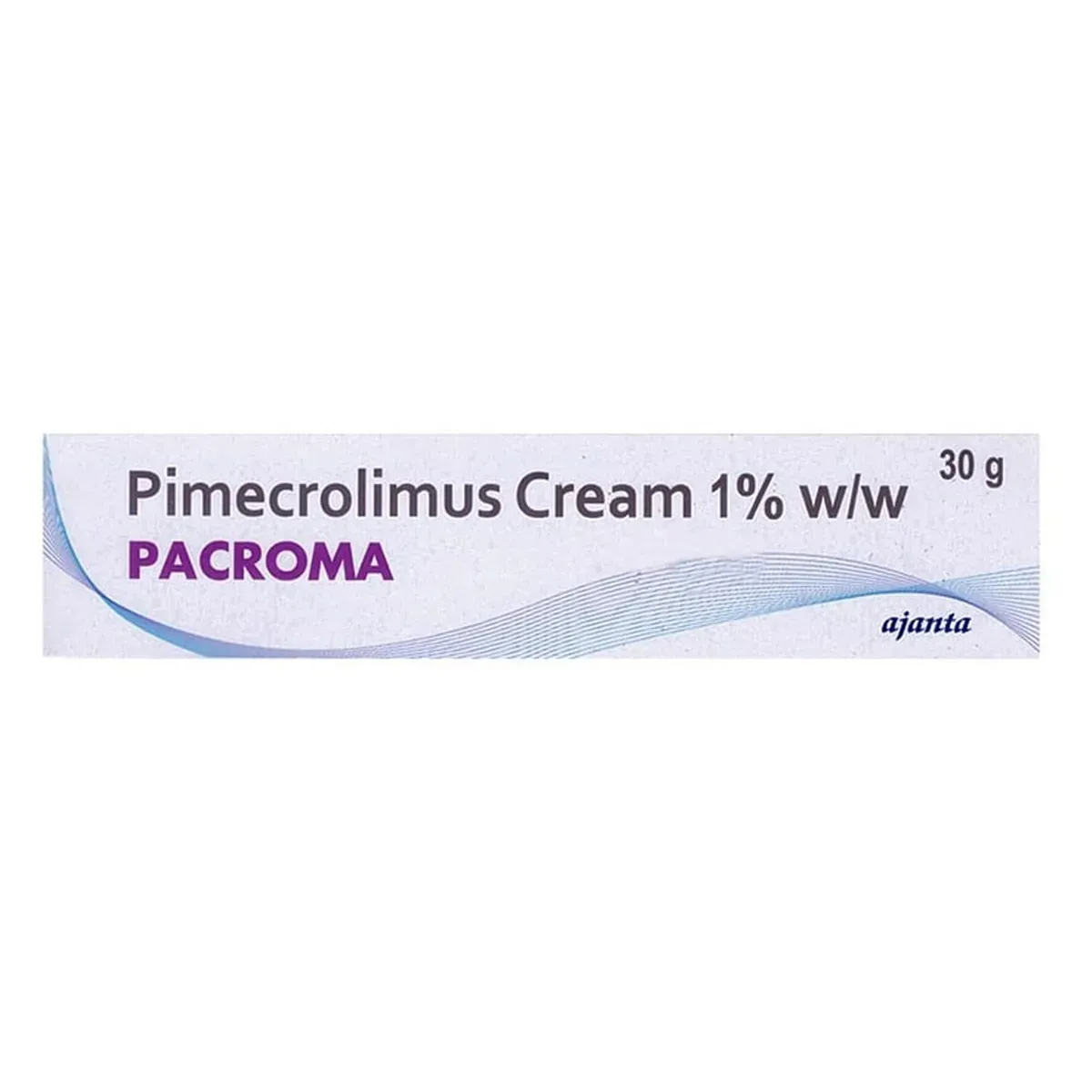
Pacroma Cream (Pimecrolimus)
Price range: $16.00 through $87.00
| Active Ingredient | Pimecrolimus |
|---|---|
| Manufacturer | Ajanta Pharma Ltd |
| Packaging | 10 gm in 1 tube |
| Strength | 1% |
| Delivery Time | 6 to 15 days |
| SKU: | Pacroma Cream (Pimecrolimus) |
The Complete Guide to Pacroma Cream (Pimecrolimus): Uses, Benefits, Science, and Eczema Relief
Living with chronic skin conditions like eczema or atopic dermatitis can feel like an endless cycle of discomfort. The persistent itching, intense redness, raw patches, and uncomfortable flare-ups impact not only your skin but also your sleep, confidence, and overall quality of life. For years, topical corticosteroids have been the default treatment to calm active inflammation. However, long-term steroid use carries known risks, such as skin thinning (atrophy), stretch marks, spider veins, and rebound flare-ups.
This is where non-steroidal topical therapies have revolutionized modern dermatology. Among the most effective prescription options available today is Pacroma Cream (Pimecrolimus). Designed specifically to target overactive immune responses in the skin without the structural drawbacks of steroids, this cream offers a safe, long-term management strategy for sensitive skin.
In this comprehensive guide, we will explore everything you need to know about Pacroma Cream (Pimecrolimus). From its cellular mechanism of action and clinical uses to proper application techniques, safety profiles, potential side effects, and daily skin care strategies, this guide provides the detailed information you need to take control of your skin health.
What is Pacroma Cream (Pimecrolimus)?
Pacroma Cream (Pimecrolimus) is a specialized, prescription-only topical immunomodulator formulated to manage mild-to-moderate atopic dermatitis (eczema) and various inflammatory skin conditions. Containing 1% Pimecrolimus in a smooth, moisturizing cream base, it belongs to a class of medications known as topical calcineurin inhibitors (TCIs).
Unlike traditional corticosteroid creams that broadly suppress multiple cellular pathways—sometimes leading to tissue breakdown over time—Pacroma Cream (Pimecrolimus) acts with targeted precision. It selective interrupts the immune signaling cascade that triggers skin redness, swelling, and itching, leaving the structural collagen of your skin entirely intact.
Key Specifications & Characteristics
| Attribute | Specification Details |
| Active Ingredient | Pimecrolimus (1% w/w) |
| Therapeutic Class | Topical Calcineurin Inhibitor (TCI) / Immunomodulator |
| Formulation Type | Smooth, water-miscible topical cream |
| Primary Indication | Mild-to-moderate atopic dermatitis (eczema) |
| Steroid-Free Status | 100% Non-Steroidal |
| Suitable Application Sites | Face, neck, eyelids, skin folds, and general body surfaces |
| Prescription Status | Prescription required |
The Science: How Pacroma Cream Works in the Skin
To understand why Pacroma Cream (Pimecrolimus) is so effective for inflammatory skin conditions, it helps to examine the underlying biology of eczema flare-ups.
In a healthy skin barrier, immune cells remain calm until an external threat appears. However, in skin affected by atopic dermatitis, specialized immune cells called T-lymphocytes (T-cells) and mast cells become hypersensitive. When exposed to triggers like dry air, allergens, stress, or friction, these T-cells activate rapidly and produce inflammatory proteins called cytokines (such as Interleukin-2, Interleukin-4, and Interleukin-10). These cytokines flood the surrounding tissue, causing intense itching, redness, heat, and swelling.
The Calcineurin Inhibition Cascade
Pimecrolimus works directly at the source of this inflammatory chain reaction:
-
Cellular Penetration: When applied topically, Pimecrolimus penetrates the outer layer of the skin (stratum corneum) to reach infiltrating T-cells and skin-resident immune cells.
-
Binding to Macrophilin-12: Inside the T-cell, Pimecrolimus binds with high affinity to an intracellular protein called macrophilin-12 (also known as FKBP-12).
-
Inhibition of Calcineurin: The resulting Pimecrolimus-macrophilin complex specifically targets and blocks calcineurin, an essential enzyme needed to activate the Nuclear Factor of Activated T-cells (NF-AT).
-
Blocking Cytokine Synthesis: Without functional calcineurin, NF-AT cannot enter the cell nucleus. As a result, the gene transcription of inflammatory cytokines is completely blocked.
-
Calming Mast Cells: Pimecrolimus also prevents mast cells from releasing histamine and other inflammatory mediators that cause immediate itching and hive-like reactions.
By shutting down cytokine release at the cellular level, Pacroma Cream (Pimecrolimus) breaks the vicious “itch-scratch cycle,” allowing the skin barrier to heal naturally.
Primary Uses & Clinical Indications
Dermatologists prescribe Pacroma Cream (Pimecrolimus) for a variety of localized inflammatory skin conditions, particularly where long-term safety and delicate skin areas are primary considerations.
1. Atopic Dermatitis (Eczema)
The primary clinical use of Pacroma Cream (Pimecrolimus) is the second-line, short-term, and non-continuous chronic treatment of mild-to-moderate atopic dermatitis. It is indicated for patients who cannot tolerate topical corticosteroids or for whom steroid therapy carries unacceptable risks.
2. Facial and Delicate Area Eczema
The skin on the face, eyelids, neck, armpits, and groin is significantly thinner and more delicate than skin on the rest of the body. Topical steroids applied to these sensitive spots carry a high risk of skin thinning, loss of elasticity, and telangiectasia (visible broken blood vessels). Because Pacroma Cream (Pimecrolimus) does not affect collagen synthesis, it is an ideal choice for treating delicate facial and flexural skin areas.
3. Proactive Maintenance & Flare Prevention
Beyond treating active lesions, Pacroma Cream (Pimecrolimus) can be used at the very first sign of a flare-up—such as subtle redness or early itching—to prevent the condition from escalating into a severe, widespread outbreak.
4. Off-Label Dermatological Uses
Under the close supervision of a dermatologist, Pacroma Cream (Pimecrolimus) is sometimes utilized off-label for other inflammatory skin conditions that respond to calcineurin inhibitors, including:
-
Seborrheic Dermatitis: Red, scaly, itchy patches on the face and hairline.
-
Inverse Psoriasis: Smooth, red inflammatory patches in skin folds.
-
Vitiligo: To help modulate the local immune response and encourage repigmentation, especially on the face and neck.
-
Perioral Dermatitis: A rash around the mouth often triggered or worsened by topical steroids.
Distinct Advantages of Pacroma Cream over Topical Steroids
When managing chronic skin conditions, choosing the right treatment strategy is essential for long-term health. Pacroma Cream (Pimecrolimus) offers several significant advantages over traditional steroid-based treatments.
| Feature / Benefit | Pacroma Cream (Pimecrolimus) | Topical Corticosteroids |
| Steroid Content | 100% Non-Steroidal | Contains Synthetic Steroid Hormones |
| Skin Thinning (Atrophy) | Zero risk of skin thinning or atrophy | Risk increases with prolonged or high-potency use |
| Facial & Eyelid Safety | Safe for thin, sensitive facial skin | Requires extreme caution; can cause skin thinning or glaucoma |
| Rebound Flare-Ups | Minimal risk of rebound symptoms upon stopping | Common risk when abruptly stopping strong steroids |
| Collagen Synthesis | Does not inhibit collagen or elastin production | Inhibits collagen, leading to fragile skin and stretch marks |
| Long-Term Suitability | Suitable for intermittent long-term flare management | Restricted to short, limited treatment cycles |
Step-by-Step Guide: How to Apply Pacroma Cream Correctly
Proper application ensures maximum therapeutic benefits while minimizing localized side effects like burning or stinging. Follow these simple steps for best results:
Step 1: Wash and Dry Your Hands
Always start by thoroughly cleaning your hands with mild soap and warm water to prevent introducing new bacteria to delicate, compromised skin.
Step 2: Cleanse the Affected Area
Gently cleanse the flare-up area with a soap-free, fragrance-free cleanser and lukewarm water. Avoid hot water, which strips natural skin oils and worsens eczema. Gently pat the skin dry with a soft towel—do not rub vigorously.
Step 3: Apply a Thin Layer
Dispense a small amount of Pacroma Cream (Pimecrolimus) onto your fingertip. Apply a micro-thin layer to cover only the affected areas showing redness, irritation, or itching. Smooth the cream in gently until it absorbs completely.
Step 4: Wash Hands Post-Application
Unless your hands are the area being treated for eczema, wash your hands thoroughly after applying the cream to avoid inadvertently spreading it to your eyes or mouth.
Step 5: Emollient/Moisturizer Timing
Maintaining a strong skin barrier requires consistent moisturizing. You can and should continue using your regular emollients alongside Pacroma Cream (Pimecrolimus). However, apply Pacroma Cream (Pimecrolimus) first, wait approximately 15 to 30 minutes for it to absorb fully into the skin, and then apply your moisturizing cream or ointment over top.
Dosing Frequency & Duration
-
Standard Frequency: Apply a thin layer to the affected areas twice daily (typically morning and evening), or exactly as directed by your physician.
-
Early Intervention: Start application at the very first sign or symptom of an eczema flare-up.
-
Discontinuation: Once signs and symptoms of redness, itching, and inflammation clear completely, stop using the cream. If symptoms return, resume treatment under medical guidance.
Potential Side Effects and What to Expect
Pacroma Cream (Pimecrolimus) has a favorable safety profile and is generally well tolerated. However, like all active medications, it can cause localized side effects, particularly during the first few days of treatment.
Common and Mild Side Effects
-
Application Site Warmth or Burning: The most frequently reported side effect is a mild-to-moderate feeling of warmth, burning, or stinging at the application site. This reaction typically occurs during the first few days of starting treatment as the skin is actively inflamed.
-
Why Burning Happens: When calcineurin inhibitors are first applied to inflamed skin, they trigger a temporary release of substance P and other local neurotransmitters from nerve endings, creating a sensation of heat.
-
Resolution: In the vast majority of patients, this warming sensation subsides after 3 to 5 days of continuous use as the skin inflammation settles down.
Less Common Side Effects
-
Local Skin Irritation: Temporary redness, mild itching, or dry skin at the site of application.
-
Folliculitis: Mild inflammation or tiny bumps around hair follicles in the treated area.
-
Increased Sensitivity to Heat: Skin may feel more sensitive to warm water or sunlight shortly after application.
Rare Reactions
In rare instances, patients may experience an allergic contact reaction to one of the cream’s excipients, characterized by sudden severe itching, swelling, or hives. If you experience these symptoms, wash the cream off and contact your doctor.
Important Safety Precautions & Warnings
To ensure safe and effective treatment with Pacroma Cream (Pimecrolimus), keep the following precautions in mind:
1. Sun Protection and UV Exposure
Pimecrolimus alters the local immune response in the skin. Consequently, treated skin may be somewhat more sensitive to ultraviolet light.
-
Avoid Excessive Sunlight: Minimize exposure to direct sunlight, sunlamps, and tanning beds during treatment.
-
Use Sunscreen: When going outdoors, apply a broad-spectrum, physical/mineral sunscreen (SPF 30 or higher containing zinc oxide or titanium dioxide) over dried areas.
-
Wear Protective Clothing: Cover treated areas with lightweight, loose-fitting clothing when outdoors.
2. Active Skin Infections
Do not apply Pacroma Cream (Pimecrolimus) over areas of skin with active bacterial, viral, or fungal infections (such as cold sores, chickenpox, shingles, or impetigo). Because the cream modifies local immune activity, applying it to infected tissue can allow infections to spread. Treat and resolve any underlying infection first before resuming use.
3. Immunocompromised Individuals
Pacroma Cream (Pimecrolimus) should not be used in patients with severely weakened immune systems (such as those undergoing chemotherapy, organ transplant recipients, or individuals with severe genetic immune deficiencies).
4. Pregnancy and Breastfeeding
-
Pregnancy: Pacroma Cream (Pimecrolimus) should be used during pregnancy only if the potential benefit justifies the potential risk to the fetus, as determined by an obstetrician.
-
Breastfeeding: Nursing mothers should exercise caution. Do not apply the cream directly to the breast or nipple area prior to nursing to avoid accidental oral ingestion by the infant.
5. Age Recommendations
Pacroma Cream (Pimecrolimus) is generally approved for use in adults and pediatric patients aged 2 years and older. Use in children under 2 years of age is not recommended unless explicitly prescribed by a specialized pediatric dermatologist.
Lifestyle & Skincare Strategies to Manage Eczema Flares
While Pacroma Cream (Pimecrolimus) works to suppress inflammation from the inside out, incorporating supportive daily skincare habits helps repair the physical skin barrier and prevents future flare-ups.
1. Practice the “Soak and Seal” Method
Bath or shower in lukewarm (never hot) water for 5 to 10 minutes. Within 3 minutes of stepping out, gently pat excess water off with a towel and immediately seal in moisture with a rich, fragrance-free emollient cream or ceramic ointment.
2. Identify and Eliminate Triggers
Eczema flare-ups are frequently triggered by environmental factors. Common culprits include:
-
Harsh laundry detergents, fabric softeners, and scented soaps
-
Synthetic fabrics like polyester or rough wool (opt for soft, breathable 100% organic cotton)
-
Dust mites, pet dander, and environmental pollen
-
Rapid temperature changes, sweat accumulation, and low air humidity
3. Avoid Scratching
Scratching damages the outer skin barrier further, introduces bacteria from under fingernails, and triggers more histamine release. Keep fingernails short and smooth, and consider wearing soft cotton gloves at night if you tend to scratch in your sleep.
Frequently Asked Questions (FAQs)
1. How fast does Pacroma Cream (Pimecrolimus) start working?
Many patients begin noticing relief from intense itching within the first 48 to 72 hours of starting treatment. Visible reduction in skin redness and swelling typically becomes apparent within 1 to 2 weeks of consistent, twice-daily application.
2. Can I use Pacroma Cream on my eyelids?
Yes. One of the greatest advantages of Pacroma Cream (Pimecrolimus) is that it is non-steroidal and does not cause skin thinning or increase intraocular pressure. It can be safely applied to delicate skin around the eyes and eyelids, provided you take care not to get the cream directly inside the eye.
3. Will Pacroma Cream cause skin thinning like steroid creams?
No. Pacroma Cream (Pimecrolimus) belongs to the calcineurin inhibitor class and does not affect collagen or elastin synthesis in the skin. It causes zero skin atrophy or skin thinning, even with repeated, intermittent use over time.
4. What should I do if the cream burns when I apply it?
A warm or mild burning sensation during the first few applications is a common and expected effect of topical calcineurin inhibitors on actively inflamed skin. This sensation usually fades after 3 to 5 days as the inflammation resolves. Applying the cream to completely dry skin can help minimize stinging. If burning is severe or persists beyond a week, consult your dermatologist.
5. Can I apply makeup or sunscreen over Pacroma Cream?
Yes. Once you apply a thin layer of Pacroma Cream (Pimecrolimus) and allow it to absorb fully into the skin (about 15 minutes), you can safely apply your regular moisturizers, mineral sunscreen, or cosmetics over the area.
6. Is Pacroma Cream habit-forming or addicting?
No. Pacroma Cream (Pimecrolimus) is a non-hormonal, non-steroidal immunomodulator with no addictive properties or risk of physical dependence.
7. How should Pacroma Cream be stored?
Store the tube at room temperature, away from direct heat, moisture, and direct sunlight. Keep the cap tightly closed when not in use, do not freeze the cream, and keep it safely out of the reach of children.
Conclusion
Managing chronic eczema and sensitive skin requires a thoughtful approach that balances effective inflammation control with long-term safety. Pacroma Cream (Pimecrolimus) offers a targeted, steroid-free solution that effectively calms the immune pathways responsible for redness, swelling, and itching.
Its safety profile on delicate areas like the face, neck, and eyelids makes it an invaluable option for long-term flare prevention. By applying Pacroma Cream (Pimecrolimus) at the early signs of irritation, maintaining consistent moisturizing habits, and protecting your skin from environmental triggers, you can achieve smooth, calm, and healthy skin.
If you are struggling with persistent eczema or wish to transition away from topical steroids, speak with a dermatologist to determine if Pacroma Cream (Pimecrolimus) is the right addition to your skincare routine.
Additional information
| unit | 1 Cream, 3 Cream, 6 Cream |
|---|



Reviews
There are no reviews yet.