
- “Amantrel 100 Mg” already exists in your wishlist
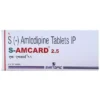
S Amcard 2.5 Mg

Price range: $36.62 through $63.00
| Active Ingredient | Amlodipine |
|---|---|
| Manufacturer | Systopic Laboratories Pvt Ltd |
| Packaging | 10 tablets in 1 strip |
| Strength | 2.5 Mg |
| Delivery Time | 6 To 15 days |
| SKU: | Amcard 2.5 Mg |
Complete Guide to S Amcard 2.5 Mg: Uses, Dosage, Mechanism, Side Effects, and Safety Precautions
Hypertension, commonly known as high blood pressure, is often called the silent killer. It rarely presents noticeable early symptoms, yet it places continuous strain on your heart, blood vessels, brain, and kidneys over time. If left unmanaged, persistent high blood pressure can significantly increase the risk of heart attacks, heart failure, strokes, and chronic kidney disease.
Choosing an effective, well-tolerated antihypertensive medication is a cornerstone of long-term cardiovascular health. Among modern blood pressure treatments, S Amcard 2.5 Mg stands out as a highly effective, refined, and preferred choice for many patients and healthcare providers.
In this comprehensive, human-centered guide, we will break down everything you need to know about S Amcard 2.5 Mg. From its active ingredient and unique chemical isolation to its primary medical uses, mechanism of action, proper dosage, potential side effects, and practical lifestyle habits, this article provides the essential information needed to manage your heart health safely and effectively.
What is S Amcard 2.5 Mg?
S Amcard 2.5 Mg is a prescription cardiovascular medication widely used to manage high blood pressure (hypertension) and treat specific types of chest pain known as angina pectoris. It belongs to a major class of cardiac medications known as calcium channel blockers (CCBs), specifically the dihydropyridine sub-class.
The key feature that sets S Amcard 2.5 Mg apart from conventional blood pressure tablets is its active ingredient: S-Amlodipine (2.5 mg).
Understanding the Difference: Amlodipine vs. S-Amlodipine
To understand why doctors frequently prescribe S Amcard 2.5 Mg, it helps to look at the chemistry behind standard amlodipine versus S-amlodipine.
-
Racemic Amlodipine: Standard amlodipine is a 50:50 mixture of two mirror-image molecules called enantiomers: S-amlodipine and R-amlodipine.
-
S-Amlodipine (The Active Molecule): Research proved that the therapeutic blood-pressure-lowering effect comes almost entirely from the S-enantiomer. It is approximately 1,000 times more potent at blocking calcium channels than the R-enantiomer.
-
R-Amlodipine (The Inactive Molecule): The R-enantiomer provides virtually no blood pressure benefits but contributes significantly to common peripheral side effects, such as swelling in the ankles and feet (peripheral edema).
By isolating and delivering only the pure, active S-Amlodipine, S Amcard 2.5 Mg provides full blood-pressure-lowering efficacy at half the standard dose (2.5 mg of S-amlodipine equals the therapeutic power of 5 mg of standard amlodipine). More importantly, this single-enantiomer formulation drastically reduces the risk of pedal edema and peripheral swelling, offering equal relief with far better patient comfort.
Product Composition Summary
| Attribute | Specification Details |
| Brand Name | S Amcard 2.5 Mg |
| Active Ingredient | S-Amlodipine Besylate (2.5 mg) |
| Therapeutic Class | Dihydropyridine Calcium Channel Blocker |
| Primary Indications | Essential Hypertension, Chronic Stable Angina, Vasospastic Angina |
| Route of Administration | Oral (Tablets) |
| Duration of Action | 24 Hours (Once Daily Dosage) |
| Habit-Forming | No |
How S Amcard 2.5 Mg Works: Mechanism of Action
To understand how S Amcard 2.5 Mg lowers your blood pressure and protects your heart, it helps to take a look inside your vascular system.
For muscle tissue to contract, calcium ions must flow from outside the cell into the intracellular space through specialized channels known as L-type calcium channels. This applies to both the smooth muscle lining your blood vessels and the muscle cells of your heart.
When calcium enters vascular smooth muscle cells, it causes them to constrict, narrowing the arteries and raising the pressure required for blood to flow through them.
Step-by-Step Cardiovascular Actions
-
Inhibition of Calcium Entry: S-Amlodipine selectively binds to L-type calcium channels in the smooth muscle cells of peripheral arteries and coronary blood vessels, blocking the influx of extracellular calcium.
-
Vascular Smooth Muscle Relaxation: Without sufficient calcium influx, the smooth muscles around your arteries relax.
-
Vasodilation & Pressure Reduction: As the arteries relax and expand (vasodilation), peripheral vascular resistance drops significantly. Your heart can pump blood effortlessly through wider pathways, causing your systemic blood pressure to decrease safely and consistently.
-
Reduction of Cardiac Workload: By lowering the resistance against which the heart must pump (afterload), S Amcard 2.5 Mg reduces the heart muscle’s workload and oxygen consumption.
-
Coronary Artery Dilation: In patients suffering from angina, S Amcard 2.5 Mg dilates the main coronary arteries and arterioles. This increases oxygen-rich blood delivery directly to the heart tissue, preventing painful ischemic chest spasms.
Because S-amlodipine binds gradually to calcium channels and leaves them slowly, the blood-pressure-lowering effect occurs smoothly over several hours. This prevents sudden drops in blood pressure (reflex tachycardia) or sudden lightheadedness, providing stable 24-hour coverage with a single daily dose.
Key Clinical Uses and Indications
Healthcare professionals prescribe S Amcard 2.5 Mg for several primary cardiovascular conditions:
1. Essential (Primary) Hypertension
High blood pressure often develops gradually without a single identifiable underlying cause. S Amcard 2.5 Mg is indicated both as a first-line monotherapy and as part of combination therapy to bring elevated blood pressure back down into a safe target range (typically below 120/80 mmHg).
2. Chronic Stable Angina Pectoris
Angina is chest pain or discomfort that occurs when a section of your heart muscle does not receive enough oxygen-rich blood, typically during physical exertion or stress. By relaxing coronary blood vessels and decreasing cardiac workload, S Amcard 2.5 Mg reduces the frequency and severity of angina attacks, improving exercise tolerance.
3. Vasospastic (Prinzmetal’s) Angina
Vasospastic angina is a less common form of chest pain caused by sudden spasms in the coronary arteries, often occurring while at rest or asleep. S Amcard 2.5 Mg directly inhibits coronary arterial spasms, maintaining steady blood flow to the heart muscle around the clock.
4. Combination Therapy for Resistant Hypertension
When a single blood pressure medication is insufficient to hit target numbers, doctors frequently combine S Amcard 2.5 Mg with other antihypertensive classes, such as:
-
ACE inhibitors (e.g., Enalapril, Ramipril)
-
Angiotensin Receptor Blockers / ARBs (e.g., Telmisartan, Losartan)
-
Beta-blockers (e.g., Metoprolol, Bisoprolol)
-
Thiazide diuretics (e.g., Chlorthalidone, Hydrochlorothiazide)
Combining medications with different mechanisms produces a synergistic effect, lowering blood pressure safely without needing maximum doses of a single drug.
Standout Benefits of Choosing S Amcard 2.5 Mg
Compared to older or conventional blood pressure options, S Amcard 2.5 Mg provides distinct clinical advantages:
-
Lower Incidence of Ankle Swelling (Pedal Edema): Because it contains only the pure active S-enantiomer, patients experience significantly lower rates of foot, ankle, and leg fluid retention compared to standard 5 mg amlodipine.
-
Smooth, 24-Hour Blood Pressure Control: Its long elimination half-life (35 to 50 hours) maintains steady therapeutic levels in the bloodstream, preventing dangerous early-morning blood pressure spikes.
-
Preserved Organ Function: By maintaining consistent arterial pressure, it shields delicate micro-vessels in the kidneys, eyes, and brain from chronic pressure-induced damage.
-
No Negative Impact on Metabolism: Unlike certain older diuretics or beta-blockers, S Amcard 2.5 Mg does not adversely affect blood sugar, HbA1c levels, or lipid profiles (cholesterol and triglycerides), making it an excellent choice for patients with diabetes or metabolic syndrome.
-
Once-Daily Convenience: A simple once-a-day schedule improves daily adherence, ensuring long-term consistency.
Recommended Dosage and How to Take S Amcard 2.5 Mg
To get the full therapeutic benefits from S Amcard 2.5 Mg, always follow the exact dosage and administration instructions provided by your prescribing doctor.
Standard Administration Guidelines
-
Usual Starting Dose: For most adults managing hypertension or chronic angina, the typical starting dose is S Amcard 2.5 Mg taken once daily.
-
Dose Adjustments: Depending on individual blood pressure readings and response, your doctor may keep you at 2.5 mg or gradually adjust the dosage up to a maximum of 5 mg of S-amlodipine daily.
-
Elderly & Fragile Patients: Elderly patients or individuals with mild-to-moderate hepatic impairment often start with S Amcard 2.5 Mg daily, as clearance may be slower in these groups.
How to Take Your Tablet
-
Take it at the Same Time Every Day: Whether you choose morning or evening, taking S Amcard 2.5 Mg at the same hour daily helps keep a steady level of the medication in your bloodstream.
-
With or Without Food: You can take S Amcard 2.5 Mg with a meal or on an empty stomach. Choose whichever routine feels best for your digestion and stick to it.
-
Swallow Whole: Swallow the tablet whole with a full glass of plain water. Do not crush, chew, break, or dissolve the tablet, as this can disrupt its controlled release.
-
Avoid Grapefruit and Grapefruit Juice: Grapefruit contains compounds that block the liver enzyme (CYP3A4) responsible for breaking down amlodipine. Drinking grapefruit juice while taking S Amcard 2.5 Mg can significantly increase drug concentrations in your blood, leading to an unpredictable, sharp drop in blood pressure.
What Should You Do If You Miss a Dose?
If you forget to take your tablet at your usual time:
-
Take it as soon as you remember that same day.
-
However, if it is almost time for your next scheduled dose (within 12 hours), skip the missed tablet completely and return to your normal schedule.
-
Never take a double dose to make up for a missed tablet.
Potential Side Effects and How to Manage Them
While S Amcard 2.5 Mg is engineered to minimize adverse effects, some individuals may still experience mild and transient side effects as their body adapts to lower blood pressure.
Common and Mild Side Effects
These effects are generally mild, self-limiting, and clear up as your body adjusts:
-
Headache or Lightheadedness: Occurs due to initial vascular dilation. Staying well-hydrated and standing up slowly from sitting or lying positions helps minimize dizziness.
-
Flushing or Warmth: A temporary warm sensation in the face, neck, or chest caused by expanded blood vessels.
-
Mild Fatigue or Drowsiness: Feeling slightly tired during the first few weeks of starting therapy.
-
Mild Abdominal Discomfort or Nausea: Taking your tablet with meals can ease mild stomach upset.
-
Minor Ankle Swelling: Although far less common than with racemic amlodipine, minor fluid accumulation can still occur in sensitive individuals. Elevating your legs while resting helps reduce fluid accumulation.
Rare but Serious Side Effects
Seek prompt medical care if you experience any of the following unusual symptoms:
-
Severe Dizziness or Fainting (Hypotension): Indicates your blood pressure has dropped too low.
-
Unusually Fast or Pounding Heartbeat (Palpitations): Reflex tachycardia can occur rarely during initial therapy.
-
Worsening Chest Pain: In rare cases, especially when starting treatment or increasing the dose, patients with severe underlying coronary artery disease may experience temporary increases in angina frequency.
-
Allergic Reactions: Symptoms such as skin rash, severe itching, swelling of the face, lips, tongue, or throat, and difficulty breathing require immediate emergency medical evaluation.
Important Safety Precautions & Drug Interactions
To ensure your safety while taking S Amcard 2.5 Mg, keep the following clinical precautions in mind:
1. Pregnancy and Breastfeeding
-
Pregnancy: S Amcard 2.5 Mg should only be used during pregnancy if explicitly prescribed by your cardiologist and obstetrician when the therapeutic benefits outweigh potential risks to the fetus.
-
Breastfeeding: Small amounts of amlodipine pass into human breast milk. Consult your doctor to determine whether to continue nursing or adjust your blood pressure regimen.
2. Liver Impairment
Because S-amlodipine is extensively processed by the liver, patients with impaired hepatic function break down the medication more slowly. Your doctor may monitor your liver enzymes and adjust your dosing schedule accordingly.
3. Severe Aortic Stenosis
Caution is necessary for patients with severe aortic stenosis (narrowing of the heart’s aortic valve), as significant vasodilation can temporarily reduce coronary blood flow.
4. Important Drug Interactions
Always inform your doctor and pharmacist about all prescription drugs, over-the-counter medications, vitamins, and herbal supplements you are taking. S Amcard 2.5 Mg can interact with:
| Drug Class / Compound | Example Medications | Clinical Interaction Effect |
| CYP3A4 Inhibitors | Ketoconazole, Itraconazole, Erythromycin, Clarithromycin | Increases S-amlodipine concentration in blood; increases risk of low blood pressure and side effects. |
| CYP3A4 Inducers | Rifampicin, St. John’s Wort, Phenytoin, Carbamazepine | Decreases S-amlodipine concentration in blood; may reduce blood pressure control. |
| Other Antihypertensives | Telmisartan, Ramipril, Metoprolol, Furosemide | Enhances blood pressure lowering. Beneficial when planned, but requires monitoring to avoid hypotension. |
| Simvastatin (Cholesterol Drug) | Simvastatin | S-amlodipine increases blood levels of simvastatin. Your doctor may cap your simvastatin dose at 20 mg daily. |
| Immunosuppressants | Tacrolimus, Cyclosporine | S-amlodipine can increase blood levels of these drugs, requiring close blood level monitoring. |
Complementary Lifestyle Habits for Optimal Blood Pressure Control
Medication like S Amcard 2.5 Mg plays a critical role in controlling high blood pressure, but pairing it with healthy daily habits yields the best long-term cardiovascular results.
1. Adopt a Heart-Healthy DASH Diet
Embrace the Dietary Approaches to Stop Hypertension (DASH) eating plan:
-
Focus on fresh fruits, vegetables, whole grains, lean proteins, legumes, and low-fat dairy.
-
Limit intake of saturated fats, trans fats, refined sugars, and ultra-processed foods.
2. Reduce Dietary Sodium (Salt)
Excess sodium causes the body to retain extra fluid, increasing blood volume and raising pressure in your arteries. Aim to keep daily sodium intake under 2,000 mg (about one teaspoon of table salt), avoiding hidden salt in canned soups, packaged snacks, and fast food.
3. Engage in Regular Physical Activity
Aim for at least 150 minutes of moderate-intensity aerobic exercise each week, such as brisk walking, swimming, cycling, or light jogging. Regular movement strengthens the heart muscle, improves arterial flexibility, and aids weight management.
4. Maintain a Healthy Body Weight
Losing excess weight significantly reduces the strain on your heart and vascular system. Even losing 3 to 5 kilograms can lead to measurable reductions in your daily blood pressure readings.
5. Manage Stress and Improve Sleep
Chronic emotional stress keeps your body in a state of fight-or-flight, elevating stress hormones like cortisol and adrenaline that constrict blood vessels. Incorporate relaxation techniques such as deep breathing, meditation, yoga, or daily nature walks. Prioritize 7 to 8 hours of quality sleep every night.
6. Limit Alcohol and Quit Smoking
-
Quit Tobacco: Nicotine immediately spikes blood pressure and damages inner arterial walls, accelerating plaque build-up.
-
Moderate Alcohol: Keep alcohol consumption strictly moderate, as excessive drinking raises blood pressure and interferes with medication efficacy.
Frequently Asked Questions (FAQs)
1. Can I stop taking S Amcard 2.5 Mg once my blood pressure normalizes?
No. High blood pressure is a chronic condition, and normal readings mean the medication is working effectively. Stopping S Amcard 2.5 Mg abruptly can cause your blood pressure to rebound to high levels, increasing your risk of cardiovascular events. Always consult your doctor before making any changes to your medication routine.
2. How long does it take for S Amcard 2.5 Mg to start working?
S Amcard 2.5 Mg begins lowering blood pressure within 6 to 12 hours of taking your first dose. However, it may take 7 to 14 days of continuous daily use to see its full therapeutic benefits on your regular blood pressure logs.
3. Is S Amcard 2.5 Mg safe to take long-term?
Yes. S Amcard 2.5 Mg is designed for long-term management of chronic hypertension and angina. Millions of patients safely take calcium channel blockers for years without developing tolerance or habituation.
4. Will S Amcard 2.5 Mg cause my legs or feet to swell?
Ankle swelling (pedal edema) is significantly less common with S Amcard 2.5 Mg than with standard amlodipine because it contains only the pure active S-enantiomer. However, if you do experience swelling, mention it to your doctor, who can suggest simple adjustments or complementary treatments.
5. Can I take S Amcard 2.5 Mg at night?
Yes, you can take S Amcard 2.5 Mg either in the morning or at night, as long as you take it at the same time every day. Many patients prefer taking their blood pressure medication at bedtime to maintain optimal control through the overnight and early morning hours.
6. Can I drink coffee while taking S Amcard 2.5 Mg?
Moderate coffee consumption (1 to 2 cups daily) is generally fine for most people. However, caffeine can cause temporary spikes in blood pressure. It is best to avoid heavy caffeine intake right before measuring your blood pressure.
Disclaimer:-
This information about S Amcard 2.5 Mg is provided for educational purposes only and should not be considered medical advice. Always use this medicine only according to the prescription and guidance of a qualified healthcare professional. Do not change the dose, stop treatment, or start the medicine without consulting your doctor. If you experience unusual or serious symptoms, seek medical attention promptly.
Additional information
| unit | 500 Tablet, 1000 Tablet, 1500 Tablet |
|---|




Reviews
There are no reviews yet.