
Pyrantel — Trusted Anthelmintic for Worm Infections
What Is Pyrantel?
Pyrantel is a well-established antiparasitic medication used to treat a range of intestinal worm infections, including roundworm (ascariasis), pinworm (enterobiasis), hookworm infections, trichostrongyliasis, and trichinellosis. First introduced in the 1960s, it has since become one of the most globally trusted anthelmintic agents. It is listed on the World Health Organization’s List of Essential Medicines, reflecting its proven safety and effectiveness across decades of clinical use. Available as a generic medication, Pyrantel is widely accessible and affordable for both human and veterinary applications.
How Does Pyrantel Work?
Pyrantel works by causing neuromuscular blockade in parasitic worms. It mimics the neurotransmitter acetylcholine and binds to nicotinic receptors on the muscle cells of the parasites, leading to continuous depolarization. This results in spastic paralysis — the worms lose their grip on the intestinal wall and are expelled naturally through normal bowel movement.
Because the drug is minimally absorbed from the gastrointestinal tract, it acts locally where the parasites reside, which further enhances its safety profile by limiting systemic exposure and associated side effects.
What Conditions Does Pyrantel Treat?
Pyrantel targets a broad range of gastrointestinal nematodes. It is highly effective against:
- Pinworm (Enterobiasis) — one of the most common intestinal worm infections, especially in children
- Roundworm (Ascariasis) — a widespread parasitic infection affecting the small intestine
- Hookworm — including Ancylostoma duodenale and Necator americanus
- Trichostrongyliasis — a less common but effectively treated parasitic infection
Note: Pyrantel is not effective against whipworm (Trichuris trichiura).
Available Forms
Pyrantel is formulated for convenience and ease of use across different age groups. It is available in the following forms:
- Oral suspension — ideal for children and those who have difficulty swallowing tablets
- Chewable tablets — easy to administer, especially for paediatric use
- Capsules — suitable for adult patients
It is available both on prescription and over the counter (OTC), depending on the region and indication.
Dosage Guidelines
Dosage depends on the type of infection and the patient’s body weight. As a general guideline:
- A single dose of 10 mg/kg (up to a maximum of 1 g) is typically recommended for roundworm, pinworm, and hookworm infections.
- A repeat dose after 2–4 weeks is often advised to eliminate any newly hatched worms.
- Pyrantel can be taken between meals and consumed with milk or fruit juice — no fasting, special diets, or laxatives are required before or after treatment.
- It should not be used in children younger than 2 years of age unless directed by a doctor.
Always follow the dosage prescribed by your healthcare provider or as indicated on the product label.
Side Effects
Pyrantel is generally well tolerated at recommended doses. Commonly reported side effects include:
- Nausea, vomiting, or diarrhoea
- Abdominal cramps or discomfort
- Headache or dizziness
- Drowsiness or insomnia
- Mild skin rash
- Transient elevation of liver enzymes
Most side effects are mild and short-lived. Pyrantel is considered a safe and inexpensive treatment that usually resolves the infection with a single dose and has a low risk of serious toxicity.
Precautions & Contraindications
- Use with caution in patients with impaired liver function.
- Exercise care in malnourished or severely anaemic individuals.
- The safety of Pyrantel in pregnant and breastfeeding women has not been fully established — consult a doctor before use.
- Avoid concurrent use with piperazine, as the two drugs have opposing mechanisms and may reduce each other’s effectiveness.
- Enzyme-inducing drugs such as rifampin or phenobarbital may reduce Pyrantel’s therapeutic efficacy.
Always inform your doctor of all medications you are currently taking before starting Pyrantel.
Pyrantel in Veterinary Medicine
Pyrantel has been used in companion animal medicine since the 1970s and remains a cornerstone of veterinary deworming protocols. It is effective against hookworms and roundworms in dogs, cats, horses, and livestock. In veterinary settings, it is often combined with other antiparasitic agents to provide broader-spectrum coverage against multiple parasite species.
Why Choose Pyrantel?
- Proven efficacy — trusted in clinical practice for over 50 years
- WHO-listed — recognised as an essential medicine globally
- Minimal systemic absorption — targets parasites locally with low risk to the host
- Single-dose convenience — effective for most infections with one administration
- Dual use — suitable for both human and veterinary medicine
Always consult a qualified healthcare professional before starting any antiparasitic treatment. The information on this page is for general reference and does not replace professional medical advice.
-
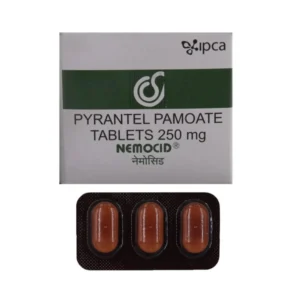
Nemocid 250 Mg (Pyrantel)
Active Ingredient: Pyrantel Indication: Worm infections Manufacturer: Ipca Laboratories Ltd Packaging: 3 tablets in 1 strip Strength: 250mg Delivery Time: 10 to 15 days Price range: $35.00 through $110.00Nemocid 250 Mg (Pyrantel)
Price range: $35.00 through $110.00