
- “Sebifin Cream (Terbinafine)” already exists in your wishlist
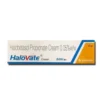
Halovate Cream (Halobetasol)

Price range: $6.00 through $33.00
| Active Ingredient | Halobetasol |
|---|---|
| Manufacturer | Glenmark Pharmaceuticals Ltd. |
| Packaging | 30 gm in 1 tube |
| Strength | 0.05% |
| Delivery Time | 6 To 15 days |
| SKU: | Halovate Cream (Halobetasol) |
Halovate Cream (Halobetasol): The Ultimate Guide to Relief from Inflammatory Skin Conditions
Dealing with severe skin conditions like psoriasis, severe eczema, or persistent dermatitis can deeply impact your quality of life. From relentless itching and burning sensations to painful redness and thick, scaly patches, finding rapid and effective relief is top priority. That is where Halovate Cream (Halobetasol) comes in as a high-potency, dermatologist-recommended solution.
Classified among the most potent topical corticosteroids available in modern medicine, Halovate Cream is specifically engineered to target severe skin inflammation right at its cellular source. When over-the-counter creams and mid-strength steroids fail to bring relief, this targeted medication provides rapid comfort and restores skin health.
In this comprehensive guide, we will break down everything you need to know about Halovate Cream (Halobetasol)—from its core mechanism of action and primary uses to step-by-step application guidelines, managing side effects, critical safety precautions, and long-term care strategies.
What is Halovate Cream (Halobetasol)?
Halovate Cream (Halobetasol) is a super-potent (Class 1) topical corticosteroid prescribed for the short-term treatment of severe, inflammatory, and pruritic (itching) skin conditions. Its active pharmaceutical ingredient is Halobetasol Propionate (0.05% w/w).
In dermatological science, topical steroids are categorized into seven classes based on their strength, with Class 1 being the most powerful. Halobetasol Propionate belongs to this elite Class 1 category. It is formulated to act rapidly against stubborn skin plaques, intense swelling, and severe skin irritation that do not respond to milder topical treatments.
Key Product Details
| Feature | Details |
| Active Ingredient | Halobetasol Propionate (0.05% w/w) |
| Drug Class | Super-High Potency Topical Corticosteroid (Class 1) |
| Primary Indication | Plaque Psoriasis, Severe Eczema, Resistant Dermatitis |
| Formulation | Smooth, non-greasy topical cream base |
| Prescription Status | Prescription Only (POM) |
| Typical Duration | Short-term use (up to 2 consecutive weeks) |
How Does Halovate Cream (Halobetasol) Work?
To understand why Halovate Cream (Halobetasol) is so effective, it helps to understand what happens inside inflamed skin. Conditions like psoriasis and eczema trigger an overactive immune response, causing blood vessels to dilate and inflammatory chemicals (such as prostaglandins and leukotrienes) to flood the skin tissue. This results in red, swollen, intensely itchy skin cells that multiply too quickly.
Halovate Cream tackles this inflammation through three primary physiological mechanisms:
1. Powerful Anti-Inflammatory Action
Halobetasol enters skin cells and binds to specific glucocorticoid receptors. Once bound, it inhibits the production of inflammatory chemicals and cytokines. This halts the inflammatory cascade, leading to a rapid reduction in skin redness, heat, and swelling.
2. Immunosuppressive Properties
In conditions like plaque psoriasis, the immune system mistakenly attacks healthy skin cells, causing them to regenerate in days rather than weeks. Halovate Cream suppresses localized overactive immune cell activity, helping to slow down skin cell hyper-proliferation and reduce thick, silvery scaling.
3. Anti-Pruritic (Anti-Itch) and Vasoconstrictive Effects
Itching causes scratching, which further damages the skin barrier and worsens inflammation—a cycle known as the “itch-scratch cycle.” Halobetasol constricts dilated microscopic blood vessels (vasoconstriction) and soothes nerve endings in the skin, delivering fast-acting relief from severe itching and burning.
Primary Indications: What Conditions Does Halovate Cream Treat?
Because Halovate Cream (Halobetasol) is a super-potent steroid, it is reserved for severe or treatment-resistant inflammatory skin diseases.
1. Plaque Psoriasis (Psoriasis Vulgaris)
Plaque psoriasis causes raised, red lesions covered with silvery dead skin scales, commonly appearing on elbows, knees, lower back, and scalp. Halovate Cream effectively flattens these raised plaques, removes thick scales, and calms persistent inflammation.
2. Severe or Resistant Eczema (Atopic Dermatitis)
When chronic eczema flares up into intensely itchy, dry, cracked, and inflamed patches that resist mid-strength steroids, Halovate Cream provides the heavy-duty anti-inflammatory power needed to break the flare-up.
3. Severe Contact or Seborrheic Dermatitis
Whether caused by severe allergic reactions to plants, chemicals, or metals (contact dermatitis) or stubborn inflammatory scaling (seborrheic dermatitis), Halovate Cream quickly subdues allergic skin responses.
4. Lichen Planus and Other Inflammatory Dermatoses
Lichen planus creates uncomfortable, purplish, itchy, flat-topped bumps on the skin. Halobetasol helps smooth these bumps and eliminates associated itching.
Key Benefits of Halovate Cream (Halobetasol)
Using a Class 1 corticosteroid like Halovate Cream (Halobetasol) under medical supervision provides significant advantages:
-
Rapid Symptom Control: Delivers visible relief from itching, burning, and redness within a few days of starting treatment.
-
Flattens Thick Skin Plaques: Highly effective at penetrating dense, scaly skin lesions associated with long-standing psoriasis.
-
Breaks the Itch-Scratch Cycle: Fast-acting anti-itch properties prevent constant scratching, protecting the skin barrier from secondary bacterial infections.
-
Targeted Topical Action: Focuses high-potency relief directly on affected lesions, minimizing systemic steroid exposure when used correctly.
Step-by-Step Guide: How to Apply Halovate Cream Correctly
Because of its super-high potency, applying Halovate Cream (Halobetasol) correctly is critical to achieving maximum therapeutic benefits while preventing unnecessary skin thinning or side effects.
Step 1: Wash and Dry the Area
Gently cleanse the affected area with warm water and a mild, fragrance-free soap. Pat the skin thoroughly dry with a clean towel.
Step 2: Apply a Very Thin Layer
Squeeze a tiny, pea-sized amount of Halovate Cream (Halobetasol) onto your clean fingertip. Apply a very thin film only to the inflamed lesions or plaques.
Important Rule: Do not apply this cream like a standard moisturizing lotion. Use the minimal amount needed to cover the affected spot.
Step 3: Gently Rub It In
Lightly massage the cream into the skin until it absorbs completely. Wash your hands thoroughly immediately after application (unless your hands are the area being treated).
Step 4: Leave the Area Uncovered
Do NOT cover, bandage, or wrap the treated area with airtight dressings (occlusion) unless explicitly instructed by your dermatologist. Covering super-potent steroids dramatically increases skin absorption, which can trigger systemic absorption and side effects.
Step 5: Follow the Prescribed Schedule
Apply Halovate Cream once or twice daily, exactly as directed by your healthcare provider. Never exceed the prescribed dose or frequency.
Crucial Safety Rules & Duration Limits
Because Halovate Cream (Halobetasol) is a Class 1 topical steroid, stricter safety parameters apply compared to lower-potency treatments:
-
The 2-Week Rule: Treatment should generally not exceed 2 consecutive weeks. Prolonged use can lead to skin atrophy (thinning) and systemic absorption.
-
Maximum Weekly Dose: Patients should generally not exceed 50 grams per week of Halovate Cream.
-
Avoid Sensitive Skin Areas: Never apply Halovate Cream to thin, delicate skin areas such as the face, groin, underarms (axillae), or skin folds, unless under direct dermatological instruction. These areas absorb steroids rapidly and are prone to irreversible skin thinning and stretch marks.
-
Tapering Off: Once your skin lesion clears or improves significantly, your dermatologist will instruct you to taper off the cream—either by reducing application frequency or switching to a lower-potency steroid or non-steroidal maintenance cream. Stopping super-potent steroids abruptly after prolonged use can cause a rebound flare-up.
Managing Side Effects: What You Need to Know
When used strictly as directed for short periods, Halovate Cream (Halobetasol) is well-tolerated. However, misuse, overuse, or prolonged application can lead to local and systemic side effects.
Common Local Side Effects (At Application Site)
-
Mild Burning or Stinging: A brief warming sensation immediately following application.
-
Dryness or Tightness: Temporary skin dryness as the lesion heals.
-
Mild Skin Redness or Irritation: Light local reaction in sensitive individuals.
Side Effects Associated with Misuse or Prolonged Use
-
Skin Atrophy (Skin Thinning): The skin becomes fragile, translucent, and easily bruised.
-
Striae (Stretch Marks): Permanent reddish or purplish lines on skin areas subject to friction.
-
Telangiectasia: Visible, enlarged superficial blood vessels (spider veins) under the skin.
-
Topical Steroid Rebound/Withdrawal: Worsening redness, burning, and intense inflammation upon sudden cessation after prolonged misuse.
-
Hypopigmentation: Temporary lightening of skin tone around treated areas.
-
Folliculitis or Acneiform Eruptions: Inflamed hair follicles or acne-like breakouts.
Rare Systemic Side Effects
If applied over large surface areas or under airtight bandages for extended periods, enough Halobetasol may enter the bloodstream to affect the HPA (hypothalamic-pituitary-adrenal) axis, leading to temporary adrenal suppression or Cushingoid symptoms. This emphasizes the importance of following the 2-week limit and weekly dosage caps.
Precautions and Special Considerations
Before using Halovate Cream (Halobetasol), review these essential medical precautions:
1. Active Skin Infections
Do not apply Halovate Cream over active viral skin infections (such as herpes or chickenpox), fungal infections (such as ringworm or athlete’s foot), or bacterial skin infections (such as impetigo). Steroids suppress the skin’s immune defense and can cause infections to spread rapidly. If an infection is present, an appropriate anti-fungal or anti-bacterial treatment must be used first.
2. Pregnancy and Breastfeeding
Corticosteroids should be used during pregnancy only if the potential benefit outweighs the potential risk to the fetus. If prescribed during breastfeeding, do not apply Halovate Cream directly to the chest or nipple area to prevent accidental ingestion by the nursing infant.
3. Pediatric Use
Children and adolescents have a higher skin surface-to-body weight ratio, making them significantly more susceptible to systemic absorption and steroid-induced growth suppression. Halovate Cream is generally not recommended for young children unless under strict pediatric dermatological supervision.
4. Rosacea and Perioral Dermatitis
Halovate Cream should never be used to treat facial rosacea or perioral dermatitis (rash around the mouth). Applying high-potency steroids to these conditions causes severe rebound flare-ups and permanent facial skin damage.
Halovate Cream vs. Other Topical Steroids
Understanding where Halovate Cream (Halobetasol) sits in the spectrum of topical steroids helps illustrate its potency:
| Steroid Name | Potency Class | Relative Strength | Typical Use Cases |
| Halobetasol (Halovate) | Class 1 (Super-High) | Highest | Severe Psoriasis, Resistant Eczema |
| Clobetasol Propionate | Class 1 (Super-High) | Highest | Severe Psoriasis, Thick Plaques |
| Mometasone Furoate | Class 4 (Medium-High) | Moderate | Moderate Eczema, Dermatitis |
| Triamcinolone Acetonide | Class 4/5 (Medium) | Moderate | Generalized Body Eczema |
| Hydrocortisone (1%) | Class 7 (Low) | Mild | Light Rashes, Bug Bites, Facial Eczema |
Best Practices for Integrating Halovate Cream into Your Routine
To ensure maximum safety and treatment efficacy, follow these practical tips during your treatment course:
-
Pair with Gentle Emollients: Maintain skin hydration by applying a fragrance-free, ceramide-based moisturizing cream 30 to 45 minutes after applying Halovate Cream. This supports the skin barrier without diluting the medication.
-
Keep a Treatment Log: Note the date you start using Halovate Cream to ensure you stay within the recommended 14-day limit.
-
Store at Room Temperature: Keep the tube tightly closed and stored at room temperature away from direct heat, moisture, and sunlight. Do not freeze.
-
Never Share Your Medication: Halovate Cream is a potent prescription drug formulated specifically for your condition. Never share it with family members or friends dealing with rashes.
Frequently Asked Questions (FAQs)
1. How quickly does Halovate Cream (Halobetasol) start working?
Many patients report noticeable reductions in severe itching, redness, and swelling within 24 to 48 hours of initial application. Significant flattening of thick psoriasis plaques typically occurs within 3 to 7 days.
2. Can I use Halovate Cream on my face or neck?
No. Facial skin and neck tissue are exceptionally thin and sensitive. Applying a super-high potency Class 1 steroid like Halovate Cream to the face can cause rapid skin thinning, visible spider veins, acne breakouts, and severe rebound rashes. Use lower-potency options for facial skin as directed by your physician.
3. What happens if I forget a application?
If you miss a dose, apply it as soon as you remember. However, if it is almost time for your next scheduled application, skip the missed dose and resume your regular schedule. Do not double up on cream to make up for a missed dose.
4. Can I use Halovate Cream for insect bites or mild heat rash?
No. Halovate Cream is far too strong for mild skin irritations, insect bites, or simple heat rashes. Over-the-counter mild hydrocortisone (1%) cream or soothing calamine lotion is appropriate for minor irritations.
5. Why is Halovate Cream restricted to 2 weeks of continuous use?
Super-potent topical corticosteroids suppress local cell regeneration. Using them continuously beyond 2 weeks significantly raises the risk of permanent skin thinning, stretch marks, loss of efficacy (tachyphylaxis), and potential absorption into the bloodstream.
6. Can I apply moisturizer right over Halovate Cream?
It is best to wait roughly 30 to 45 minutes after applying Halovate Cream before layering a moisturizer on top. This allows the active steroid to fully penetrate into the target skin layers without being smeared or diluted by the moisturizer.
7. Is Halovate Cream the same as Clobetasol Cream?
Both Halobetasol and Clobetasol belong to Class 1 (super-high potency) topical corticosteroids. While they share similar clinical strength, efficacy, and duration limits, they contain distinct chemical molecules. Your dermatologist will determine which active agent best suits your specific skin profile.
8. What should I do if my skin symptoms return after stopping Halovate Cream?
If your condition flares up again after completing your prescribed 2-week course, contact your dermatologist. They may prescribe a non-steroidal maintenance cream (such as a topical calcineurin inhibitor) or recommend an intermittent dosing schedule to keep breakouts under control safely.
Final Summary & Conclusion
Relief from severe psoriasis, chronic eczema, and resistant dermatitis is achievable with the right medical approach. Halovate Cream (Halobetasol) stands as one of the most powerful topical tools in modern dermatology, delivering rapid relief from intense itching, redness, and thick inflammatory plaques.
By respecting its high potency, strictly observing the 2-week application limit, avoiding thin skin areas like the face, and pairing treatment with gentle emollients under medical guidance, you can safely calm acute flare-ups and restore comfort to your skin.
Medical Disclaimer: This article is for educational and informational purposes only and does not constitute formal medical advice, diagnosis, or treatment. Always consult a qualified dermatologist or medical practitioner before starting or stopping any high-potency prescription medication.
Additional information
| unit | 1 Cream, 3 Cream, 6 Cream |
|---|




Reviews
There are no reviews yet.