
- “Tenovate Cream (Clobetasol Propionate)” already exists in your wishlist
Imutrex 2.5 Mg (Methotrexate)
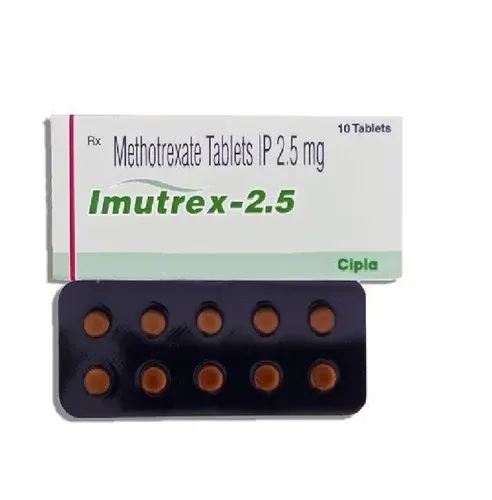
Price range: $27.00 through $195.00
| Active Ingredient | Methotrexate |
|---|---|
| Manufacturer | Cipla Limited |
| Packaging | 10 tablets in 1 strip |
| Strength | 2.5 Mg, 7.5 Mg, 10 Mg |
| Delivery Time | 6 To 15 days |
| SKU: | Imutrex 2.5 Mg (Methotrexate) |
Imutrex 2.5 Mg (Methotrexate): The Ultimate Patient and Clinical Guide
Managing autoimmune conditions like rheumatoid arthritis or severe psoriasis requires a treatment that addresses underlying inflammation rather than just suppressing temporary symptoms. Living with chronic joint pain, persistent morning stiffness, or painful skin plaques can severely impact your mobility, productivity, and overall quality of life. In modern rheumatology and dermatology, Imutrex 2.5 Mg (Methotrexate) remains one of the most trusted, effective, and widely prescribed disease-modifying antirheumatic drugs (DMARDs) available.
Whether you have recently been prescribed this medication or are researching options for long-term autoimmune management, understanding how Imutrex 2.5 Mg (Methotrexate) works inside your body is crucial. This comprehensive guide covers everything you need to know, including its indications, mechanism of action, precise dosing protocols, potential side effects, critical drug interactions, and essential precautions.
What is Imutrex 2.5 Mg (Methotrexate)?
Imutrex 2.5 Mg (Methotrexate) is an oral prescription medication containing 2.5 milligrams of methotrexate as its active pharmaceutical ingredient. Classified primarily as an antimetabolite and immunosuppressant, it belongs to the disease-modifying antirheumatic drug (DMARD) family.
Unlike fast-acting painkillers or non-steroidal anti-inflammatory drugs (NSAIDs) that offer immediate but brief relief, Imutrex 2.5 Mg (Methotrexate) alters the underlying disease process itself. By suppressing an overactive immune system, it prevents progressive joint damage, slows down rapid skin cell proliferation, and reduces chronic systemic inflammation over time.
Product Profile Overview
| Attribute | Clinical Details |
| Active Ingredient | Methotrexate (2.5 mg) |
| Drug Class | Antimetabolite / DMARD (Disease-Modifying Antirheumatic Drug) |
| Primary Uses | Rheumatoid Arthritis, Psoriasis, Psoriatic Arthritis, Juvenile Idiopathic Arthritis |
| Formulation | Oral Tablet |
| Dosing Schedule | Weekly basis (Single day per week or divided across 24 hours once weekly) |
| Common Co-Prescription | Folic Acid (Vitamin B9) to reduce side effects |
How Imutrex 2.5 Mg (Methotrexate) Works in the Body
To understand why Imutrex 2.5 Mg (Methotrexate) is so effective, it helps to examine what happens during an autoimmune reaction. In conditions like rheumatoid arthritis or severe psoriasis, the immune system mistakenly identifies healthy body tissues—such as the synovial lining of joints or healthy skin cells—as dangerous invaders. This mistake triggers continuous inflammation, tissue destruction, and rapid cell division.
1. Folate Antagonism and Enzyme Inhibition
Methotrexate is structurally similar to folic acid (Vitamin B9). It competitively inhibits an enzyme called dihydrofolate reductase (DHFR). This enzyme is essential for converting dihydrofolate into tetrahydrofolate, a key compound needed for synthesizing purines and pyrimidines—the building blocks of DNA and RNA.
By slowing down DNA and RNA synthesis, Imutrex 2.5 Mg (Methotrexate) selectively halts the rapid multiplication of hyperactive immune cells (T-lymphocytes and B-lymphocytes) and keratinocytes without shutting down slower-growing healthy body tissues.
2. Adenosine Accumulation and Anti-Inflammatory Effects
At low immunomodulatory doses (such as those used in rheumatology), methotrexate increases cellular levels of adenosine. Adenosine is a potent natural anti-inflammatory molecule that binds to specific cell surface receptors, effectively signaling immune cells to stop releasing inflammatory cytokines such as TNF-alpha, Interleukin-1 (IL-1), and Interleukin-6 (IL-6).
3. Suppression of Joint Destruction and Plaque Formation
In joints affected by arthritis, reducing cytokine production calms synovial inflammation, decreases swelling, stops bone erosion, and helps preserve joint function. In skin affected by psoriasis, it normalizes the hyperactive cell turnover cycle, allowing thick, scaly plaques to flatten and heal.
Key Clinical Indications for Imutrex 2.5 Mg (Methotrexate)
Dermatologists, rheumatologists, and clinical specialists prescribe Imutrex 2.5 Mg (Methotrexate) for several autoimmune and inflammatory disorders:
1. Rheumatoid Arthritis (RA)
Rheumatoid arthritis is a chronic autoimmune disease characterized by painful, swollen joints, morning stiffness lasting over an hour, and progressive joint destruction. Imutrex 2.5 Mg (Methotrexate) is widely considered the first-line anchor therapy for RA. It reduces joint swelling, lowers systemic inflammatory markers (like CRP and ESR), and halts long-term joint deformation.
2. Severe Psoriasis
Psoriasis causes skin cells to multiply up to ten times faster than normal, forming raised, red patches covered with silvery scales. When topical ointments and phototherapy are insufficient, oral Imutrex 2.5 Mg (Methotrexate) works systemically to slow skin cell production, reduce redness, and restore smoother skin texture.
3. Psoriatic Arthritis (PsA)
Psoriatic arthritis combines skin lesions with joint inflammation, often leading to painful, swollen fingers and toes (dactylitis) and spinal discomfort. Imutrex 2.5 Mg (Methotrexate) addresses both skin and joint symptoms simultaneously, offering comprehensive relief.
4. Juvenile Idiopathic Arthritis (JIA)
In pediatric rheumatology, methotrexate is prescribed for children with polyarticular juvenile idiopathic arthritis who have not responded adequately to standard anti-inflammatory medications.
5. Off-Label Autoimmune Applications
Because of its powerful immunomodulatory properties, doctors may also prescribe Imutrex 2.5 Mg (Methotrexate) off-label for conditions like systemic lupus erythematosus (SLE), polymyositis, dermatomyositis, Crohn’s disease, and vasculitis.
Critical Dosing Guidelines: The Weekly Rule
The single most important aspect of taking Imutrex 2.5 Mg (Methotrexate) safely is its administration schedule.
CRITICAL WARNING: Imutrex 2.5 Mg (Methotrexate) is taken ONCE A WEEK, not every day. Taking this medication daily by mistake can lead to life-threatening toxicity, severe bone marrow suppression, and widespread organ failure.
Standard Adult Dosage Protocols
-
Rheumatoid Arthritis: The typical starting dose ranges from 7.5 mg to 15 mg once per week (equivalent to taking three to six 2.5 mg tablets together on one chosen day of the week). Depending on your clinical response and laboratory results, your doctor may adjust the dose up to 20 mg–25 mg per week.
-
Psoriasis: Starting doses generally range from 10 mg to 15 mg once per week, taken as a single dose or split into three smaller doses taken over a 24-hour period once weekly.
-
Maintenance Therapy: Once your disease is under control, your doctor will adjust your treatment to the lowest effective weekly dose to maintain remission while minimizing side effects.
How to Take Your Weekly Dose
-
Pick a Specific Day: Select a dedicated day of the week (for example, every Sunday morning) that is easy to remember.
-
Swallow Whole: Take your prescribed number of Imutrex 2.5 Mg (Methotrexate) tablets with a full glass of water. Do not crush, chew, or break the tablets.
-
Food Considerations: You may take the tablets with or without food. Taking them with a light meal or at bedtime can help reduce mild nausea.
-
Never Double Up: If you miss your scheduled weekly dose, contact your physician or pharmacist immediately for guidance. Never take extra tablets to make up for a missed dose.
The Essential Role of Folic Acid Supplementation
Because Imutrex 2.5 Mg (Methotrexate) works as a folate antagonist, it can deplete your body’s healthy folate stores over time. This depletion is the primary cause of common side effects like mouth ulcers, nausea, digestive upset, and fatigue.
To counteract these side effects without diminishing the drug’s therapeutic benefits, doctors almost always co-prescribe a Folic Acid (Vitamin B9) supplement.
Folic Acid Dosing Strategies
-
Daily Scheme: Taking 1 mg to 5 mg of Folic Acid daily, except on the day you take your Imutrex 2.5 Mg dose.
-
Weekly Scheme: Taking a single 5 mg dose of Folic Acid 24 to 48 hours after your weekly methotrexate dose.
Always follow your physician’s exact instructions regarding when and how much folic acid to take, as timing is essential for maintaining treatment efficacy.
Comprehensive Overview of Potential Side Effects
Like all potent immunosuppressive medications, Imutrex 2.5 Mg (Methotrexate) can cause side effects. Most patients tolerate low weekly doses well, especially when supported by folic acid, but monitoring your body’s response remains essential.
Common Side Effects (Mild to Moderate)
These reactions often occur during the first few weeks of treatment as your body adjusts, and they frequently improve over time:
-
Nausea and Mild Stomatitis: Queasiness, mild appetite loss, or occasional sore lips and mouth ulcers.
-
Fatigue and Dizziness: Feeling tired or sluggish for 24 to 48 hours following your weekly dose (often called “methotrexate fog”).
-
Mild Hair Thinning: Temporary hair shedding that usually resolves once dosing stabilizes or folic acid intake is adjusted.
-
Headaches: Light to moderate head discomfort after taking your weekly dose.
Serious Side Effects Requiring Immediate Medical Attention
If you experience any of the following symptoms, stop taking the medication and contact your doctor or seek emergency medical care right away:
| Serious Reaction | Warning Signs and Symptoms |
| Bone Marrow Suppression | Unexplained fever, chills, persistent sore throat, unusual bruising, or nosebleeds. |
| Hepatotoxicity (Liver Strain) | Yellowing of the skin or eyes (jaundice), dark urine, persistent abdominal pain, severe fatigue. |
| Pulmonary Toxicity | Sudden onset of a dry cough, unexpected shortness of breath, fever, or chest pain. |
| Severe Skin Reactions | Widespread rash, blistering skin, skin peeling, or severe hives. |
| Renal Impairment | Significant drop in urine volume, swelling in the lower legs, feet, or ankles. |
Essential Precautions and Routine Monitoring
Because Imutrex 2.5 Mg (Methotrexate) affects immune function, liver performance, and blood cell production, routine lab work is mandatory throughout your treatment.
Required Laboratory Tests
-
Baseline Screening: Before starting therapy, your doctor will order a complete blood count (CBC), liver function tests (LFTs), kidney function tests (serum creatinine and BUN), and screenings for latent infections like Tuberculosis (TB) and Hepatitis B/C.
-
Ongoing Monitoring: During the initial months, blood tests are typically conducted every 2 to 4 weeks. Once your dose is stable, testing is usually spaced out to every 8 to 12 weeks.
Important Lifestyle Considerations
-
Strict Avoidance of Alcohol: Alcohol increases the risk of liver damage and toxicity when combined with methotrexate. It is best to avoid alcohol entirely or limit intake strictly as advised by your physician.
-
Infection Risk Management: Because your immune system is partially suppressed, practice good hygiene, wash your hands frequently, and avoid close contact with individuals who have active contagious infections.
-
Sun Sensitivity (Photosensitivity): Imutrex 2.5 Mg (Methotrexate) can make your skin more sensitive to sunlight. Apply broad-spectrum sunscreen (SPF 30+), wear protective clothing, and limit exposure to direct sunlight and tanning beds.
-
Vaccination Guidelines: Avoid receiving live vaccines (such as the yellow fever vaccine, live attenuated flu nasal spray, or oral typhoid vaccine) while taking methotrexate, as your suppressed immune system may not handle a live virus safely. Inactivated or mRNA vaccines (like standard flu shots or COVID-19 vaccines) are generally safe, though your doctor may adjust treatment timing around your vaccination.
Pregnancy, Fertility, and Contraception Warnings
Imutrex 2.5 Mg (Methotrexate) is strictly contraindicated during pregnancy and breastfeeding. It is a known teratogen that can cause severe fetal death, miscarriages, and congenital malformations.
Strict Family Planning Protocols
-
For Female Patients: You must maintain effective, reliable birth control throughout your treatment. If you plan to become pregnant, you must discontinue Imutrex 2.5 Mg (Methotrexate) and wait at least one full menstrual cycle (many clinical guidelines recommend waiting 3 to 6 months) after stopping the medication before attempting to conceive.
-
For Male Patients: Methotrexate can enter seminal fluid and cause temporary chromosomal changes in sperm cells. Male patients should use reliable barrier contraception during treatment and continue for at least 3 months after stopping the medication before attempting to father a child.
-
Breastfeeding: Methotrexate passes into breast milk and can cause harm to a nursing infant. Breastfeeding must be avoided during treatment.
Major Drug Interactions
Certain medications can interact with Imutrex 2.5 Mg (Methotrexate), either by increasing its concentration in your bloodstream to toxic levels or by reducing its effectiveness. Always provide your doctor and pharmacist with a complete list of all prescription drugs, over-the-counter products, vitamins, and herbal supplements you take.
High-Risk Drug Interactions
-
Non-Steroidal Anti-Inflammatory Drugs (NSAIDs): Medications like ibuprofen, naproxen, and diclofenac can reduce kidney clearance of methotrexate, potentially raising drug levels in your blood. While low-dose NSAIDs are sometimes co-prescribed under medical supervision, never start new high-dose OTC painkillers without asking your doctor.
-
Antibiotics (Trimethoprim / Sulfamethoxazole): Cotrimoxazole and trimethoprim inhibit folate metabolism similarly to methotrexate. Combining them significantly increases the risk of severe bone marrow toxicity.
-
Penicillins and Proton Pump Inhibitors (PPIs): Drugs like amoxicillin, omeprazole, or pantoprazole can decrease renal elimination of methotrexate, increasing the risk of side effects.
-
Probenecid and Salicylates: These compounds compete for renal tubular secretion, slowing methotrexate clearance and elevating its blood levels.
-
Other Hepatotoxic Drugs: Combining methotrexate with other medications known to stress the liver (like leflunomide) requires careful medical monitoring.
How to Store Imutrex 2.5 Mg Tablets Safely?
Proper storage ensures the medication maintains its chemical stability and potency:
-
Store tablets at room temperature, ideally between 20°C and 25°C (68°F to 77°F).
-
Keep the tablets in their original blister packaging to protect them from moisture, heat, and direct light.
-
Store the medication safely out of reach and sight of children and pets.
-
Dispose of unused or expired tablets responsibly according to local pharmaceutical disposal guidelines.
Frequently Asked Questions (FAQs)
1. Why do I take Imutrex 2.5 Mg (Methotrexate) only once a week?
Taking methotrexate once a week provides enough immunomodulatory activity to manage autoimmune conditions while giving your healthy tissues time to recover. Taking this medication daily leads to severe cell toxicity, bone marrow suppression, and dangerous organ damage.
2. How long does it take for Imutrex 2.5 Mg to start working?
Methotrexate is a slow-acting medication. While minor improvements in joint pain or morning stiffness may appear within 3 to 6 weeks, full therapeutic benefits typically take 8 to 12 weeks of consistent weekly use to become noticeable.
3. Can I take Imutrex 2.5 Mg if I have a cold or mild fever?
If you develop an active infection, fever, or illness, contact your rheumatologist or doctor before taking your next weekly dose. Your physician may recommend pausing your treatment temporarily until the infection resolves.
4. What should I do if I accidentally take Imutrex 2.5 Mg every day instead of once a week?
This is a medical emergency. Seek immediate emergency medical care or contact a poison control center right away. Doctors can administer leucovorin (folinic acid), an active metabolite that acts as a specific rescue agent to counteract methotrexate toxicity.
5. Will Imutrex 2.5 Mg make my hair fall out completely?
No. High-dose methotrexate used in cancer chemotherapy can cause significant hair loss, but the low weekly doses used for autoimmune conditions like arthritis or psoriasis rarely cause complete hair loss. Some patients experience mild hair thinning, which often improves with folic acid supplementation.
6. Can I drive after taking my weekly dose of Imutrex 2.5 Mg?
Some patients experience temporary dizziness, fatigue, or brain fog on the day they take their weekly dose. If you feel tired or dizzy, avoid driving, operating machinery, or performing tasks that require full mental alertness.
7. Do I need to avoid high-folate foods while taking Imutrex 2.5 Mg?
No, you do not need to avoid dietary sources of folate like spinach, broccoli, or beans. Dietary folate is beneficial for overall health. Simply follow your doctor’s instructions regarding your daily or weekly folic acid supplement.
Summary and Key Takeaways
Imutrex 2.5 Mg (Methotrexate) remains a cornerstone treatment in modern rheumatology and dermatology. By targeting hyperactive immune cells and calming chronic systemic inflammation, it helps preserve joint health, smooth scaly skin plaques, and restore daily function for thousands of patients worldwide.
To ensure safe and effective treatment, keep these key principles in mind:
-
Always follow the weekly schedule: Never take this medication daily.
-
Take your folic acid supplement: Protect your body from digestive and mouth side effects.
-
Keep up with lab appointments: Routine blood work helps your doctor monitor your liver, kidney, and blood cell health.
-
Practice reliable contraception: Avoid taking this medication during pregnancy or breastfeeding.
-
Report unusual symptoms quickly: Inform your healthcare team promptly if you notice signs of infection, persistent cough, or unexpected bruising.
With proper medical guidance, regular lab monitoring, and consistent adherence to your weekly schedule, Imutrex 2.5 Mg (Methotrexate) offers a reliable path toward long-term disease remission and improved quality of life.
Disclaimer:-
This information about Imutrex 2.5 Mg (Methotrexate) is provided for educational purposes only and should not replace professional medical advice. Methotrexate is a prescription medicine that can cause serious side effects and requires appropriate medical supervision. Use it only as directed by a qualified healthcare professional. Do not start, stop, or change the dose without consulting your doctor. Always read the prescribed instructions and discuss possible drug interactions, contraindications, pregnancy-related concerns, and monitoring requirements with your healthcare provider.
Additional information
| mg | 10 Mg, 2.5 Mg, 7.5 Mg |
|---|---|
| unit | 300 Tablet, 90 Tablet, 120 Tablet, 150 Tablet |







Reviews
There are no reviews yet.