
Levamisole — Anthelmintic & Immunomodulatory Agent
What Is Levamisole?
Levamisole is a broad-spectrum anthelmintic medication used to treat parasitic worm infections, particularly ascariasis and hookworm infections. First introduced as an antiparasitic agent in 1969, it later gained recognition for its immunomodulatory properties, leading to FDA approval in 1990 as an adjuvant treatment for colon cancer. It is listed on the World Health Organization’s List of Essential Medicines, making it one of the few drugs that bridges the gap between infectious disease treatment and oncology support.
How Does Levamisole Work?
Levamisole acts as a fast-acting neuromuscular blocking agent in nematodes. It acts as an agonist on L-subtype nicotinic acetylcholine receptors in nematode muscles, causing sustained muscle depolarization and spastic paralysis. Unable to maintain their position in the intestinal wall, worms are expelled through normal peristaltic movement — typically within 24 hours of administration.
Beyond its antiparasitic action, Levamisole also exerts notable immunomodulatory effects. It restores depressed immune function rather than overstimulating it. It enhances T-cell activation and proliferation, stimulates antibody formation, and potentiates macrophage and monocyte functions such as phagocytosis and chemotaxis. It also acts on the dopaminergic, cholinergic, and noradrenergic systems, contributing to its diverse therapeutic applications.
What Conditions Does Levamisole Treat?
Levamisole has a broad therapeutic profile spanning parasitology, oncology, and dermatology.
Parasitic infections treated include:
- Ascaris lumbricoides (roundworm)
- Ancylostoma duodenale and Necator americanus (hookworms)
- Enterobius vermicularis (pinworm)
- Strongyloides stercoralis
- Trichuris species
Other therapeutic uses include:
- Adjuvant treatment with fluorouracil in Dukes Stage C colon cancer
- Nephrotic syndrome (particularly in children)
- Rheumatic and autoimmune conditions
- Skin conditions such as warts, lichen planus, leprosy, and recurrent aphthous ulcers
Available Forms
Levamisole is available in the following forms:
- Tablets — for oral administration in standard antiparasitic and adjuvant oncology dosing
- Veterinary formulations — injectable and oral solutions for livestock, poultry, and companion animals
Dosage Guidelines
- For worm infections, a single oral dose of 150 mg for adults or 2.5 mg/kg for children is typically recommended, preferably after a light meal.
- In cases of severe hookworm infection, a second dose may be given one to seven days after the first.
- For colon cancer adjuvant therapy, dosing is administered in cycles as prescribed by an oncologist alongside fluorouracil chemotherapy.
Always follow the dosage prescribed by your healthcare provider, as requirements differ significantly based on the condition being treated.
Side Effects
When used for short-term anthelmintic treatment, Levamisole is generally well tolerated. Commonly reported side effects include:
- Nausea, abdominal cramps, or loss of appetite
- Altered taste sensation
- Mild skin rash or hair loss
- Joint pain or flu-like symptoms
- Mouth sores or ulcers
Serious but less common side effects include:
- Agranulocytosis, leucopenia, or thrombocytopenia (low blood cell counts)
- Liver function abnormalities — including jaundice, dark urine, or severe fatigue
- Blood in urine or stools
Seek immediate medical attention if any serious symptoms occur.
Precautions & Drug Interactions
- Pregnancy & breastfeeding — Levamisole is not recommended during pregnancy, particularly in the third trimester, or during breastfeeding due to potential adverse effects on the foetus.
- Alcohol — A disulfiram-like reaction has been reported with alcohol consumption during Levamisole use, resulting in headache, fever, shivers, and dizziness. Total abstinence from alcohol is advised during treatment.
- Warfarin — Levamisole may enhance warfarin’s blood-thinning effects, increasing the risk of bleeding.
- Phenytoin — Levamisole may increase phenytoin toxicity.
- Albendazole & Ivermectin — Levamisole may decrease albendazole bioavailability while increasing that of ivermectin.
- It is contraindicated in patients with pre-existing blood disorders such as agranulocytosis or neutropenia.
Levamisole in Veterinary Medicine
Levamisole has been widely used in veterinary medicine since the late 1960s as a broad-spectrum dewormer for cattle, sheep, pigs, and poultry. It is effective against a range of gastrointestinal and pulmonary nematodes in livestock. It has also gained popularity among aquarists as an effective treatment for Camallanus roundworm infestations in freshwater tropical fish.
Key Highlights
- Dual-action — antiparasitic and immunomodulatory in a single molecule
- WHO-listed — recognised as a globally essential medicine
- Fast-acting — worm expulsion typically occurs within 24 hours
- Oncology adjunct — used alongside fluorouracil in colon cancer treatment
- Veterinary relevance — widely used across livestock and companion animals
Always consult a qualified healthcare professional before starting Levamisole therapy. This information is for general reference only and does not substitute for professional medical advice.
-
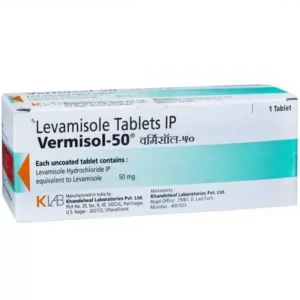
Vermisol 50 Tablet (Levamisole)
Active Ingredient: Levamisole Indication: Worm infections Manufacturer: Khandelwal Laboratories Pvt.Ltd. Packaging: 1 Tablet in 1 strip Strength: 50mg Delivery Time: 10 to 15 days Price range: $20.00 through $50.00Vermisol 50 Tablet (Levamisole)
Price range: $20.00 through $50.00 -
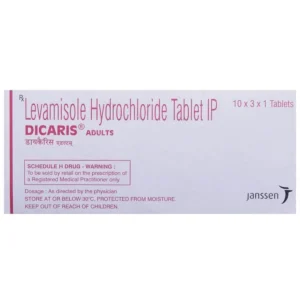
Dicaris Adults 150 mg (Levamisole)
Active Ingredient: Levamisole Indication: Worm infections Manufacturer: Janssen Pharmaceuticals, India Packaging: 1 Tablet in 1 strip Strength: 150mg Delivery Time: 10 to 15 days Price range: $5.00 through $20.00Dicaris Adults 150 mg (Levamisole)
Price range: $5.00 through $20.00 -
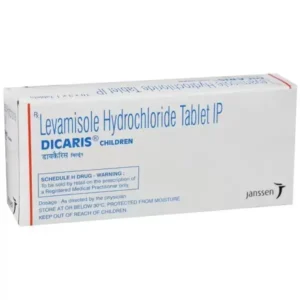
Dicaris Children 50 mg (Levamisole)
Active Ingredient: Levamisole Indication: Worm infections Manufacturer: Janssen Pharmaceuticals, India Packaging: 1 Tablet in 1 strip Strength: 50mg Delivery Time: 10 to 15 days Price range: $5.00 through $15.00Dicaris Children 50 mg (Levamisole)
Price range: $5.00 through $15.00 -
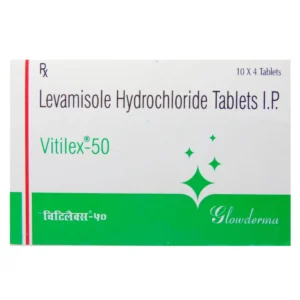
Vitilex 50 Mg (Levamisole)
Active Ingredient: Levamisole Indication: Worm infections Manufacturer: Glowderma Lab Ltd. Packaging: 4 Tablets in 1 strip Strength: 50mg Delivery Time: 10 to 15 days Price range: $17.00 through $60.00Vitilex 50 Mg (Levamisole)
Price range: $17.00 through $60.00