
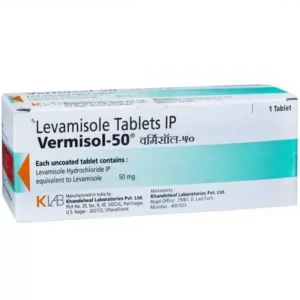
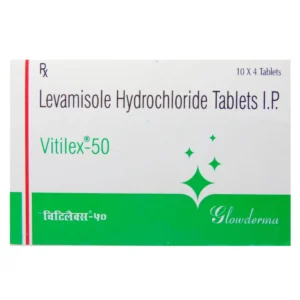
Dicaris Children 50 mg (Levamisole)

Price range: $5.00 through $15.00
| Active Ingredient: | Levamisole |
|---|---|
| Indication: | Worm infections |
| Manufacturer: | Janssen Pharmaceuticals, India |
| Packaging: | 1 Tablet in 1 strip |
| Strength: | 50mg |
| Delivery Time: | 10 to 15 days |
Dicaris Children 50 Mg (Levamisole) — Uses, Dosage, Side Effects & Complete Parent Guide
What Is Dicaris Children 50 Mg?
As a parent, few things are more unsettling than finding out your child has a worm infection. It’s more common than most people think — especially in school-going children who share spaces, touch common surfaces, and aren’t always consistent with handwashing. The good news is that with the right medication, most intestinal worm infections in children are very treatable.
Dicaris Children 50 Mg is a trusted antiparasitic medication specifically formulated for pediatric use. Its active ingredient is Levamisole — a well-established anthelmintic (worm-expelling) drug that has been used in clinical practice for over five decades. What makes Dicaris Children particularly suitable for kids is its child-friendly formulation — available as a flavored chewable tablet that’s easy for children to take without the usual battle that comes with giving medicine to young ones.
Manufactured with pediatric dosing in mind, Dicaris Children 50 Mg is used primarily to treat roundworm (Ascaris lumbricoides) infections — one of the most common parasitic infections affecting children globally. Beyond its antiparasitic action, Levamisole also carries notable immunomodulatory properties, meaning it can help support and regulate a child’s immune response — an added benefit that makes it valuable in certain immune-related pediatric conditions as well.
If your child has been prescribed Dicaris Children 50 Mg and you want to understand what it is, how it works, and what to expect, this guide is written specifically with parents in mind.
How Does Dicaris Children 50 Mg Work?
Understanding how a medication works always helps parents feel more confident about giving it to their child. Here’s a straightforward explanation.
Antiparasitic Mechanism: Levamisole works by acting on the nervous system of parasitic worms — specifically by stimulating nicotinic acetylcholine receptors at the worm’s nerve-muscle junctions. This causes sustained spastic paralysis of the worm — its muscles contract rigidly, and it can no longer move or maintain its grip on the intestinal wall.
Once paralyzed, the worm is unable to resist the natural movement of the gut. It gets swept along with intestinal contents and is expelled from the body through normal bowel movements — alive but completely immobilized.
What’s reassuring for parents is that this mechanism specifically targets receptors that are far more prominent in worm neuromuscular systems than in humans. This selective action means Levamisole paralyzes the parasite without causing the same effect in your child’s body.
Immunomodulatory Mechanism: Beyond its antiparasitic role, Levamisole has a secondary and genuinely remarkable property — it can stimulate and restore immune function. Specifically, it enhances the activity of T-lymphocytes and macrophages — key components of the cell-mediated immune response.
This immune-boosting effect is particularly relevant in pediatric conditions like nephrotic syndrome, where the immune system behaves abnormally. Levamisole helps recalibrate immune activity rather than simply suppressing or stimulating it — a nuanced action that has made it a valuable adjunct therapy in pediatric medicine.
What Does Dicaris Children 50 Mg Treat?
Roundworm Infection (Ascariasis) — Primary Use: This is the most common reason Dicaris Children is prescribed. Ascaris lumbricoides — the human roundworm — is one of the most widespread parasitic infections in the world, with school-age children being disproportionately affected.
Children typically become infected by accidentally ingesting worm eggs from contaminated soil, water, or food — often through hand-to-mouth contact after playing outdoors. Symptoms of roundworm infection in children can include:
- Abdominal pain and bloating
- Nausea or vomiting
- Diarrhea or irregular bowel movements
- Visible worms in stool or vomit (in heavier infections)
- Nutritional deficiencies and weight loss with heavy, prolonged infection
- Disturbed sleep
- Irritability and poor concentration at school
A single dose of Dicaris Children 50 Mg, calculated based on the child’s body weight, is typically highly effective at clearing roundworm infections. The paralyzed worms are expelled within 24 to 48 hours.
Hookworm Infection Dicaris is also used to treat hookworm infections in children. Hookworms are contracted primarily through skin contact with contaminated soil — often when children walk barefoot in affected areas. The larvae penetrate the skin, travel through the bloodstream, and eventually settle in the intestine, where they feed on blood.
Chronic hookworm infection in children causes:
- Iron-deficiency anemia
- Fatigue and weakness
- Poor appetite and growth retardation
- Pale skin and reduced energy levels
Levamisole effectively paralyzes and expels hookworms, though some guidelines recommend confirming clearance with a follow-up stool test.
Nephrotic Syndrome (Steroid-Sparing Adjunct Therapy) One of the more specialized — and genuinely important — pediatric uses of Levamisole is in the management of childhood nephrotic syndrome. This is a kidney condition where the filtering membranes of the kidneys become abnormally permeable, causing large amounts of protein to leak into the urine.
Many children with nephrotic syndrome experience frequent relapses and become dependent on corticosteroids (like Prednisolone) for disease control. Long-term steroid use in children carries serious consequences — including growth suppression, weight gain, bone density loss, and immune suppression.
Levamisole is used as a steroid-sparing agent — its immunomodulatory properties help reduce the frequency of relapses, allowing doctors to taper and minimize steroid doses. Several clinical studies and pediatric nephrology guidelines support the use of Levamisole in frequently relapsing and steroid-dependent nephrotic syndrome in children.
Recurrent Respiratory Infections. In some clinical settings, Levamisole has been used to help children who suffer from recurrent respiratory tract infections — particularly those with evidence of impaired cell-mediated immunity. By stimulating immune function, it may help reduce the frequency and severity of these infections.
Dicaris Children 50 Mg Dosage — Getting It Right for Your Child
Accurate dosing in children is critically important — both for effectiveness and safety. Levamisole is dosed based on body weight, not a flat universal amount.
For Roundworm and Hookworm Infections:
- Standard dose: 2.5 mg/kg body weight as a single dose
- For a child weighing 20 kg, this would be approximately 50 mg — which is one Dicaris Children 50 Mg tablet
- For heavier children, the dose is adjusted accordingly
- In most cases, one dose is sufficient — but your doctor may recommend a follow-up dose or stool test after 2–4 weeks
For Nephrotic Syndrome:
- Typical dose: 2.5 mg/kg given on alternate days (every other day)
- Treatment is long-term — often extending for 12 to 24 months under specialist supervision
- Regular blood count monitoring is mandatory during prolonged therapy
- Dosing adjustments are made based on response and tolerability
How to Give Dicaris Children 50 Mg:
- The tablet is chewable and flavored — most children accept it without difficulty
- It can be chewed directly or swallowed whole with water
- For younger children or those who resist tablets, it can be crushed and mixed into a small amount of soft food or juice
- Can be given with or without food — taking it with a light meal may help reduce the chance of stomach upset
- Give it approximately the same time each day when used for long-term therapy
Never guess the dose. Always confirm the correct amount with your child’s doctor, as body weight and the specific condition being treated both influence the right dosage.
Side Effects of Dicaris Children 50 Mg
For short-term antiparasitic use, Dicaris Children 50 Mg is generally very well tolerated by most children. Side effects are more relevant — and require closer monitoring — when the medication is used long-term for nephrotic syndrome.
Common Side Effects (Usually Mild and Short-Lived):
- Nausea
- Stomach cramps or abdominal discomfort
- Vomiting
- Diarrhea
- Headache
- Mild dizziness
- Mild skin rash or itching
These effects typically resolve on their own within a day or two and are more common in children with heavier worm infestations — partly because dying worms can temporarily irritate the gut.
Side Effects With Prolonged Use:
- Mouth ulcers (aphthous stomatitis) — one of the more commonly reported complaints with long-term Levamisole use in children
- Flu-like symptoms — low-grade fever, fatigue, muscle aches
- Skin rash — sometimes appearing on the face or around the ears
- Altered taste
- Joint discomfort
- Gastrointestinal disturbances — nausea, diarrhea, persisting over time
Serious Side Effects — Know the Warning Signs:
Agranulocytosis: This is the most serious risk associated with prolonged Levamisole use and the main reason regular blood monitoring is non-negotiable. Agranulocytosis is a dangerous drop in neutrophils — the white blood cells responsible for fighting bacterial infections.
Warning signs in children include:
- Sudden high fever
- Severe sore throat
- Painful mouth ulcers
- Unusual susceptibility to infections
- Extreme fatigue or pallor
If your child shows any of these symptoms during Levamisole therapy, stop the medication and seek medical attention immediately. A complete blood count (CBC) should be done urgently.
ANCA-Associated Vasculitis: Rare but reported — this is an autoimmune condition affecting blood vessels. Signs include unusual skin lesions, joint pain, and in some cases, kidney involvement. Report any unexplained skin changes to your doctor.
Severe Allergic Reaction: Though rare, anaphylactic reactions are possible. Signs include sudden swelling of the face, lips, or throat, difficulty breathing, and severe hives. This is a medical emergency — call for help immediately.
Precautions — Important Safety Information for Parents
Age Considerations: Dicaris Children 50 mg is formulated for pediatric use, but it is generally not recommended for children under 1 year of age. For children between 1 and 2 years, use should be under direct pediatric supervision with careful weight-based dosing.
Children With Blood Disorders: If your child has any pre-existing blood condition — including anemia, neutropenia, or a history of bone marrow issues — Levamisole should be used only under very close hematological monitoring. The risk of agranulocytosis is a primary concern.
Children With Liver Conditions: Levamisole is metabolized in the liver. Children with hepatic impairment may process the drug more slowly, leading to higher-than-expected drug levels. Your doctor may need to adjust the dose accordingly.
Children With Epilepsy or Seizure History: Levamisole may lower the seizure threshold in susceptible children. If your child has a history of febrile convulsions or epilepsy, inform the prescribing doctor before starting Dicaris Children.
Children with Kidney Disease: Ironically, while Levamisole is used in the management of nephrotic syndrome, children with significant renal impairment need careful dose consideration due to altered drug elimination.
Vaccinations: Because Levamisole affects immune function, the timing of vaccinations during long-term therapy should be discussed with your pediatrician. Live vaccines in particular may require special consideration.
Drug Interactions — What Your Child’s Doctor Should Know?
Corticosteroids (Prednisolone): In nephrotic syndrome management, Levamisole is often used alongside corticosteroids. While this combination is intentional and therapeutically meaningful, it requires careful monitoring of both immune function and potential side effects of steroid tapering.
Warfarin: Levamisole can enhance the anticoagulant effect of Warfarin. While this is rarely relevant in pediatric antiparasitic use, it’s an important interaction for any child on anticoagulation therapy.
Alcohol-Containing Medications: Levamisole can cause a disulfiram-like reaction when combined with alcohol. While this is primarily relevant in adults, be cautious with liquid medications or syrups containing alcohol if your child is on Levamisole.
Phenytoin: Levamisole may increase blood levels of Phenytoin. If your child takes Phenytoin for seizure management, inform the doctor before starting Dicaris Children.
Immunosuppressants: Combining Levamisole with other immunosuppressant or immunomodulatory drugs requires specialist oversight due to complex and potentially unpredictable immune interactions.
Always give the prescribing doctor a complete list of every medication, supplement, and herbal remedy your child is currently taking — including vitamins and over-the-counter products.
Monitoring During Long-Term Therapy
For parents whose children are using Dicaris Children for nephrotic syndrome or other long-term indications, monitoring is not optional — it is an essential part of safe treatment.
Your child’s doctor will typically recommend:
- Complete Blood Count (CBC) — every 3 to 4 weeks during long-term therapy to monitor white blood cell levels and detect early signs of agranulocytosis
- Urine protein tests — to track nephrotic syndrome activity and treatment response
- Liver function tests — periodically, especially with prolonged use
- Regular clinical review — to assess for mouth ulcers, skin changes, and any signs of infection
Keep all follow-up appointments and never skip blood tests — early detection of agranulocytosis is the most important safety step in long-term Levamisole therapy.
Frequently Asked Questions — From a Parent’s Perspective?
How quickly will Dicaris Children 50 mg work for roundworms?
Levamisole starts paralyzing worms within hours of the dose. Paralyzed worms are typically expelled through your child’s stool within 24 to 48 hours of treatment. You may or may not notice worms in the stool — this is normal either way. Symptoms like stomach discomfort usually begin improving within a couple of days.
Will my child need more than one dose?
For straightforward roundworm infections, a single dose is usually curative. Your doctor may recommend a stool test after 2–4 weeks to confirm clearance. If worms persist, a repeat dose may be given.
Should I treat the whole family?
For roundworm infections specifically, whole-family treatment is not always necessary — unlike pinworm infections. However, if other family members are symptomatic or a stool test confirms infection, simultaneous treatment makes sense. Ask your doctor for guidance.
Is the chewable tablet safe for young children?
Yes — the flavored chewable formulation is specifically designed to make administration easier for children. Ensure the child chews it properly or crushes it in food if needed to avoid any choking risk in very young children.
What if my child vomits after taking the tablet?
If vomiting occurs within 30 minutes of taking the tablet, contact your doctor — a repeat dose may be needed. If it occurs more than an hour later, the medication has likely already been absorbed adequately.
Hygiene Tips to Prevent Reinfection in Children:-
Treating the infection is important — but breaking the reinfection cycle is equally critical, especially in children:
- Teach and supervise handwashing — before every meal, after toilet use, and after outdoor play. Make it a non-negotiable habit
- Keep fingernails short and clean — worm eggs hide under nails and are transferred to the mouth through normal hand-to-mouth behavior common in children
- Ensure children wear footwear outdoors — particularly in areas with soil that may be contaminated with hookworm larvae
- Wash children’s clothing and bedding in hot water during and after treatment
- Clean bathroom surfaces and toilet seats regularly with a household disinfectant
- Ensure children drink clean, safe water — particularly at school or when playing outside
- Wash fruits and vegetables thoroughly before serving to children
- Discourage nail-biting and finger-sucking — gentle reminders and positive reinforcement work better than scolding
- Inform the school if your child has been diagnosed — other children in the class may need screening
Final Thoughts — A Word for Parents
Discovering that your child has a worm infection can feel distressing — but the reality is that it’s an incredibly common childhood experience, particularly in warm climates and densely populated areas. There’s no shame in it, and with the right treatment, it’s completely manageable.
Dicaris Children 50 Mg (Levamisole) is a well-established, pediatric-appropriate medication that has been helping children recover from intestinal worm infections for decades. When used for short-term antiparasitic treatment, it is fast-acting, effective, and generally very safe. When used longer-term for conditions like nephrotic syndrome, it offers real clinical benefit — provided it is monitored appropriately.
As a parent, your most important roles are to give the medication correctly as prescribed, watch for any warning signs — particularly fever, mouth sores, or unusual infections — keep follow-up appointments, and reinforce good hygiene habits at home.
With the right approach, Dicaris Children 50 Mg will do its job well — and your child will be back to their healthy, energetic self before you know it.
Disclaimer:-
This article is for informational purposes only and is not a substitute for professional medical advice, diagnosis, or treatment. Always consult a qualified pediatrician or healthcare provider before giving any medication to your child.
Additional information
| mg | 50 Mg |
|---|---|
| unit | 10 Tablets, 5 Tablets, 15 Tablets |


Reviews
There are no reviews yet.