
Lulifin Cream 10G (Luliconazole)
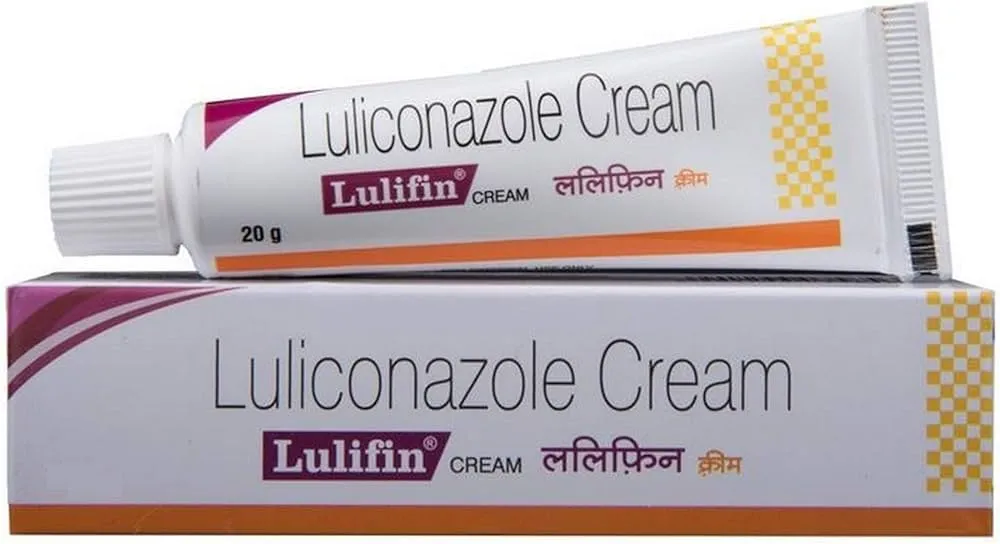
Price range: $7.00 through $101.00
| Active Ingredient | Luliconazole |
|---|---|
| Manufacturer | Sun Pharmaceutical Industries Ltd |
| Packaging | Available in 10g, 20g, 30g & 50g in a Tube |
| Strength | 10gm, 20gm, 30gm, 50gm |
| Delivery Time | 6 To 15 days |
| SKU: | Lulifin Cream 10g (Luliconazole) |
Lulifin Cream 10G (Luliconazole): Uses, Benefits, Side Effects, and Application Guide
Fungal skin infections are among the most common dermatological complaints worldwide. Conditions like athlete’s foot, jock itch, and ringworm cause intense itching, burning, inflammation, and skin scaling that disrupt daily life. While many over-the-counter and older antifungal treatments require multiple daily applications over several weeks, modern dermatological advances have introduced more potent, convenient options.
Lulifin Cream 10G (Luliconazole) is a broad-spectrum, topical antifungal medication engineered to eliminate stubborn fungal infections quickly and effectively. Renowned for its high cure rates and once-daily dosing regimen, Lefufin Cream 10G (Luliconazole) offers fast relief from troublesome symptoms while tackling the root cause of the infection.
This detailed guide breaks down everything you need to know about Lulifin Cream 10G (Luliconazole)—including its active mechanism, approved uses, step-by-step application instructions, side effects, precautions, comparative advantages, and essential skin hygiene tips.
What is Lulifin Cream 10G (Luliconazole)?
Lulifin Cream 10G (Luliconazole) is a prescription topical antifungal formulation containing 1% w/w of the active ingredient Luliconazole. Manufactured by prominent pharmaceutical leaders such as Sun Pharmaceutical Industries Ltd., it belongs to the imidazole class of antifungal agents.
Unlike older topical antifungals that require frequent application over prolonged periods, Lulifin Cream 10G (Luliconazole) features enhanced skin penetration and retention capabilities. It concentrates in the outermost layer of the skin (the stratum corneum), maintaining therapeutic levels for hours after application. This unique pharmacokinetic profile allows for a shorter treatment duration and convenient once-daily application.
Key Overview
| Feature | Details |
| Product Name | Lulifin Cream 10G |
| Active Ingredient | Luliconazole (1% w/w) |
| Pharmacological Class | Imidazole Antifungal |
| Formulation | Topical Cream (10 grams tube) |
| Primary Target | Dermatophytes (Trichophyton, Microsporum, Epidermophyton), Yeasts |
| Application Frequency | Once daily |
| Route of Administration | Topical (External skin application only) |
Mechanism of Action: How Lulifin Cream 10G (Luliconazole) Works
To understand how Lulifin Cream 10G (Luliconazole) clears infections, it helps to look at how fungal cells survive on human skin.
Fungi thrive in warm, moist environments and feed on keratin—the protein found in human skin, hair, and nails. To maintain their structural integrity and reproduce, fungal cells rely on a specialized cell membrane. A critical structural component of this membrane is a lipid called ergosterol.
The Biochemical Process
-
Inhibition of Lanosterol 14α-Demethylase: Luliconazole selectively targets and inhibits lanosterol 14α-demethylase, an essential fungal enzyme responsible for converting lanosterol into ergosterol.
-
Depletion of Ergosterol: By blocking this enzyme, Lefufin Cream 10G (Luliconazole) starves the fungal cell wall of ergosterol.
-
Accumulation of Toxic Precursors: The inhibition leads to a dangerous buildup of toxic methylated sterols within the fungal cell membrane.
-
Membrane Disruption and Cell Death: Without ergosterol, the fungal cell membrane becomes unstable, permeable, and compromised. Essential cellular contents leak out, causing the fungal cell to burst and die (fungicidal action).
Because Lulifin Cream 10G (Luliconazole) exhibits powerful fungicidal (fungus-killing) properties rather than merely fungistatic (fungus-inhibiting) effects against dermatophytes, it clears skin lesions rapidly and reduces the likelihood of infection recurrence.
Primary Uses and Indications of Lulifin Cream 10G (Luliconazole)
Dermatologists prescribe Lefufin Cream 10G (Luliconazole) to treat a variety of superficial fungal infections (tinea infections) caused by dermatophytes and yeasts.
1. Tinea Pedis (Athlete’s Foot)
Tinea pedis is a fungal infection affecting the feet, particularly the webbed spaces between the toes and the soles. Symptoms include intense itching, peeling skin, redness, cracking, and occasional burning. Lulifin Cream 10G (Luliconazole) rapidly penetrates thick foot skin to eliminate the underlying dermatophyte fungi and restore healthy skin barriers.
2. Tinea Cruris (Jock Itch)
Tinea cruris affects the groin, inner thighs, and buttocks—areas prone to moisture and friction. It manifests as a red, itchy, ring-shaped rash with raised edges. Applying Lulifin Cream 10G (Luliconazole) once daily calms groin irritation, relieves chafing pain, and clears the fungal overgrowth.
3. Tinea Corporis (Ringworm of the Body)
Despite its name, ringworm is caused by a fungus, not a worm. It appears as circular, red, scaly patches with clear centers on the arms, legs, torso, or neck. Lulifin Cream 10G (Luliconazole) halts the outward spread of these lesions and restores smooth, clear skin.
4. Cutaneous Candidiasis
Infections caused by Candida species can develop in skin folds, under breasts, or around the navel where sweat accumulates. Lulifin Cream 10G (Luliconazole) suppresses yeast proliferation, reducing redness, skin breakdown, and itching.
Key Benefits of Lulifin Cream 10G (Luliconazole)
Selecting the right antifungal product depends on efficacy, safety, and patient compliance. Lulifin Cream 10G (Luliconazole) offers several distinct therapeutic advantages over traditional topical remedies:
-
Once-Daily Dosing Convenience: Unlike older creams requiring application two or three times a day, Lulifin Cream 10G (Luliconazole) is effective with just one daily application. This significantly improves patient adherence.
-
Shorter Treatment Duration: Due to its high binding affinity to skin keratin and potent fungicidal action, full clinical cure can often be achieved in 1 to 2 weeks (depending on the infection type and location), compared to 4 weeks with conventional antifungals.
-
Rapid Symptom Relief: It quickly reduces bothersome symptoms like itching, redness, inflammation, and burning, providing physical comfort early in the treatment cycle.
-
Broad-Spectrum Efficacy: Effective against a wide array of fungal strains, including resistant dermatophytes and Candida species.
-
Non-Greasy Formulation: The cream absorbs easily into the skin without leaving a sticky or greasy residue, making it comfortable for daily use under clothing.
How to Apply Lulifin Cream 10G (Luliconazole): Step-by-Step Guide
Proper application ensures maximum therapeutic absorption and prevents accidental cross-contamination to other parts of the body.
Step-by-Step Application Instructions
-
Clean the Affected Area: Wash the infected skin gently with mild soap and lukewarm water to remove sweat, dirt, and dead skin scales.
-
Dry Thoroughly: Pat the area completely dry with a clean, soft towel. Fungi thrive in moisture, so ensuring the skin is dry before application is critical.
-
Wash Your Hands: Clean your hands thoroughly with soap and water before touching the cream.
-
Apply a Thin Layer: Squeeze a small amount of Lulifin Cream 10G (Luliconazole) onto your fingertip. Gently smooth a thin layer over the affected area, extending about 1 inch (2.5 cm) beyond the visible border of the rash.
-
Rub in Gently: Lightly massage the cream into the skin until it is completely absorbed.
-
Wash Hands After Use: Wash your hands thoroughly after applying the cream to prevent spreading the fungus to other body parts or other people (unless your hands are the treatment area).
-
Allow to Dry Before Dressing: Wait a few minutes for the cream to absorb before putting on socks, underwear, or clothing over the treated zone.
Recommended Dosage & Duration Schedule
| Indication | Frequency | Typical Duration |
| Tinea Cruris (Jock Itch) | Once daily | 1 week |
| Tinea Corporis (Ringworm) | Once daily | 1 week |
| Tinea Pedis (Athlete’s Foot) | Once daily | 2 weeks |
Note: Always follow the specific duration prescribed by your physician. Do not stop applying the cream prematurely, even if symptoms vanish after a few days, as residual fungal spores may cause a relapse.
Potential Side Effects of Lulifin Cream 10G (Luliconazole)
Lulifin Cream 10G (Luliconazole) is generally well-tolerated with a favorable safety profile because systemic absorption into the bloodstream is minimal. Most side effects are localized to the site of application and are mild and temporary.
Common and Mild Side Effects
-
Mild Skin Irritation: A temporary stinging or burning sensation immediately following application.
-
Erythema (Redness): Mild, localized redness at the application site.
-
Dry or Flaking Skin: Minor skin peeling as the infected skin layers shed.
-
Mild Itching: Temporary itchiness as the skin heals.
Less Common Side Effects
-
Contact Dermatitis: Skin sensitivity characterized by localized inflammation, rash, or tiny bumps.
-
Application Site Pain: Mild discomfort or warmth where the cream was applied.
Rare but Serious Reactions Requiring Immediate Medical Attention
While extremely rare, severe allergic reactions can occur. Discontinue use and seek urgent medical care if you experience:
-
Severe, spreading rash or hives.
-
Intense burning, blistering, or oozing skin lesions.
-
Swelling of the face, lips, tongue, or throat.
-
Difficulty breathing or severe dizziness.
Side Effect Management Matrix
| Side Effect | Severity | Recommended Action |
| Mild Stinging on Application | Low | Continues for a few minutes; no action needed. |
| Localized Dryness/Peeling | Low | Normal as skin sheds; continue treatment as directed. |
| Persistent Redness/Irritation | Moderate | Consult your doctor; dose or product adjustment may be needed. |
| Blistering or Severe Swelling | High | Stop using immediately and seek emergency medical care. |
Safety Precautions and Warnings
To ensure safe and effective treatment with Lefufin Cream 10G (Luliconazole), observe the following dermatological precautions:
1. External Use Only
Lulifin Cream 10G (Luliconazole) is strictly formulated for topical skin application. It must never be ingested, nor used inside the eyes, nose, mouth, vagina, or ear canals. If accidental contact with the eyes or mucous membranes occurs, rinse immediately with plenty of cool water.
2. Avoid Broken or Severely Damaged Skin
Do not apply the cream to open wounds, severe burns, deep skin cuts, or weeping skin lesions unless explicitly directed by your doctor, as this may increase systemic absorption or cause severe stinging.
3. Pregnancy and Breastfeeding
-
Pregnancy: Topical luliconazole is classified as a risk-assessed medication during pregnancy. Because systemic absorption is low, potential risk to the fetus is minimal, but it should only be used during pregnancy if clearly needed and prescribed by a doctor.
-
Breastfeeding: It is unknown whether topical luliconazole passes into human breast milk. Nursing mothers should exercise caution and avoid applying the cream directly onto the chest or nipple area to prevent accidental ingestion by the infant.
4. Pediatric Use
Safety and effectiveness of Lulifin Cream 10G (Luliconazole) in pediatric patients under 2 years of age have not been fully established. Always consult a pediatrician before applying antifungal creams to infants or young children.
5. Do Not Cover with Occlusive Dressings
Unless instructed by a dermatologist, do not cover the treated area with airtight bandages, plastic wraps, or tight non-breathable dressings. Occlusive coverings increase skin absorption and may heighten the risk of localized side effects. Wear loose-fitting, cotton clothing over treated skin.
Drug Interactions and Special Considerations
Because Lulifin Cream 10G (Luliconazole) is applied topically and minimally absorbed into the bloodstream, interactions with oral prescription medications are rare. However, local interactions can occur when multiple topical products are used simultaneously.
Important Interaction Guidelines
-
Other Topical Antifungals or Corticosteroids: Avoid applying other medicated creams, ointments, or lotions (such as hydrocortisone or betamethasone) to the same skin area at the same time as Lulifin Cream 10G (Luliconazole) unless advised by your dermatologist. Combining products can dilute the active ingredient, alter skin absorption, or worsen irritation.
-
Cosmetics and Skincare Products: Do not apply cosmetic lotions, powders, body sprays, or scented moisturizers over the treated area immediately after applying Luliconazole, as they can interfere with cream penetration.
-
Topical Steroid Co-Prescription: In cases of severe inflammation, a doctor may briefly prescribe a mild topical steroid alongside Luliconazole. Always apply the medications at separate times as directed by your physician.
Comparative Analysis: Lulifin Cream 10G vs. Other Topical Antifungals
Understanding how Lulifin Cream 10G (Luliconazole) compares with other commonly used topical antifungal agents can highlight its unique advantages in clinical practice.
| Feature / Drug | Lulifin Cream (Luliconazole) | Clotrimazole | Terbinafine | Ketoconazole |
| Drug Class | Imidazole | Imidazole | Allylamine | Imidazole |
| Primary Action | Fungicidal | Fungistatic | Fungicidal | Fungistatic / Fungicidal |
| Daily Frequency | Once Daily | 2-3 times daily | 1-2 times daily | 1-2 times daily |
| Typical Treatment Duration | 1-2 weeks | 2-4 weeks | 1-2 weeks | 2-4 weeks |
| Skin Retention | Very High | Moderate | High | Moderate |
| Patient Compliance | Excellent | Moderate | High | Moderate |
As shown in the comparison, Lulifin Cream 10G (Luliconazole) offers superior convenience with its once-daily application schedule and shorter overall treatment duration compared to older agents like Clotrimazole and Ketoconazole.
Best Hygienic Practices to Prevent Fungal Infections
While Lulifin Cream 10G (Luliconazole) effectively eliminates existing fungal pathogens, adopting good daily hygiene habits is essential to prevent re-infection and stop the spread of fungi to family members.
1. Maintain Dry, Clean Skin
Fungi flourish in dark, moist environments. After bathing, swimming, or working out, dry all skin folds thoroughly—especially between the toes, under the arms, and around the groin.
2. Wear Breathable Fabrics
Choose loose-fitting clothing made from natural, breathable fibers like cotton or moisture-wicking synthetic fabrics. Avoid wearing tight synthetic underwear or tight jeans that trap heat and moisture against the skin.
3. Practice Smart Footwear Hygiene
-
Wear clean, dry cotton socks daily, and change them promptly if they become damp from sweat.
-
Alternate shoes every day to allow footwear to air out completely between uses.
-
Wear protective flip-flops or water shoes in public locker rooms, communal showers, and pool decks to avoid picking up fungal spores.
4. Avoid Sharing Personal Items
Never share towels, clothing, socks, shoes, nail clippers, or hairbrushes with others. Fungal spores can survive on fabrics and hard surfaces for extended periods, making cross-contamination common.
5. Wash Clothes in Hot Water
Wash workout clothes, socks, underwear, bath towels, and bed linens in warm or hot water with detergent to destroy lingering fungal spores.
Frequently Asked Questions (FAQs)
1. How long does it take for Lulifin Cream 10G (Luliconazole) to show results?
Many patients experience noticeable relief from itching and redness within 2 to 4 days of initiating treatment. However, complete skin clearing and eradication of the fungal organism usually require 1 to 2 weeks of continuous once-daily application.
2. Can I stop using Lulifin Cream 10G once the rash disappears?
No. You should complete the full course prescribed by your healthcare provider even if visible symptoms resolve earlier. Stopping prematurely allows remaining microscopic fungal spores to multiply, leading to a quick recurrence of the infection.
3. Can Lulifin Cream 10G be used on facial skin?
Lulifin Cream 10G (Luliconazole) should only be applied to the face if specifically directed by a dermatologist. Facial skin is sensitive, and extra care must be taken to prevent getting the cream into your eyes, nostrils, or mouth.
4. Is Lulifin Cream 10G effective against scalp ringworm (Tinea Capitis)?
Scalp ringworm usually involves deep hair follicle infection and typically requires oral antifungal medications prescribed by a doctor. While topical Luliconazole may reduce surface fungal load, it is generally insufficient as a standalone treatment for tinea capitis.
5. What should I do if I miss a daily application?
If you forget an application, apply the cream as soon as you remember that day. If it is almost time for your next scheduled application, skip the missed dose and resume your regular daily schedule. Do not apply double the amount of cream to compensate for a missed application.
6. Can Lulifin Cream 10G be used for diaper rash?
No. Diaper rash can stem from multiple causes, including friction, ammonia irritation, or yeast. Do not use Lulifin Cream 10G (Luliconazole) on infants or toddlers without explicit evaluation and prescription from a pediatrician.
7. Does Lulifin Cream 10G leave stains on clothing?
No. Lulifin Cream 10G (Luliconazole) is formulated as a smooth, non-greasy white cream that absorbs rapidly into the skin without staining fabrics or leave oily residues once fully rubbed in.
8. Can I use moisturizers while using Lulifin Cream 10G?
Yes, but timing is important. Apply Lulifin Cream 10G (Luliconazole) first to clean, dry skin, and allow it to absorb completely for at least 20 to 30 minutes before applying any unmedicated moisturizer over the area.
Final Thoughts
Fungal skin infections can be persistent and uncomfortable, but modern therapies make treatment straightforward and highly effective. Lulifin Cream 10G (Luliconazole) stands out as a premier topical antifungal solution, combining broad-spectrum fungicidal activity with the unmatched convenience of once-daily application and short treatment cycles.
By targeting fungal cell membrane synthesis at the root level, it quickly relieves burning and itching while clearing stubborn lesions caused by ringworm, jock itch, athlete’s foot, and skin candidiasis.
To ensure the best clinical outcome:
-
Apply Lulifin Cream 10G (Luliconazole) consistently once daily as prescribed.
-
Maintain clean, dry skin and follow proper hygiene habits.
-
Complete the full recommended course of treatment to prevent infection relapse.
-
Consult a qualified dermatologist or healthcare professional if your symptoms fail to improve after two weeks of treatment or if you experience severe skin irritation.
Disclaimer:-
This information about Lulifin Cream 10G (Luliconazole) is provided for educational purposes only and should not replace professional medical advice, diagnosis, or treatment. Use this medicine only as directed by a qualified healthcare professional. Read the product label carefully and consult your doctor or pharmacist if you have questions about its use, side effects, interactions, or suitability for your condition.
Additional information
| mg | 10gm, 20gm, 30gm, 50gm |
|---|---|
| unit | 1 Cream, 3 Cream, 6 Cream |


Reviews
There are no reviews yet.