
- “Tri-Luma Cream (Fluocinolone, Hydroquinone & Tretinoin)” already exists in your wishlist
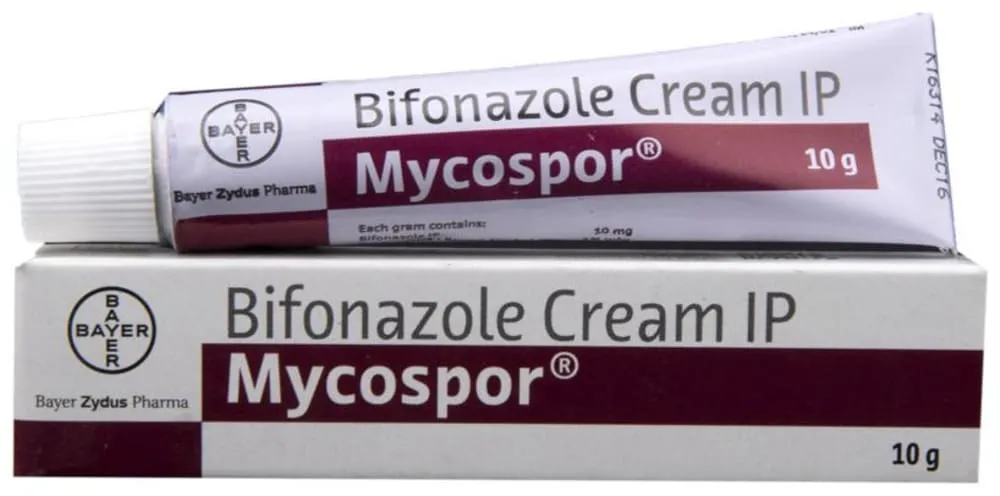
Mycospor Cream (Bifonazole)
Price range: $5.00 through $20.00
| Active Ingredient | Bifonazole |
|---|---|
| Manufacturer | Bayer Zydus Pharma |
| Packaging | 10 gm in 1 tube |
| Strength | 1% |
| Delivery Time | 6 To 15 days |
| SKU: | Mycospor Cream (Bifonazole) |
Complete Guide to Mycospor Cream (Bifonazole): Uses, Application, Benefits, and Safety
Fungal skin infections can be frustrating, uncomfortable, and persistent. Whether you are dealing with the unbearable itch of athlete’s foot, unsightly patches of ringworm, or stubborn fungal infections in skin folds, finding an antifungal treatment that delivers fast, lasting relief is essential.
Mycospor Cream (Bifonazole) is a highly regarded topical antifungal medication designed specifically to target and eliminate a wide range of dermatological fungal infections. Known for its broad-spectrum action and convenient application schedule, it helps restore skin health effectively.
In this comprehensive guide, we will break down everything you need to know about Mycospor Cream (Bifonazole). From its active ingredient mechanism and clinical uses to step-by-step application instructions, precautions, potential side effects, and essential skin care tips, this article provides all the details required to manage fungal skin conditions safely.
What is Mycospor Cream (Bifonazole)?
Mycospor Cream (Bifonazole) is a broad-spectrum topical antifungal formulation containing Bifonazole (1% w/w) as its primary active pharmaceutical ingredient. It belongs to the imidazole class of antifungal agents and is formulated to treat fungal infections affecting the skin, nails, and cutaneous tissues.
Unlike many older-generation topical antifungals that require multiple applications per day, Mycospor Cream (Bifonazole) is engineered for sustained skin retention. Its formula penetrates deep into the outer layers of the skin (stratum corneum) and maintains therapeutic concentrations over an extended period, making it effective with a simple, convenient once-daily application.
Key Specifications & Summary
| Attribute | Specification Details |
| Active Ingredient | Bifonazole (1% w/w) |
| Therapeutic Class | Topical Antifungal (Imidazole Derivative) |
| Primary Indications | Tinea pedis, Tinea corporis, Tinea cruris, Tinea versicolor, Candidiasis |
| Dosing Frequency | Once daily (preferably at bedtime) |
| Duration of Treatment | 2 to 4 weeks (varies by condition) |
| Habit-Forming | No |
How Does Mycospor Cream (Bifonazole) Work?
To understand why Mycospor Cream (Bifonazole) is so effective against stubborn skin infections, it helps to look at its unique dual-action mechanism at the cellular level.
The Dual Mechanism of Action
Most fungal pathogens rely on a crucial structural compound called ergosterol to maintain the stability, permeability, and integrity of their cell membranes. Without ergosterol, fungal cell membranes weaken, leak essential contents, and ultimately collapse.
Bifonazole stands out among antifungal agents because it inhibits ergosterol synthesis at two distinct enzymatic steps:
-
Inhibition of HMG-CoA Reductase: Bifonazole suppresses the enzyme HMG-CoA reductase early in the ergosterol biosynthesis pathway.
-
Inhibition of C-14 Demethylase: It simultaneously blocks 14-alpha-demethylase, a key enzyme needed later in the pathway.
By targeting ergosterol production at two separate stages, Mycospor Cream (Bifonazole) exerts a powerful fungicidal (fungus-killing) or fungistatic (growth-inhibiting) effect, depending on the fungal species and concentration. This dual blockade makes it exceptionally difficult for fungal strains to develop resistance, ensuring consistent therapeutic results.
Extended Skin Retention Profile
Once applied, the active ingredient in Mycospor Cream (Bifonazole) rapidly penetrates the skin layers and binds to keratinized tissue. It forms a reservoir in the epidermis that continuously releases the drug over 24 hours. This high dermal persistence is precisely why a single daily application is sufficient to keep fungal growth completely suppressed around the clock.
Primary Indications and Uses of Mycospor Cream (Bifonazole)
Dermatologists and healthcare providers prescribe Mycospor Cream (Bifonazole) to treat a diverse range of superficial fungal infections caused by dermatophytes, yeasts, molds, and other susceptible fungi.
1. Athlete’s Foot (Tinea Pedis)
Athlete’s foot is a common dermatophyte infection that affects the feet, especially the spaces between the toes (interdigital) and the soles. It causes intense itching, burning, peeling, scaling, and painful cracking. Applying Mycospor Cream (Bifonazole) clears up active fungal colonies in foot tissue, relieves burning, and restores smooth, healthy skin.
2. Jock Itch (Tinea Cruris)
Jock itch affects the groin, inner thighs, and buttocks—warm, moist areas where fungi thrive. It causes a red, raised, itchy, and often ring-shaped rash. Mycospor Cream (Bifonazole) rapidly calms groin irritation, eliminates the underlying dermatophytes, and prevents the rash from spreading to surrounding areas.
3. Ringworm of the Body (Tinea Corporis)
Despite its name, ringworm is caused by a fungus, not a worm. It manifests as circular, red, scaly patches with raised edges on the arms, legs, torso, or face. Mycospor Cream (Bifonazole) penetrates the active border of ringworm lesions to eradicate the fungus and smooth out the skin.
4. Pityriasis Versicolor (Tinea Versicolor)
Pityriasis versicolor is a superficial yeast infection caused by Malassezia species. It causes small, discolored patches on the chest, back, shoulders, or neck that may appear lighter or darker than surrounding skin. Mycospor Cream (Bifonazole) normalizes fungal balance on the skin, clearing up active scaling and helping natural pigmentation return over time.
5. Cutaneous Candidiasis
Caused by Candida species, cutaneous candidiasis typically develops in warm, humid skin folds such as under the breasts, around the navel, or in armpits (intertrigo). It causes bright red, raw, itchy skin often accompanied by tiny satellite spots. Mycospor Cream (Bifonazole) neutralizes Candida overgrowth and helps dry out inflamed skin folds.
6. Erythrasma and Mixed Superficial Infections
Beyond fungi, Bifonazole exhibits antimicrobial activity against certain Gram-positive bacteria like Corynebacterium minutissimum, the organism responsible for erythrasma (a superficial bacterial infection that mimics fungal intertrigo). This makes Mycospor Cream (Bifonazole) particularly valuable for treating mixed cutaneous lesions.
Standout Benefits of Mycospor Cream (Bifonazole)
Why do healthcare professionals frequently choose Mycospor Cream (Bifonazole) for skin infections?
-
Broad-Spectrum Efficacy: Effectively targets dermatophytes, yeasts (Candida and Malassezia), molds, and select Gram-positive skin bacteria.
-
Convenient Once-Daily Dosing: Unlike creams that require 2 to 3 applications daily, a single daily application ensures better patient compliance and ease of use.
-
Deep Dermal Penetration: Reaches deep into the outer skin layers to clear embedded fungal hyphae.
-
Dual Action Mechanism: Dual-stage enzyme inhibition reduces the likelihood of fungal drug resistance.
-
Non-Greasy & Smooth Texture: Formulated as a cosmetically elegant cream that absorbs quickly without leaving a heavy, sticky residue on clothing.
Step-by-Step Guide: How to Apply Mycospor Cream (Bifonazole)
Proper application technique ensures that the cream reaches maximum efficacy while keeping surrounding skin healthy and unirritated.
Step 1: Clean the Affected Area
Thoroughly wash the infected skin and surrounding area with mild soap and warm water. Removing dirt, sweat, and loose dead skin cells allows the active medicine to penetrate directly into the tissue.
Step 2: Dry Thoroughly
Fungi thrive in moisture. Gently pat the area completely dry using a clean, soft towel. Pay special attention to skin folds, under the breasts, or between the toes. Avoid aggressive rubbing, which can irritate raw skin.
Step 3: Wash Your Hands
Wash your hands thoroughly with soap before touching the tube to avoid introducing unwanted bacteria to the area or contaminating the cream container.
Step 4: Apply a Thin Layer
Squeeze a small amount of Mycospor Cream (Bifonazole) onto your fingertip. Gently massage a thin layer over the affected area plus a 1 to 2 cm border of surrounding healthy skin. Applying to the outer edge is crucial because active fungal elements often spread beyond the visible rash.
Step 5: Massage Until Absorbed
Gently rub the cream in circular motions until it vanishes into the skin. A little goes a long way—avoid slathering on thick layers.
Step 6: Wash Hands After Use
Wash your hands thoroughly after application to prevent spreading the fungal infection to other body parts, your eyes, or other people (unless your hands are the treated area).
Best Time to Apply: Apply Mycospor Cream (Bifonazole) once daily, ideally at bedtime. Applying at night allows the cream to stay undisturbed on the skin for hours without being rubbed off by footwear or washed away by sweat.
Recommended Duration of Treatment
To prevent fungal infections from returning, you must complete the full course of treatment even if your symptoms (itching, redness, scaling) disappear after a few days. Fungal spores can linger invisibly in the skin long after surface symptoms improve.
Typical treatment durations for Mycospor Cream (Bifonazole) include:
-
Tinea Pedis (Athlete’s Foot): 3 to 4 weeks
-
Tinea Corporis / Tinea Cruris (Ringworm / Jock Itch): 2 to 3 weeks
-
Pityriasis Versicolor: 2 weeks
-
Cutaneous Candidiasis: 2 to 4 weeks
If no clinical improvement is observed after 2 weeks of continuous use, consult your physician or dermatologist to re-evaluate the diagnosis.
Important Safety Precautions & Warnings
While Mycospor Cream (Bifonazole) is generally safe and well-tolerated for external use, observe these key precautions:
1. External Topical Use Only
Mycospor Cream (Bifonazole) is strictly meant for application to the skin. Do not use it near or inside the eyes, nose, mouth, ear canals, or internal vaginal tissue. If accidental contact with the eyes occurs, rinse immediately and thoroughly with cool water.
2. Hypersensitivity & Allergic Reactions
Individuals with a known allergy or hypersensitivity to Bifonazole, other imidazole antifungals (like clotrimazole, miconazole, or ketoconazole), or any inactive excipients in the cream should avoid using this product.
3. Pregnancy and Breastfeeding
-
Pregnancy: Clinical data regarding the use of Bifonazole in pregnant women is limited. Although systemic absorption through the skin is minimal, Mycospor Cream (Bifonazole) should only be used during pregnancy—especially during the first trimester—under direct medical supervision.
-
Breastfeeding: It is unknown whether topical Bifonazole passes into breast milk. If prescribed while nursing, do not apply the cream directly to the chest or breast area to prevent accidental ingestion by the infant.
4. Pediatric Use
Safety and efficacy in infants and young children should always be evaluated by a pediatrician before starting treatment. If used in infants, monitor skin reaction closely, especially under occlusive diapers.
5. Avoid Occlusive Dressings
Unless specifically instructed by a doctor, do not cover the treated area with airtight, plastic, or waterproof bandages (occlusive dressings). Air circulation helps skin heal and prevents excessive absorption of the medication.
Potential Side Effects of Mycospor Cream (Bifonazole)
Most people use Mycospor Cream (Bifonazole) without experiencing significant adverse effects. When side effects do occur, they are typically mild, localized to the application site, and temporary.
Common, Mild Side Effects
-
Mild Application Site Irritation: Temporary redness (erythema), mild stinging, or a burning sensation shortly after applying the cream.
-
Dryness or Flaking: Minor skin dryness, peeling, or scaling as the infected skin layers shed.
-
Contact Sensitization: Mild localized itching (pruritus) or skin rash at the application site.
Rare / Serious Side Effects
While rare, severe allergic reactions can occur in highly sensitive individuals:
-
Marked swelling (edema) at or around the application site
-
Blistering, oozing, or severe hives
-
Widespread dermatitis
If you experience severe burning, painful rash, or signs of an allergic reaction, stop using the cream, wash the area with mild soap and water, and contact a medical professional.
Potential Interactions with Other Topical Products
Because Mycospor Cream (Bifonazole) is applied topically, systemic drug interactions are exceedingly rare. However, local product interactions can occur:
-
Other Topical Medications: Avoid applying other medicated creams, ointments, or lotions to the exact same skin area at the same time as Mycospor Cream (Bifonazole) unless directed by your doctor. Mixing products can dilute the active drug or cause skin irritation.
-
Warfarin / Oral Anticoagulants: In extremely rare cases, high-surface-area topical imidazole application has been reported to interact mildly with oral blood thinners like Warfarin. If you take blood thinners and apply topical antifungals over large skin areas, inform your physician.
Essential Hygiene Tips to Prevent Fungal Recurrence
Treating the active infection with Mycospor Cream (Bifonazole) is only half the battle. Fungal spores live easily on clothes, shoes, towels, and humid surfaces. Combining your cream treatment with these simple hygiene practices will help keep fungal infections from coming back:
1. Keep Skin Clean and Dry
-
Always dry your skin thoroughly after showering, bathing, or swimming.
-
Use a separate, clean towel for infected areas so you do not transfer fungus to uninfected parts of your body.
2. Practice Smart Foot Hygiene (For Athlete’s Foot)
-
Wear clean, moisture-wicking cotton or bamboo socks, and change them daily (or twice daily if your feet sweat heavily).
-
Alternate your shoes every day to give worn footwear at least 24 hours to air out completely.
-
Avoid walking barefoot in public places like gym locker rooms, communal showers, and pool decks; always wear flip-flops or shower shoes.
-
Consider using an antifungal powder inside your shoes during hot weather.
3. Wear Loose, Breathable Clothing
-
Choose loose-fitting clothing made from natural fibers like cotton to reduce friction and allow air circulation, especially in groin and underarm areas.
-
Wash workout clothes, socks, underwear, and towels in warm or hot water after every use.
4. Avoid Sharing Personal Items
-
Never share towels, washcloths, socks, shoes, nail clippers, or clothing with family members or friends while treating an active fungal infection.
Frequently Asked Questions (FAQs) About Mycospor Cream (Bifonazole)
1. How quickly will I see results with Mycospor Cream (Bifonazole)?
Many individuals experience noticeable relief from itching, burning, and redness within 2 to 4 days of starting treatment. However, visible skin clearing takes time as the infected outer skin layer sheds and healthy tissue regenerates.
2. Can I stop using the cream once the itching stops?
No. Relief from itching simply means active fungal activity has decreased. Fungal spores remain hidden deep inside skin layers. Stopping treatment early often leads to a quick relapse. Complete the full duration recommended by your doctor (usually 2 to 4 weeks).
3. Why is Mycospor Cream (Bifonazole) applied only once a day?
Bifonazole has a long skin-retention half-life. It binds securely to epidermal keratin, forming a reservoir that continuously releases the medication for 24 hours. Because of this, once-daily application is as effective as multi-dose regimens required by other antifungals.
4. Can Mycospor Cream (Bifonazole) be used for scalp infections?
While Bifonazole works against dermatophytes, creams are difficult to apply effectively to dense hair and may not penetrate hair follicles deeply enough for conditions like Tinea Capitis (scalp ringworm). Scalp infections often require oral antifungal medications or specialized medicated shampoos as prescribed by a dermatologist.
5. What should I do if I miss an application?
If you forget your daily dose, apply it as soon as you remember. If it is almost time for your next scheduled application, skip the missed dose and resume your regular schedule. Do not apply double amounts to make up for a missed application.
6. Can I apply cosmetics or sunscreen over Mycospor Cream (Bifonazole)?
If applying the cream to your face or neck, allow Mycospor Cream (Bifonazole) to absorb completely into the skin (wait about 20 to 30 minutes) before applying non-comedogenic moisturizers, sunscreen, or cosmetics.
7. How should I store Mycospor Cream (Bifonazole)?
Store Mycospor Cream (Bifonazole) at room temperature, ideally below 25°C (77°F). Keep the tube tightly closed when not in use, protect it from excessive heat and direct light, do not freeze it, and store it safely out of the reach of children.
Conclusion
Fungal skin infections can be uncomfortable and inconvenient, but they are fully manageable with the right approach. Mycospor Cream (Bifonazole) provides a reliable, broad-spectrum solution that tackles dermatophytes, yeasts, and skin molds right at the source.
Thanks to its dual-action enzyme inhibition and high skin-retention capability, this formulation delivers continuous 24-hour protection with the convenience of a simple once-daily application. By applying a thin layer every night, completing your full treatment course, and practicing good personal hygiene, you can clear skin infections and keep your skin feeling smooth, healthy, and itch-free.
If your skin condition does not improve after 2 weeks of consistent use, or if you experience severe irritation or spreading lesions, consult a certified dermatologist or healthcare professional for individualized medical care.
Disclaimer:-
This content about Mycospor Cream (Bifonazole) is provided for general educational and informational purposes only. It is not a substitute for professional medical advice, diagnosis, or treatment. Use this medicine only as directed by a qualified healthcare professional or according to the product instructions. Consult a doctor or pharmacist if symptoms persist, worsen, or return, or if you experience an unusual reaction.
Additional information
| unit | 1 Cream, 3 Cream, 6 Cream |
|---|







Reviews
There are no reviews yet.