
- “Sertacide B Cream (Sertaconazole & Beclometasone)” already exists in your wishlist
Sertacide B Cream (Sertaconazole & Beclometasone)
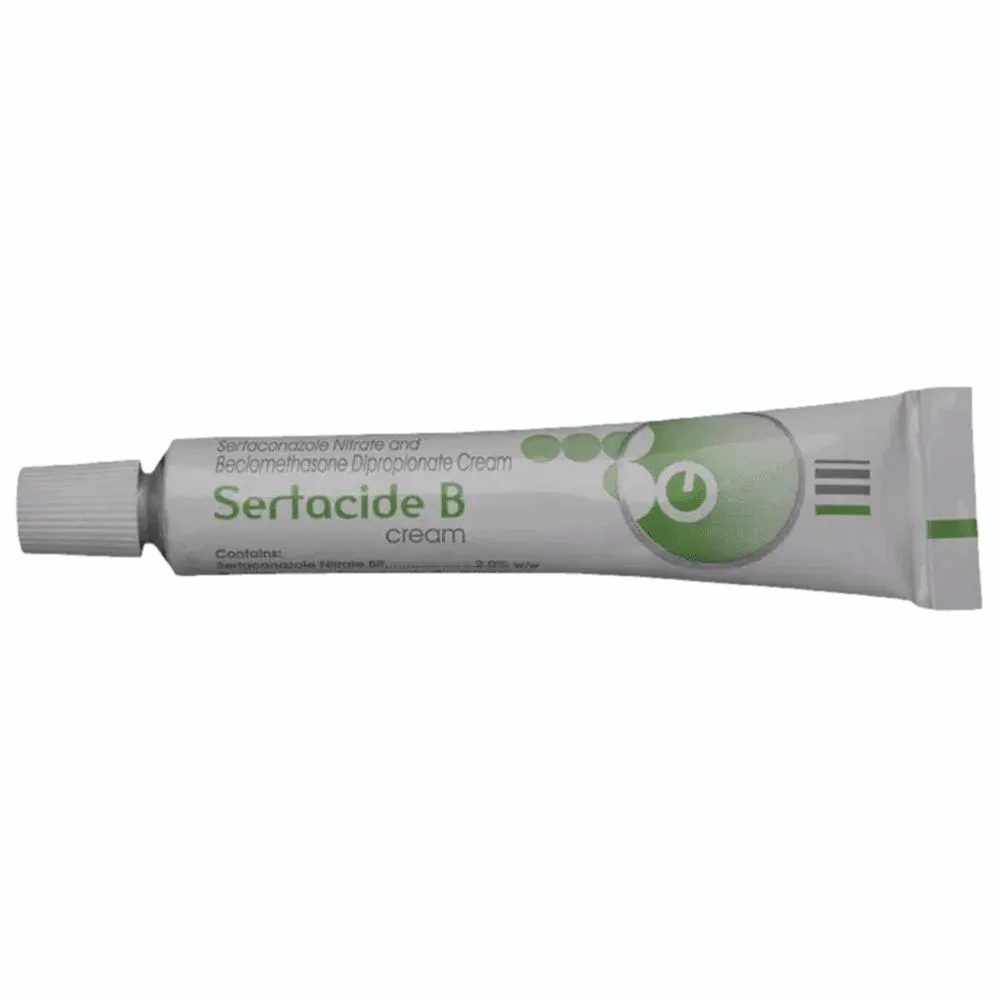
Price range: $5.00 through $27.00
| Active Ingredient | Sertaconazole/Beclometasone |
|---|---|
| Manufacturer | Cipla Limited |
| Packaging | 10 gm in 1 tube |
| Strength | 10gm |
| Delivery Time | 6 To 15 days |
| SKU: | Sertacide B Cream (Sertaconazole/Beclometasone) |
Comprehensive Guide to Sertacide B Cream (Sertaconazole & Beclometasone): Uses, Application, Mechanism, and Precautions
Skin infections accompanied by intense itching, redness, swelling, and inflammation can make daily life extremely uncomfortable. Fungal dermatoses often present a dual challenge: the underlying fungal pathogen causes the infection, while the body’s inflammatory immune response creates severe physical discomfort. Managing just one aspect of the condition usually leads to incomplete relief or delayed recovery.
This is where Sertacide B Cream (Sertaconazole & Beclometasone) serves as a targeted topical therapy. Combining a broad-spectrum antifungal agent with a potent topical corticosteroid, this dual-action cream simultaneously eradicates fungal overgrowth and calms severe inflammatory symptoms.
In this comprehensive guide, we will break down everything you need to know about Sertacide B Cream (Sertaconazole & Beclometasone). From its active active ingredients and pharmacological mechanisms to clinical indications, proper application techniques, potential side effects, and essential precautions, this article covers all the critical information required for safe and effective use.
What is Sertacide B Cream (Sertaconazole & Beclometasone)?
Sertacide B Cream (Sertaconazole & Beclometasone) is a prescription topical dermatological formulation designed to treat inflammatory fungal skin infections. Manufactured to target resistant and highly symptomatic skin conditions, it combines two distinct pharmacological agents into a smooth, easy-to-apply cream vehicle.
Unlike simple single-agent antifungal creams that solely target fungal cells—leaving the patient to endure intense itching and burning while the infection clears—Sertacide B Cream (Sertaconazole & Beclometasone) addresses both the cause and the symptoms concurrently.
Product Composition and Key Specifications
| Feature | Specification Details |
| Active Combination | Sertaconazole Nitrate & Beclometasone Dipropionate |
| Therapeutic Class | Antifungal + Topical Corticosteroid Combination |
| Primary Formulation | Emulsified Topical Cream |
| Primary Indications | Inflammatory tinea infections (ringworm, jock itch, athlete’s foot), cutaneous candidiasis, inflamed seborrheic dermatitis |
| Target Symptoms | Severe itching, scaling, erythema (redness), localized swelling |
| Prescription Status | Rx-only (Requires medical prescription) |
Science Behind the Dual Action: How Sertacide B Cream Works
The clinical effectiveness of Sertacide B Cream (Sertaconazole & Beclometasone) relies on the complementary mechanics of its two active compounds working in synergy.
1. Sertaconazole Nitrate (The Broad-Spectrum Antifungal)
Sertaconazole is an advanced, third-generation imidazole derivative engineered for high lipophilicity and broad-spectrum antimicrobial activity. It targets a wide variety of pathogenic fungi, including dermatophytes (Trichophyton, Microsporum, and Epidermophyton species), yeasts (Candida species), and opportunistic fungi.
Sertaconazole exhibits a unique dual mechanism of action that makes it both fungistatic (inhibiting growth) and fungicidal (directly killing fungal cells):
-
Inhibition of Ergosterol Synthesis: Sertaconazole inhibits the fungal cytochrome P450-dependent enzyme lanosterol 14$\alpha$-demethylase. This blocks the conversion of lanosterol to ergosterol—an essential structural lipid component of the fungal cell membrane.
-
Cell Membrane Disruption: Without ergosterol, the structural integrity of the fungal membrane degrades, leading to increased membrane permeability and leakage of essential intracellular nutrients.
-
Direct Membrane Damage: Due to its high lipophilicity, Sertaconazole directly embeds into the fungal cell membrane, forming pores and causing rapid cell lysis (death).
-
Anti-Inflammatory & Anti-Pruritic Activity: Beyond its antifungal power, Sertaconazole possesses inherent mild anti-inflammatory properties, suppressing the release of pro-inflammatory cytokines like histamine and prostaglandin $E_2$.
2. Beclometasone Dipropionate (The Anti-Inflammatory Corticosteroid)
Beclometasone Dipropionate is a potent glucocorticoid that provides rapid symptomatic relief from acute inflammation, redness, and itching.
-
Inhibition of Phospholipase $A_2$: Beclometasone induces lipocortins, which inhibit the enzyme phospholipase $A_2$. This blocks the release of arachidonic acid, the direct precursor to inflammatory mediators like prostaglandins and leukotrienes.
-
Vasoconstriction: It shrinks dilated capillary blood vessels at the infection site, rapidly reducing redness (erythema) and localized swelling (edema).
-
Suppression of Immune Overactivity: By dampening excessive local immune cell migration and activity, Beclometasone stops the intense itching reflex, preventing scratching and secondary bacterial contamination.
Primary Clinical Uses and Indications
Healthcare providers prescribe Sertacide B Cream (Sertaconazole & Beclometasone) for dermatological conditions where fungal infection coexists with significant cutaneous inflammation.
1. Tinea Corporis (Ringworm of the Body)
Tinea corporis presents as circular, ring-shaped red patches with raised, scaly edges and clear centers. When accompanied by severe inflammation, itching, and burning, Sertacide B Cream (Sertaconazole & Beclometasone) rapidly clears the ringworm pathogen while soothing inflamed skin.
2. Tinea Cruris (Jock Itch)
Jock itch affects the groin, inner thighs, and perianal regions. Because these warm, moist intertriginous areas are subject to friction and sweat, fungal growth often triggers intense itching and painful skin rawing. Applying Sertacide B Cream (Sertaconazole & Beclometasone) eases friction discomfort while clearing the fungal colonies.
3. Tinea Pedis (Athlete’s Foot)
Athlete’s foot develops between the toes and on the soles of the feet, causing scaling, peeling, painful cracking, and intense burning. The combination formula eliminates dermatophyte fungi between the toes while relieving acute inflammation and fissuring.
4. Cutaneous Candidiasis
Caused by yeast species such as Candida albicans, this condition typically manifests in skin folds (under breasts, armpits, and abdominal folds) as bright red, weeping patches surrounded by tiny satellite pustules. The cream clears yeast overgrowth and cools raw, inflamed tissue folds.
5. Inflamed Seborrheic & Intertriginous Dermatitis
When fungal overgrowth (such as Malassezia yeast species) exacerbates seborrheic dermatitis, the skin becomes greasy, red, scaly, and deeply irritated. Sertacide B Cream (Sertaconazole & Beclometasone) restores balance by lowering yeast populations and reducing scaling inflammation.
Key Benefits of Using Sertacide B Cream
Choosing a combination therapy like Sertacide B Cream (Sertaconazole & Beclometasone) provides clear clinical advantages over using single-ingredient topical agents for inflamed fungal lesions:
-
Immediate Symptom Relief: The corticosteroid component relieves itching, pain, and burning within hours, improving patient comfort.
-
Eradication of Root Pathogens: Sertaconazole attacks the fungal cell structure, ensuring the infection is eliminated rather than merely suppressed.
-
High Retention in Skin Tissue: Sertaconazole binds effectively to the stratum corneum (outermost skin layer) and remains active in the dermal layers for extended periods, reducing the likelihood of early fungal relapse.
-
Interruption of the Itch-Scratch Cycle: Rapid itch control prevents patient scratching, preserving skin integrity and minimizing the risk of secondary bacterial skin infections.
-
Enhanced Compliance: Combining antifungal and anti-inflammatory therapy in a single cream simplifies the treatment regimen compared to managing multiple separate tubes.
Step-by-Step Application Guide: How to Apply Sertacide B Cream Correctly
Following a clean, precise application method ensures maximum absorption of Sertacide B Cream (Sertaconazole & Beclometasone) while reducing unnecessary systemic exposure.
Step 1: Wash Your Hands Thoroughly
Before touching infected or broken skin, wash your hands thoroughly with warm water and soap. Dry them with a clean towel.
Step 2: Clean and Dry the Affected Skin Area
Gently cleanse the infected lesion using mild water and a soap-free cleanser. Carefully pat the area completely dry with a soft cloth or gauze pad. Avoid harsh rubbing, which further inflames delicate skin.
Step 3: Apply a Thin Layer
Dispense a small, pea-sized amount of Sertacide B Cream (Sertaconazole & Beclometasone) onto your fingertip. Gently rub a thin layer over the affected area, extending about half an inch past the visible outer border of the rash.
Step 4: Smooth Gently Until Absorbed
Gently massage the cream into the skin until it disappears completely. Do not slather thick layers onto the skin; topical corticosteroids work best when applied thinly and evenly.
Step 5: Wash Hands Post-Application
Unless your hands are the target treatment area for athlete’s foot or ringworm, wash your hands thoroughly after applying the cream to avoid spreading the fungus or steroid to other body parts (especially your eyes).
Step 6: Leave the Area Uncovered
Allow air to circulate freely around the treated area. Do not cover the area with tight bandages, occlusive dressings, plastic wraps, or tight clothing unless explicitly instructed by a physician.
Dosage, Usage Frequency, and Treatment Duration
-
Standard Frequency: Apply Sertacide B Cream (Sertaconazole & Beclometasone) once or twice daily (morning and evening), or precisely as directed by your prescribing physician.
-
Duration of Use: Because this formulation contains a potent topical corticosteroid (Beclometasone), treatment duration should generally be kept as short as necessary—typically 1 to 2 weeks.
-
Tapering off Steroid Therapy: Once the acute inflammatory phase (redness, itching, swelling) subsides, your dermatologist may recommend switching to a single-agent antifungal cream to clear any remaining fungal spores without over-exposing the skin to corticosteroids.
-
Missed Dose: Apply the missed dose as soon as you remember. If it is almost time for your next scheduled application, skip the missed dose and resume your regular routine. Do not double up on cream applications.
Important Safety Precautions and Warnings
Because Sertacide B Cream (Sertaconazole & Beclometasone) contains an active steroid, specific safety guidelines must be strictly observed during treatment.
1. Avoid Occlusive Dressings
Never cover treated skin areas with airtight bandages, plastic wraps, or occlusive dressings. Occlusion drastically increases the transdermal absorption of Beclometasone, raising the risk of systemic corticosteroid absorption, adrenal gland suppression, and localized skin atrophy.
2. Facial Application Caution
Exercise extreme caution when applying this cream to the face. The skin on the face is delicate and thin, making it vulnerable to steroid-induced side effects such as perioral dermatitis, rosacea flare-ups, and skin thinning. Avoid contact with the eyes, eyelids, and mucous membranes.
3. Pediatric Precautions
Children have a higher skin surface area-to-body weight ratio, making them significantly more susceptible to systemic absorption of topical steroids. Prolonged use of Sertacide B Cream (Sertaconazole & Beclometasone) in infants and young children can lead to hypothalamic-pituitary-adrenal (HPA) axis suppression, Cushing’s syndrome, and growth retardation. Use in pediatric patients must be strictly monitored by a pediatrician.
4. Risk of Topical Steroid Withdrawal and Rebound
Do not stop using the cream abruptly after prolonged continuous application, as this can cause a rebound flare-up of skin redness, burning, and irritation. Always follow your physician’s tapering plan.
5. Open Wounds and Secondary Infections
Do not apply Sertacide B Cream (Sertaconazole & Beclometasone) to open wounds, deep lacerations, active viral skin lesions (such as herpes simplex, varicella, or chickenpox), or tuberculous lesions of the skin. Corticosteroids suppress local immune defenses and can cause viral or bacterial infections to spread.
6. Pregnancy and Lactation
-
Pregnancy: Topical corticosteroids and antifungals should be used during pregnancy only if the potential benefit justifies the potential risk to the fetus. Always consult your obstetrician before use.
-
Lactation: It is unknown whether topical application leads to sufficient systemic absorption to appear in human breast milk. Breastfeeding mothers should not apply the cream directly to the chest or nipple area to prevent accidental oral ingestion by nursing infants.
Potential Side Effects of Sertacide B Cream
While Sertacide B Cream (Sertaconazole & Beclometasone) is generally well-tolerated when used for short durations, side effects can occur—especially if the cream is overapplied or used for extended periods.
Common Localized Side Effects (Mild & Temporary)
-
Mild, transient burning or stinging upon initial application
-
Localized skin dryness or flaking
-
Temporary contact redness or mild irritation
Long-Term Steroid-Related Side Effects (Prolonged or Improper Use)
Using topical corticosteroids continuously for several weeks or under occlusion can cause adverse localized skin changes:
-
Skin Atrophy: Progressive thinning and fragile skin texture.
-
Striae (Stretch Marks): Permanent reddish or purple linear streaks, particularly in skin folds.
-
Telangiectasia: Dilation of small surface blood vessels, causing visible spider veins.
-
Hypopigmentation: Localized lightening of skin pigment.
-
Hypertrichosis: Excessive hair growth at the application site.
-
Folliculitis & Steroid Acne: Inflammation of hair follicles or acne-like breakouts.
Rare Systemic Effects
With widespread, heavy, or long-term occlusive application, systemic absorption of Beclometasone can lead to HPA axis suppression, elevated blood sugar levels, or signs of Cushingoid hypercortisolism. Discontinue use and seek prompt medical attention if you experience severe allergic reactions, swelling of the face or throat, or dizziness.
Potential Drug Interactions
While topical absorption is minimal under normal conditions, combining Sertacide B Cream (Sertaconazole & Beclometasone) with other medications requires attention:
| Drug Category | Interaction Mechanism | Clinical Recommendation |
| Other Topical Steroids | Concurrent use increases total steroid load and skin atrophy risk. | Avoid using other steroid-containing creams simultaneously on the same area. |
| Topical Keratolytics (e.g., Salicylic Acid) | May alter skin barrier permeability and increase absorption depth. | Consult your dermatologist before layering keratolytics over treated areas. |
| Systemic Antifungals | Generally compatible, but concurrent use requires medical oversight for severe systemic fungal dermatoses. | Use under the direct supervision of your physician. |
Lifestyle and Personal Care Tips for Fungal Infection Prevention
While Sertacide B Cream (Sertaconazole & Beclometasone) works to clear existing fungal growth and inflammation, adopting clean hygiene habits helps accelerate recovery and prevents reinfection.
Keep Affected Areas Clean and Dry
Fungi thrive in warm, dark, and humid environments. Pat body folds, groin areas, and feet completely dry after bathing before putting on clothing.
Wear Breathable, Moisture-Wicking Fabrics
Opt for loose-fitting, natural cotton or specialized moisture-wicking synthetic fabrics. Avoid tight-fitting synthetic underwear, jeans, or workout clothes that trap sweat against the skin.
Practice Good Foot Hygiene for Athlete’s Foot
-
Change socks at least once or twice daily if your feet sweat excessively.
-
Alternate footwear to give shoes at least 24 hours to air out completely.
-
Wear protective sandals or flip-flops in public showers, gym locker rooms, and swimming pool decks.
Avoid Sharing Personal Items
Do not share bath towels, clothing, hairbrushes, or personal grooming equipment with family members. Wash towels and bed linens in hot water to eliminate fungal spores during active infections.
Frequently Asked Questions (FAQs)
1. Can I purchase Sertacide B Cream (Sertaconazole & Beclometasone) over the counter?
No. Sertacide B Cream (Sertaconazole & Beclometasone) contains a high-potency antifungal combined with a potent corticosteroid, requiring a valid medical prescription from a licensed physician or dermatologist.
2. How quickly does Sertacide B Cream provide relief?
The Beclometasone component usually begins reducing itching, stinging, and burning within a few hours of the first application. However, eradicating the underlying fungal infection requires consistent use over several days as directed by your doctor.
3. Can I use this cream for regular acne pimples or facial rashes?
No. Sertacide B Cream (Sertaconazole & Beclometasone) should never be applied to common bacterial acne or undiagnosed facial rashes. Topical steroids can worsen acne breakouts, cause steroid rosacea, and thin delicate facial skin.
4. What happens if I stop using the cream as soon as the itching stops?
Stopping treatment prematurely when symptoms fade can leave viable fungal spores behind in the deeper epidermal layers, leading to an infection relapse. Complete the full duration prescribed by your healthcare provider.
5. Is Sertacide B Cream effective for ringworm on the scalp?
Tinea capitis (scalp ringworm) involves deep hair follicle infection and generally requires oral systemic antifungal therapy prescribed by a doctor. Topical creams alone cannot penetrate deeply enough into hair follicles to cure scalp infections.
6. What should I do if my skin symptoms worsen during treatment?
If your redness, irritation, or swelling worsens, or if you develop pus, open sores, or spreading inflammation, stop applying the cream immediately and consult your dermatologist. This may indicate a secondary bacterial infection or an allergic contact dermatitis reaction.
Disclaimer:-
This information about Sertacide B Cream (Sertaconazole & Beclometasone) is provided for general educational purposes only and should not replace professional medical advice, diagnosis, or treatment. Use this medicine only as directed by a qualified healthcare professional. The suitability, duration of treatment, possible side effects, and precautions may vary from person to person. Consult your doctor or pharmacist before using this cream, especially if symptoms persist, worsen, or recur.
Additional information
| unit | 1 Cream, 3 Cream, 6 Cream |
|---|


Reviews
There are no reviews yet.